


Connecting Several Fixtures To One Trap
Description
This section is from the book "Principles And Practice Of Plumbing", by John Joseph Cosgrove. Also available from Amazon: Principles and Practice of Plumbing.
Connecting Several Fixtures To One Trap
When a number of wash basins are grouped together in a wash room of a factory, hotel, or other institution it is common practice to connect the waste pipes from all the basins to one trap. A better practice, however, is to trap each basin separately, Fig. 42. . When but one trap is used in an installation of this kind, it leaves untrapped a large stretch of pipe, which in time becomes foul and emits disagreeable odors, that are carried into the room by local currents of air circulating in through the pipe at one basin connection and out at another basin.
Kitchen Sinks and Laundry Trays- There are conditions under which the use of one trap for two or more fixtures is permissible. In apartment buildings, where laundry trays adjoin the kitchen sink, and there is a possibility that for long periods of time the trays may not be used, it not only is permissible but perhaps better to connect the waste pipe from the trays to the house side of the sink trap below the water level, as in Fig. 43. By this arrangement a permanent seal is assured the trays whether they are used or not. The waste pipes from the trays, however, should be offset above the water level in the trap as shown, so the waste pipe will not stand full of water.
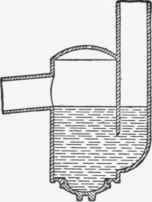
Fig. 41

Fig. 42
The waste pipe from the kitchen sink should never connect to a laundry-tray trap, as that would leave un-trapped a greater stretch of pipe than when the conditions are reversed; besides, the untrap-ped pipe would soon foul from the greasy sink water passing through it, and local circulation would set up from the tub waste through the tray waste.
Grease Traps are separators in which grease, fats and oils are separated from greasy waste water, the grease being retained in the trap while the water escapes to the drainage system. They are used in connection with kitchen, scullery or other sinks, into which large quantities of greasy water are emptied, to intercept the grease while in a fluid state and thus prevent its adhering to the waste pipes, where it would congeal and successive deposits in time choke the pipe.
Continue to:


My Books

