


Self-Cleansing Plumbers' Traps. Continued
Description
This section is from the book "Principles And Practice Of Plumbing", by S. Stevens Hellyer. Also available from Amazon: Principles and practice of plumbing.
Self-Cleansing Plumbers' Traps. Continued
4. The quantity of water for closets graciously allowed by the Water Companies of the Metropolis is two gallons. How can so small a quantity be discharged quickly enough through a Waste-preventing apparatus to pass through a 4 in. trap in a volume large enough to fill the bore of so large a trap? And so, though the form of the round-pipe trap is even easier to wash out than the Anti-D-trap, in practice the latter is the most self-cleansing of the two, and this is also proved by certain tests (see Table on next page).
An Anti-D-trap has been in use under the closet shown at l, fig. 95a, for ten years, and it is still clean and wholesome. In making some tests with it just after it was fixed, it was found to be so self-cleansing, that with the supply of water to the closet by a 1 1/4 in. valve and bellows regulator apparatus, the following matters were readily washed out of the trap:
(a) Twelve pieces of water-closet paper, put into the
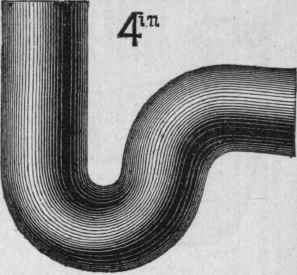
Fig. 83. - View of "Half-S" Round-Pipe Trap.
Table (No. 1) showing the Number of Water-Flushes required to Cleanse various Traps of certain Matters put into them.
Note
The traps were each fixed in turn under the valve closet, A, and connected to the 4 in. soil-pipe at b, as shown in the woodcut, Fig. 85. The basin was filled up to the overflow-arm in each flush (about one gallon of water), and no water was allowed to come into the closet during the time of the discharge.
Quantity of Water held in Trap. | Depth of Water-seal. | Traps Tested. | RESULTS. Matter put into Traps, with number of Flushes to clean same out. | |||
Twelve pieces of W.C Paper, 6 1/2 in. x 5 in. | Six pieces of Paper, and six pieces of short India-rubber Tubing. | Ten pieces of India-rubber Tubing. | Two teaspoonfuls of Ink. | |||
2 1/2 Pints | l§in.,/. | "Anti-D-Trap," for closets, fig. 81 . . . . | One flush | One flush | One flush | One flush |
4 1/2 Pints | 2 in. | "Round-pipe " Trap, "U. shaped," fig. 83 | One flush | One flush cleared all, except one piece of paper. | One flush cleared all, except one piece of I. R. | One flush |
6 1/2 Pints | 1 1/4 in. | D-Trap (Pullen's cast lead) . . | Two flushes | Three flushes | Four flushes | Three flushes |
5 Pints | 1 1/4 in. | ,, "Narrow-band," fig. 75 | Three flushes | Three flushes | Three flushes | Three flushes |
4| Pints | 1 1/4 in. | „ "Helmet," fig. 76 . . | Three flushes | Two flushes | Three flushes | Three flushes |
N.B. - With the same matters put into the closet-basin, a, instead of into the traps, it took an extra flush in the "sell-cleansing " traps, and in the "non-cleansing" traps two extra flushes, to pass the HUM matters out of the basin and through the trap. With a proper service of water laid on to the closet, and the matters put into the basin instead of into the trap, the results were about the same as (in Table 1) with the matters put into the trap and no water laid on to the basin. The tabulated tests were made without any water, laid on to the closet at the time of the discharge, to prevent one trap getting a greater flush than another.
valve-closet basin, l, were easily sent out of the basin and through the Anti-D-trap, M, under it, with one pull of the closet-handle - i.e., with the closet-handle pulled up as far as it would go, and held there for two seconds, or with the handle slowly pulled up and closed, giving only a fair flush of water.
(b) Ten pieces of india-rubber (5 ps. 1 1/4 in. dia. 1 1/2 in. long, and 5 ps. 1 in. dia. 1 1/2 in. long) were easily sent out of the closet-basin, and through the trap, with one fair flush of water.
(c) With the water in the basin well coloured with plumbers' soil, one pull of the handle washed it out of the basin and trap, leaving not a vestige behind.
(d) After the closet had been used for the purpose of nature, one fair flush of water, by pulling up the closet-handle and slowly closing it, washed the matter both out of the basin and trap.
5. The body or lower part of the Anti-D-trap for closets is fully one-fourth smaller in diameter than at the inlet. It measures 4 1/4 in. at its mouth, and 3 in. under the tongue at b; that is, the area of the water-way into the trap is 14.18, and 7.06 in the lower part, against 12.56 in the 4 in. round-pipe trap; so that a body of water one-third less in volume would suffice to fill the bore of the former under the dip, than would be necessary to fill the bore of the latter at the same point.
In Table No. 1 the results are given of some experiments made with various traps fixed under a valve-closet, and in fig. 85 an illustration is given of the apparatus experimented with.
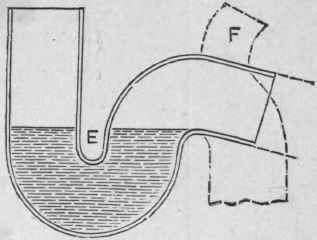
Fig. 84. - Section.
6. In fixing round-pipe traps, as figs. 86 and 87, to flatbottomed vessels, as sinks, trays, etc., it is difficult to open the mouth of the trap large enough to receive a brass grating, or plug-and-washer, which would give a water-way through them equal in area to the bore of the lower part of the trap. When a plumber is directed to fix a round-pipe trap to a sink, he should solder a cone or trumpet-pipe to the trap to increase the size of its mouth, as shown in figs. 79 and 80.,
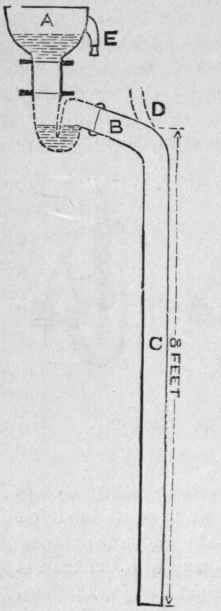
Fig. 85. - Showing ARrangement for testing Traps.
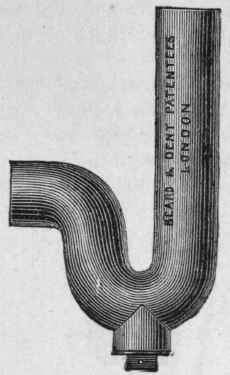
Fig. 86. - "Half-S" Round-Pipe Trap.
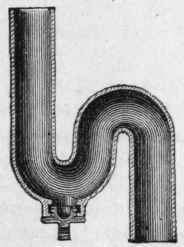
Fig. 87.-"S" Round-Pipe Trap, Section.
7, For the purpose of fixing a large brass plug-and-washer over the sink-trap, to insure a thorough cleansing of the trap every time a sink is emptied, the Anti-D-trap, fig. 88, is made with a tapering inlet; the mouth of the trap being two-thirds larger in area than in the body of the trap, as shown by the figured dimensions in the illustration, the former being 3 1/2 in., and the latter 2 in. For butlers' sinks, where a 1 1/4 in. or 1 1/2 in. waste-pipe is a better size, being more easily cleansed than a 2 in. pipe, a 1 1/4 in. Anti-D-trap, with a 2 1/2 in. inlet, as fig. 89, is large enough, as, possessing a large mouth, there is no difficulty in fixing a 2 in. brass plug-aud-washer into it, and soldering them to the bottom of the sink.
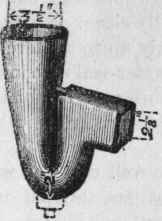
Fig. 88. - View of Anti D-Trap for Sinks, etc.
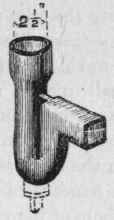
Fig. 89. - View of 1 1/4in,Anti-D-Trap, with 2 1/2 in. Inlet.
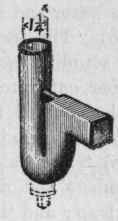
Fig. 90. - View of 1 1/4 in. Anti- D-Trap.
8. In the lectures several tests (Art. 14, previous chap.) were made with a very small D-trap, to show how difficult it is to cleanse such a form of trap when fixed under sinks and lavatories, as well as when fixed under closets; and as some tests were also made with a round-pipe trap to show the difference in the cleansing effect of small flushes of water on the two classes of traps, the result of the tests then made are quoted here. The trap experimented with is illustrated at d, fig. 91. It is a glass tube, 1 in. bore, bent into the shape of the "Half-S" round-pipe trap, and to enable the audience to see what took place inside it a strong light was thrown upon the trap from a bull's-eye lantern.
(a) "The glass 'round-pipe' trap (d, fig. 91) was charged with blue water, and a small flush of clean water was then sent into the trap from the wash-basin (b), washing out the blue water and leaving the trap perfectly clean.
(6) "The trap was then filled nearly up to the level of its 'standing water' to the top of the water-seal with india-rubber cut into small pieces, and this was completely washed out of the trap by a flush of about three pints of water sent into it from the basin.
(c) "The water in the trap was then well coloured with plumbers' soil, and a handful of gravel was also put into the trap; and the whole of it washed out, and the trap left clean, by a small flush of water from the basin.
(d) "The trap was also tested with strong soapy water with a like result, i.e., the soapy water was washed out and the trap cleansed by a small flush of clean water from the basin."
Continue to:


My Books

