


Chapter III. Old Queen Anne Style
Description
This section is from the book "The Art Of Decoration", by H. R. Haweis. Also available from Amazon: The Art Of Decoration.
Chapter III. Old Queen Anne Style
IF the gaudy red and gold monstrosities of twenty years ago (Louis XV. fashions vulgarised) may be likened to the obstreperous loud laugh, some of the would-be-aesthetic modern rooms, all splinters and ashen tints (George III. modes vulgarised) may be likened to the sour stare. Grim and acidulated in colouring, cold and formal in aspect, dotted with heavy high chairs falsely fathered upon Chippendale and falsely modelled on Greek forms, and rickety little tables and sofas glossy and spotty with inlaying almost like a snake's skin, and made with sharp legs which seem to prick and sting the carpet - we find no large conceptions of beauty or pleasantness either in the true George III. room nor its copy. Why are these things called 'Queen Anne' unless in jest because she never lived to see such furniture?
The art which was popular here in that quiet queen's day was chiefly Jacobean, for foreign fashions did not cross the silver streak as swiftly as they now do; and that was of a heavy, large, but right noble type. The woodwork was capital. The chairs were heavy, square, velvet-covered, with twisted or slowly curved legs, which will bear any superimposed weight. The well-seasoned oak or chestnut-wood has the hardness and polish of bronze. The vast bedsteads, chairs and cabinets, intelligently carven by hand (you could not overturn them with your skirts) - which were in keeping with the massive dress of Anne's day - stood against oaken panelling which for simple propriety of treatment, admirable construction, and cleanliness, is unparallelled. There is no such work now. The joints which were meant to bear the rough polishing with beeswax and vinegar of strong-armed, old-fashioned housemaids, have borne the rougher usage of neglect and defacement for 150 years, and still harbour no parasites between the well-seasoned seams.
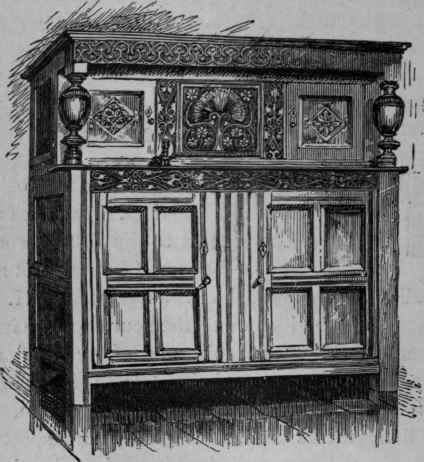
Fig. 2. - Seventeenth Century Cabinet, belonging to the Rev. H. R. Haweis.
Meantime increasing social wealth, security, and comfort were annually rendering strength in furniture less important, and effect was more generally sought. The odour of the Renascence had not quite faded, Under Louis XIV. and his successor in France the luxuries of Imperial Rome seemed more enviable as they were better understood; the passion for novelty and surprises inspired all that was best and worst in the fashions of the time; and the decadence of taste moved on through a few beautiful phases. The black oak with its splendid honest lights and shadows had long yielded to the rich marqueterie made gay with chased brass and ormolu, which was peculiarly French both in its artificiality and the cleverness of its delicate finish. Her Majesty the Queen possesses specimens of this work contemporary with Anne, but it was no more English than the Florentine mosaics which were made in the sixteenth century, and it ought to be called Louis XIV. What was English, perhaps the only fashion which may be correctly called after Queen Anne,1 was the new invention, grained paint.
There are many rooms and doorways of true Jacobean and Annean work in Gray's Inn Square and that district, which would be worth preserving in some more fashionable locality, and windows adorned with the wreaths and architectural ornaments of Renascence origin, giving on avenues of trees planted in lordly rows according to the good old English taste. The ornaments were grained over, whatever they were made of. Paper for wall-hangings was already in use, humbly emulating the designs of the old leather and silk which had long adorned richer walls, but its quality was not yet satisfactory enough to commend it to popular taste. Paper-hangings are essentially English - even Jacque-mart admits that. France received the manufacture from us, and presently added improvements; England may have derived it from Holland or Spain, where stamped paper-hangings are said to have been first made about 1555. Stencilling and whitewash were still extensively used, as they had been for centuries, whilst princes and the wealthier citizens moved to and fro against a background of Flemish or English tapestry, or silk, velvet, and gilt leather, in carved panels of oak, and overhung with pictures and mirrors.
The finer French 'Gobelin' tapestry, applied to walls, screens, and chairs of refined and easy form, was the rage in France, where luxury reached its height under Louis XV., and meek England followed France as closely as she dared.
1 Grained paint was known to the ancient Romans, but this unpleasing classic fashion appears not to have been popular in England until Queen Anne's time.
The rooms, therefore, which the wealthy inhabited during Anne's brief reign and for some time before and after, were by no means cold or bare in tone. They were brilliant, either with the superb colouring and gold of Spanish leather or Flemish looms, or with the sombre lustre of polished and carven wood. Pepys speaks of ' hanging the long chamber where the girl lies with the sad stuff that was in the best chamber, in order to the hanging that with tapestry,' only a few years before Queen Anne reigned, which proves that various stuffs were in use for that purpose; and Evelyn about the same time tells us of Lady Mordaunt's room at Ashstead 'hung with pintado full of figures great and small prettily representing sundry trades and occupations of the Indians, with their habits,' - of rooms ' parqetted with yew' which he 'liked well,' and of wainscots and chimney-pieces carved by Gibbons; of Persian carpets, of Mr. Bohun at Lee, who had Japan screens instead of wainscot (a little later Paris went mad after Japan lacquer, till Martin devised a mode of imitating it), and of the new French tapestry ' for design, tenderness of work and incomparable imitation of the best paintings, beyond anything I ever beheld.'
In such rooms, 'exceedingly glorious and pretty to look at,' the Queen Anne beauties moved and crackled about, in rich brocades, and buckram, and marvellous low bodices, and played at being Romans or rustics in equal magnificence.
Continue to:


My Books

