


Renascence Taste
Description
This section is from the book "The Art Of Decoration", by H. R. Haweis. Also available from Amazon: The Art Of Decoration.
Renascence Taste
The Renascence was a glorious branching forth of new thoughts, and new energy. The distinction between beauty and ugliness per se only then began to be thoroughly appreciated, and the admiration of physical beauty seemed to burst into life like a newly found faculty. But the Renascence had its seamy side.
In Mediaeval art the 'moral,' or subject was paramount, in Renascence art the impression on the eye was paramount, and ideas were subjugated to sensations, so that painting and sculpture were reduced - or raised - to the level of the sister-art, music, wherein, not ideas but emotions only, are conveyed and appealed to.
Art no longer sought to preach, to instruct, to elevate, in this or that department; she was no longer the spiritual guide, genial, homely, earnest, but a soft minister to pleasure and excitement. The artist himself was no longer a humble workman in an apron - he had become a gentleman. The sacred stories which still remained popular along with the pagan ones, were so chiefly because they were such capital ' subjects.' The dying or dead Christ was a magnificent chance for elaborate anatomical study and perspective; the Holy and pure Madonna, or Susannah, lent a first-rate excuse for exhibiting the fair rounded forms of a beautiful woman, and if in her new guise she did not look so very pure, she earned Phryne's own pardon - she was so handsome. For buyers who did not care to envelop their admiration for beauty in the odour of sanctity the boldest Pagan subjects were always ready. Venus and Cupid, at all ages and under all circumstances, nymphs pursued by Satyrs, Leda, Danae, even portraits of well known dames completely disrobed, such as Titian's 'Vanity,' or robed so as to increase the shock, came to be fashionable, and still remain for the instruction of the young, in the National Gallery and other museums.
The lower departments of art, such as furniture, jewellery, millinery (then under the sway of the best artists),1 mimicked the higher, of course, and every clock, cabinet, lute, chair, bedstead, helmet and earring bristled with similar pleasing images. There can never have been a time when the popular taste was so wholly sensuous since the day when Praxiteles first ventured to exhibit an un-draped female form and was forgiven\by public opinion. All this was completely different from Mediaeval naivete, behind which there was always a 'moral,' satirical or mournful, to be deciphered; and to my mind the Mediaeval mood was the noblest, despite all the superstition and simplicity swept away and scorned by Renascence unbelief. However, there are so many learned persons to dilate on the glorious history of this stupendous movement that I may be excused from lauding it further, and may point out moreover that the term Renascence art is a very wide one. Great as was much of it, and important as was the change which began here under Henry VIII., much also of the art of the new school was as bad as art can be. The architecture of the transition or Tudor time was often picturesque, but fantastic and ridiculous.
Habit could not part with the Gothic element, though it had fallen into discredit as the blossom of Popery, so it was jumbled with the classic in the oddest medley. Grecian porches were clapped on to Gothic facades, or a classic quadrangle was reached by a Gothic tower: galleries climbed above galleries, much like Arthur's fabled palace at Camelot.
1 For instance, Michael Angelo designed the costume of the Pope's Swiss Guard, and ugly enough it is, with its Renascence inconsistencies.
Skelton describes the quaint picturesque richness of Tudor erections,
Building royallie
Their mansions curiouslie
With turrets and with toures
With halles and with boures
Stretching to the starres;
With glasse windowes and barres:
Hanging about their walles
Clothes of gold and palles,
Arras of rich array
Fresh as flowres in May.
And I have already quoted the contemporary complaints against the novel splendour which came in fashion, in 'A Tudor Room.'
Sir Anthony Brown raised these strange and gorgeous piles in England when Henry emulated Francis I. in encouraging art in every branch, both by inviting foreign artists and employing native ones to decorate his splendid walls, his dinner-tables, wives, and horses with precious metals and sumptuous colours. Henry was probably a man of taste, for he could simultaneously admire the Gothic architecture of Sir Richard Lea, the Tudor mansions of his barons, and the foreign innovations of Holbein and John of Padua.
Inigo Jones himself had to compound with the conservative English tastes, and mix Gothic with his Greek for some time after he became eminent: and one cannot help wishing that the Gothic could have assimilated some of the new lights without dying in the process, so that England might have retained her own peculiar style of native art. But religious prejudice gave the coup de grace, and the classic exotic strengthened its roots all over England, at first full of vigour and beautiful, presently decaying through its own radical unfitness for our climate, and want of understanding on the part of artists who tried to improve upon the classics. The scientific and much-tried Wren was the last who reared fine classic structures in England. Nothing can be weaker, baser, more corrupt than the Henri Quatre architecture: and a great mass of the art applied to domestic purposes was worse than weak, in its determined subversion of purpose, and straining after false effects; it was ignobly grotesque. I have sketched a knife-case (1564) and a lamp-stand, from one of the South Kensington Handbooks, where the misuse of the fashionable anatomical knowledge in the attempt to be novel produces an effect on the mind as unpleasant as any 'Two-headed Nightingale.' And this was what the Renascence becran to do for domestic ornament.

Fig. 6. - Lamp-stand, Italian, sixteenth century: full of anatomical impossibilities.
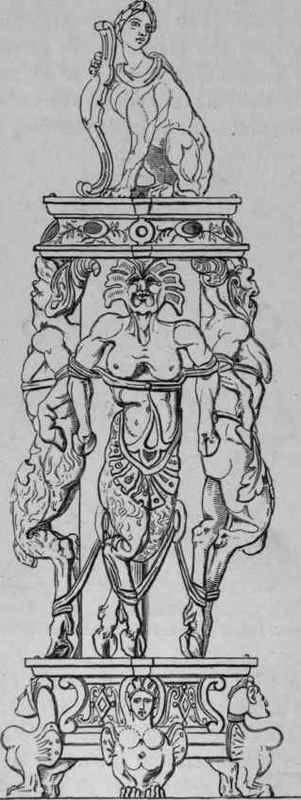
Fig. 7. - Knife case, dated 1564: an instance of the bathos of art.
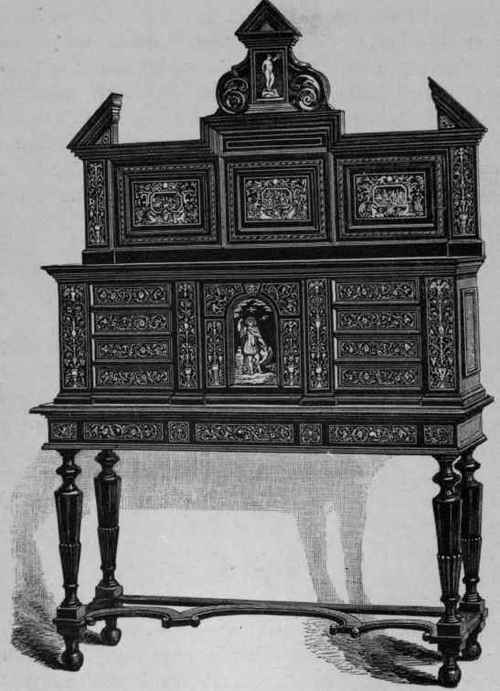
Fig. 8. - Sixteenth century cabinet: an instance of the worship of wreck.
Under this degraded class must be noted that singular tendency which we seem to trace, and which may be named
Continue to:


My Books

