


Enamels. Part 3
Description
This section is from the "Historic Ornament - Treatise On Decorative Art And Architectural Ornament" book, by James Ward. Also see Amazon: Historic Ornament - Treatise On Decorative Art And Architectural Ornament.
Enamels. Part 3
Fig. 94. Altar Tray and Chalice, Cloisonn*š Enamel; Sixth Century (?).
Fig. 95. Byzantine Reliquary, Cloisonn6 Enamel; Tenth Century.
Fig. 96. Crown of Charlemagne.
Fig. 97. Champlev*š Enamel of Geoffrey Plantagenet.
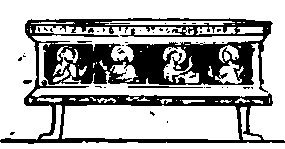
Fig. 98. Portable Altar; German, Thirteenth Century. (S. K. M).
The Italians did not make Champlev*š enamels; but they worked in the Cloisonn*š process from the eleventh to the fifteenth centuries, as we know from examples, and from the work, "Diversarum Artium Schedula," written by the learned monk Theophilus, in the twelfth century, wherein he describes very minutely the whole process of making Cloisonne enamels, according to the methods of the Tuscan enamellers of his time.
As regards the antiquity of the art of enamelling on metal, it is generally agreed by learned authorities in the matter that before the art was known at Constantinople or in the workshops of Greece, it was practised by the "barbarians" of Western Europe in the Gallo-Roman period. We apologize for quoting here the oft-repeated passage from Philostratus, the Greek who established himself at Rome in the early part of the third century at the request of the Empress Julia, wife of Septimus Severus. In his "Treatise upon Images "he says : "It is said that the barbarians living near the ocean pour colours upon heated brass, so that these adhere and become like stone, and preserve the design represented".
This passage proves at any rate in Greece and in Italy-enamelling on metal was an unknown art in the third century, the time in which this Greek writer lived, and sufficient examples exactly answering his description have been found in Gaul and in Britain, in Roman burial-places and in caves, all bearing evidences of belonging to this period. The Celtic objects in vitreous enamel are on bronze or copper, and prove that enamelling was an art carried on in the Roman Provinces of Gaul and Britain, which was unknown in Italy at that time.
The beautiful vessel at Fig. 101, found in a Roman sepulchre in the Bartlow Hills, in Essex, is a fine example of this early enamel. Other existing specimens of the Gallo-Roman period are in the Museum at Poitiers, in the Imperial Library, Paris, and in the Museums of London. From the Gallo-Roman period until the eleventh century most of the arts were at a low ebb, owing to the devastating wars and invasions that spread all over Europe; the art of enamelling had been almost lost, and had quite died out in France and Germany, but is likely to have still been practised in Ireland, where no doubt the art of the goldsmith and the enameller in conjunction had flourished less disturbed than in France or England. We have existing remains of pure Irish Celtic work that date from the ninth and probably earlier centuries, and are of unsurpassed workmanship. Chalices, books of the Gospels, croziers, reliquaries, brooches, jewellery, etc., more or less enamelled, were made in the ninth century, and some earlier. Ireland had a school of living art when in the ninth and tenth centuries the rest of Christendom was sitting wrapped in chaotic gloominess, idly awaiting the supposed end of the world, in A.D. 1000. As regards our present subject, we must notice as coming under the head of enamels that beautiful Irish relic known as the Ardagh Chalice. (Fig. 102.) The body of the cup is silver with about one-third or one-fourth of copper alloy. It is a wonderful mixture of metals, there being gold, silver, copper, bronze, brass, and lead; and an iron bolt secures the stem and bowl together. The ornaments are belts, and the handles, to which are fastened the beautifully designed and worked interlacings of Celtic ornament, of which each little panel is different; it is said that forty distinct varieties in the designs can be traced, consisting of interlaced bands of Celtic twistings, knots, and arabesques: each compartment of the principal belt of ornament is divided by a boss, or enamelled bead, of which there are twelve. The handles are composed of enamels and filigree work similar to the work of the belt, but different in design, with blue glass or paste bosses. The two larger circular ornaments on the sides are composed of gold filigree with a central enamelled boss. The four settings of these ornaments had two pieces of blue glass paste and two pieces of amber, which have fallen out.
The stem is composed of bronze metal gilt, and is richly chased with interlaced ornaments. The circular foot is ornamented with gold and bronze plaques alternating on the outer rim; the bronze divisions are enamelled.
The inside, or under the foot of the cup, is divided into a series of circular divisions around a central crystal, composed of amber and bronze, gold filigree, amber, bronze, and translucent green enamels respectively. In some of the enamels were embedded small, portions or grains of gold while the enamel was in fusion. There is a chiselled inscription on the plain surface of the bowl consisting of the names of the Apostles. The workmanship of this exquisite chalice is infinitely superior to the Byzantine work of the same period.
A detailed and exhaustive description of this chalice is given in Miss Stokes's "Early Christian Art in Ireland," from which our illustration is taken.
Going back to the ninth century, we have the ring of King Ethelwulf, bearing his name, which is of Saxon workmanship. It was found in Hampshire, and is made of gold and blue-black enamel. Another ring, that of Alfred the Great, was found at Athelney in Somersetshire, the place where Alfred retired to in 878. It is of gold, wrought in filigree and chased. The face is of rock crystal, and the design is in filigree fastened to the gold plate and enamelled in the Byzantine manner. Round the edge is the inscription (translated), "Alfred ordered me to be made".
Continue to:


My Books

