


Metal Work In Italy, Germany, France, And England. Part 2
Description
This section is from the "Historic Ornament - Treatise On Decorative Art And Architectural Ornament" book, by James Ward. Also see Amazon: Historic Ornament - Treatise On Decorative Art And Architectural Ornament.
Metal Work In Italy, Germany, France, And England. Part 2
Fig. 151. Golden Altar Front'; from BÆ'sle. Cluny Museum. Eleventh Century.
Fig. 152. Gloucester Candlestick; Twelfth Century.

Fig. 153. Seven-Branched Candlestick in Milan Cathedral.
Fig. 154. Lower Boss of the Milan Candlestick; Twelfth Century.
The Monastic Establishments
The Monastic Establishments were the schools and workshops of all the art produced in the Middle Ages, and not only splendid examples of metal work, but manuscript illuminations, wood and stone carving, and many other kinds of works were produced within their walls. After the beginning of the thirteenth century the arts were passing into the hands of the laymen, and artists were at the same time beginning to receive greater encouragement from the patronage of wealthy persons.
Almost every kind of article was now made in gold, silver, and bronze, such as cups, jugs, bowls, standing cups, mazer and wassail bowls, articles for the table, such as salt-cellars, ewers, basins, and nefs, etc.
The Nef
The Nef was a kind of table ornament or sweetmeat dish in the form of a fully-rigged ship, and was sometimes mounted on wheels: the modern *špergne corresponds to the nef. A mazer bowl was so called because it was made usually of maple wood - masere being the old word for maple.
These bowls have usually a silver or gold rim, and were often lined with silver, but the name is wrongly applied to bowls made entirely of metal, as it sometimes is. Fig. 157 is an illustration of a mazer bowl of the fifteenth century belonging to the Ironmongers' Company of London. Salt-cellars were also important table decorations. The salt was put on the table in such a position as to mark the dividing line between the guests of different rank. There is a salt in the form of a giant, a work of the fifteenth century, at All Souls' College, Oxford, and some other salts of this period and earlier were often made in form of hour-glasses (Fig. 158).
Very few specimens of household plate have come down to us from the thirteenth or fourteenth centuries, although we have many records of the great quantities of jewels and plate that belonged to the kings and feudal lords.
Spoons And Knives
Spoons And Knives were made and used at a very early period of the world's history, but forks do not seem to have come into general use until some time in the fourteenth century. Sacramental cups and chalices, and all kinds of drinking cups, were made at this time. The beautiful cup of Gothic design with translucent enamels, now in the Kensington Museum, is probably a work of the fourteenth century, and of Burgundian origin. (See Fig. 103).
Three Sacramental Chalices
Three Sacramental Chalices are illustrated at Fig. 159, and belonging to the fourteenth century, and two at Figs. 160 and 161, of the fifteenth century, all of which are Gothic in design; two also are given of the sixteenth century (Figs. 162 and 163), the latter being of Spanish origin designed in the style of the Renaissance, which is interesting as showing the development of the standing cup from the chalice, this example being in the transitional stage.
The difference between the Gothic and Renaissance cups is very marked, the foot of the former being either trefoil, or more often hexagonal in plan (Fig. 164), with the distinctive central knot or boss on the plain upright stem for grasping purposes, while the Renaissance cups are usually round in the plan of the foot, or sometimes octagonal, and have a horizontal character which is obtained by the use of mouldings cutting the cup into parts. (See Spanish chalice, Fig. 163).
This Upright Character Of The Gothic Cup
This Upright Character Of The Gothic Cup is well emphasized in the beautiful enamelled cup belonging to the corporation of King's Lynn (Fig. 166), and the horizontal features in the foot, stem, and bowl may be seen in the standing cup of Renaissance design in the Corpus Christi College, Cambridge (Fig. 165).
Fig. 155. Shrine or Reliquary, Copper Gilt; Twelfth Century.
Fig. 156. Censer; Twelfth Century.
Fig. 157. Mazer Bowl; 1450; Ironmongers' Hall.
Fig. 158. Hour-glass Salt, given 1493, at New College, Oxford.

Fig. 159. Gothic Chalices; Fourteenth Century.

Fig. 160. Chalice; Fifteenth Century.
Fig. 161. Chalice; Fifteenth Century.
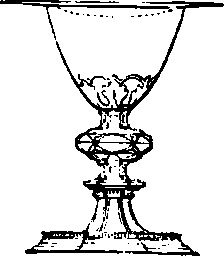
Fig. 162. German Chalice, with Paten; 1520.

Fig. 163. Spanish Chalice; 1549.
The Base Of The Gothic Cup
The Base Of The Gothic Cup splays outwards from the knot downwards, while the Renaissance base mouldings may be enclosed by a line of the opposite curvature, forming a dome of a semicircular section; and lastly the calyx of the bowl of the latter cups is always a richly ornamented feature, in opposition to the plain or almost plain bowl and calyx of the Gothic varieties. Many Gothic cups and hanaps show decided architectural constructions, as may be noticed in some of the illustrations, and some have quite a landscape treatment, as in the curious gilt metal hanap (Fig. 167), which is probably of Nuremberg manufacture.
Clocks
Clocks were also objects which received a pronounced architectural treatment. A favourite design was a church tower, or a fortified tower, embattled, and having a spreading base, in which were open archways.
The Goldsmiths Of Italy
The Goldsmiths Of Italy in the sixteenth century were painters and architects as well, and a decided architectural construction is clearly seen in most of the gold and silver-smithery of this period. The monstrance (Fig. 168) is a good illustration of this, and another is the pax (Fig. 169). The church altar furniture and silver plate of the period also partook of the prevailing architectural features.
Benvenuto Cellini
Benvenuto Cellini (1500-71) is the greatest name among the many great ones of the sixteenth century in the art of the goldsmith. Some of his work has already been noticed in the chapter on enamels. Cellini represents the art of the Italian goldsmith and enameller at its best period. He was famous for his designs in jewellery, in which he set precious stones in cartouche work combined with griffins, masks, and well-modelled little figures (Fig. 170). Many cups made in lapis-lazuli, sardonyx, and rock-crystal are attributed to him. He was also a successful worker in bronze, the best of his works in this metal being the statue group of Perseus and Medusa, and the colossal bas-relief of the Nymph of Fontainebleau, copies of which may be seen in Kensington Museum. A graphic and very in-teresting account of the casting of the Perseus group is given in his autobiography. A fine shield in damascene work by Cellini is in Windsor Castle. His smaller works in gold and jewellery probably exist in greater numbers than can be verified owing to the absence of his signature or other identifying marks. According to his own account, when besieged with the Pope, Clement VII., in the Castle of Angelo, by the Spanish, he unset the precious stones and jewellery, and melted down at the command of the Pope about two hundredweight of gold and silver crowns, tiaras, cups, and reliquaries of ancient workmanship in order to convert them into money and medals as required by the Pope. This gives us a good idea of how the fine treasures of the Middle Ages must have been destroyed under similar circumstances, and excites our wonder how any valuable piece of goldsmith's work has escaped the melting-pot, which was generally the sequel to the pillaging of conquering troops or the exigencies of war. Cellini's visit to France and his work in that country gave a great impulse to the style of the Renaissance, and his countryman, Primaticcio the sculptor, spread the style still further in France.
Continue to:


My Books

