


Furniture Arrangements Suggested By Use
Description
This section is from the book "The Practical Book Of Furnishing The Small House And Apartment", by Edward Stratton Holloway. Also available from Amazon: The Practical Book Of Furnishing The Small House & Apartment.
Furniture Arrangements Suggested By Use
But planning and arranging must not only be for correctness of effect but for comfort and convenience. So far are they from being at enmity that beauty is almost invariably willing to lend herself as a handmaid to true usefulness.
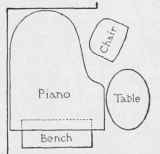
Diagram 3. An Arrangement Suggested by Use.
Take the corner of the room shown in this diagram as an instance. A medium-sized grand piano: by its side the elliptical table with its lamp, small ornaments, and attractive magazines. Not only is it the best place in this particular room for this table, but on it also stands a small electric lamp which may be lifted up and fastened upon the key-board of the piano. A comfortable chair is of course needed by the table and lamp, and an easy Hepplewhite fits comfortably into its nook. See how naturally then these objects group and how their curves supplement each other: it was use that dictated the arrangement, but use is found also to be beauty.
This is no less true of the fireside-arrangement already mentioned - a sofa projecting out into the room with its one end near the chimney-breast: on the opposite side a big arm or wing-chair and by it a table: a cricket by the hearth, a seating-stool or two disposed amiably about, between, where they are needed - an attractive alcove, is it not? for a congenial family about the fire on a blustery winter night, the lamp turned low, the flames hissing and crackling between the logs, wreaths of spark-lit smoke twisting, curling, drifting, always upward. Such is Home!
And have we not now made a beginning toward the arrangement of that ideal living-room, a bit difficult, perhaps, not because there is no central interest but because there are so many! Let us look at them. As on the winter night we unconsciously circle about the fireside, so in the sun-lit summer it is the double or triple window which holds our interest. If there is no built-in window-seat we may easily have a box made or put here a couch with plenty of comfortable pillows. If the window be but a single one an attractively covered box-seat may easily be fashioned, or a roomy chair placed nearby. But in these busy days dreaming by the fire or the open window is a luxury; there is work to do or intellectual knowledge to be gained. Would to Heaven that the men and women of to-day might realise the pleasure to be won through both instead of running off to the unconscionable "movies". Well, then, there should be a case of good books, constantly used; if possible a piano and excellent music; a table with a lamp affording a fine reading-light - not a befrilled floor abomination. There should be a handy desk at which to write letters or cast up the necessary accounts, so very necessary in these days of "la chere vie" - the dear life - as our French friends term it. If there are children "getting their lessons" their elders with book, embroidery, or sewing will not find the table so often kicked if they provide the "kiddies" with another one. And then there are friends and hospitality: a small gate-legged table that goes neatly against the wall when folded, or a pie-crust in the corner - either is admirable to bring out for light refreshments. A console cabinet will be found useful as a receptacle and may also be beautiful: so likewise may be the mirror above it, perhaps backed by an attractive hanging. Bring nature indoors - let us have growing plants and flowers when we may: simple pottery or porcelain vases in graceful line and charming colour hold them, or else clear glass through which the stems make a picture of varied green. Candlesticks by all means, with their glint of metal, holding their white cylinders of wax or colourful candles. Pictures, few but good and appropriate - or else better none at all.
Now let us try to arrange these objects according to use and convenience, but not forgetting balance of form and colour, and see if they do not fall naturally into place. A really small room would not accomodate all and some features might have to be abandoned - an easy chair might take the place of the sofa if necessary and the console be omitted: but the writer has found that a room 15x19 1/2 feet is sufficient for most of them, and in many small houses or apartments the living-room is this large. He has taken for experiment a perfectly plain rectangular example, of the usual conventional arrangement and with no attractive advantages beyond a fireplace and wide window. Let us follow the natural process for disposing of the furniture according to use and convenience: there is no built-in window seat, so a box is made, a valance put around it, and a squab-cushion made for the top, or an attractively covered box-couch with pillows is placed in the recess. The lid of such couches lifts and they are a great convenience for storage. The fireside arrangement has already been given. Besides these there are three large pieces of wall-furniture, each of considerable height - an upright piano, a book-case and the built-up effect of table, hanging and mirror. The desk is a wall-piece of medium size. One goes to the bookcase but to take out or replace a volume and a strong light is not continuously needed: it may therefore be placed on the wall next the fireplace. The reading of music requires light, and a sufficiency will reach the piano from the front window if the instrument is placed on the side-wall space to the right of the double window. The table with accessories will go at the left, and the desk against the dining-room wall will receive light from this double window. It should have a desk-lamp for night use. In the front of the room there is abundant space for a large table, an easy chair and a seating-stool. The light here will be excellent, owing to the front window.

Diagram 4. - Floor-plan of living-room, showing arrangement of furniture See Plate 2 for colour-scheme and furnishing.
The refreshment-table takes its position against the dining-room wall corresponding to the desk, but as these when of small size are light in weight it may be moved to any desired location when required. As the large chair at the fire-place has its back to the principal entrance to the room and as this is not inviting, an attractive screen partially hides this and may be unfolded to prevent draft from the door when necessary.
In order to make this exposition of furnishing complete and thoroughly helpful to the reader the author drew the floor-plan herewith given. But not resting satisfied even with this and wishing to show how this room might be made to appear, he has designed it, with its colour-scheme and furnishings, and the result will be seen in Plate 2. As will be shown by the text describing this furnishing in detail (Pages 147-9) everything in this room is of moderate cost.
This mental process of arrangement and the selection of furniture and fabrics should be of much aid in even widely varying circumstances. The principles involved are the same when handsome period furniture and expensive textiles are substituted for these simple furnishings.
Among the expedients suggested by use but adding attractiveness is the placing of a screen at the end of a couch, thus both increasing its coziness and retirement and obviating drafts from the open door. One fold is set against the end of the couch and the others back against the wall, and in the right-angled space so formed is placed an occasional-table with bowl of flowers. This is a very engaging combination, as the screen, if good, forms an attractive background.
An excellent grouping for the end of a living-room, especially if it be long and narrow, is a sofa or settee with a table placed in front of it and an easy chair or two disposed at convenient angles. These objects fill most attractively the end of such a room, which otherwise might present its difficulties. As is the case with the fireside-arrangement the articles themselves may be varied according to the general character of the room: the sofa may be large and luxurious and the table a long one of refectory character if the furnishings are of that type, or, if the remaining pieces are light and graceful, a Sheraton settee or Louis Seize canapé with a beautiful occasional-table will have much charm. The same grouping is equally convenient with simple furniture.
A couch at the foot of the bedstead in bed-chambers is likewise attractive and convenient. More unusual is a day-bed, as illustrated in Plate 113. A low chest in this position will be found useful for the storage of bed-coverings and also as a seat, while if good in design it adds much to the appearance of the room. Even a comparatively plain box may be used with a handsome covering.
Some suggestions for the dining-room will be found in other sections, where they more naturally occur.
Continue to:


My Books

