


II. Chests. Part 2
Description
This section is from the book "Colonial Furniture In America", by Luke Vincent Lockwood. Also available from Amazon: Colonial Furniture In America.
II. Chests. Part 2
Figure 8 shows a very beautiful carved chest in the Bolles Collection, the property of the Metropolitan Museum of Art. The top rail is carved in a guil-loche design, the outer stiles in laurelling, and the lower rail in an open chain of rectangles and circles and carved rosettes. The stile separating the panels is carved in a palm-leaf design. The design of the two outer panels is that of a stem foliated at the top, and at the centre of the stem are two flowers resembling tulips and below are drooping leaves. This pattern is one of the most popular found on American chests, and we will point out its variations as they occur. The centre panel is composed of scrolls and leaves. Carved brackets finish the inside of the lower rail.

Figure 8. Oak Chest, third quarter seventeenth century.
Figure 9 shows another well-carved chest in the same collection. The top rail and four stiles are carved in a palmated scroll design and the lower rail is carved in foliated scrolls. The outer panels, it will be seen, are carved in the same design as that shown in the preceding figure, but the foliage is more realistic while the tulips are less so. The background is filled in with colour, and the lozenge-shaped centre panel is decorated in a design suggesting the flower in the outer panels, and foliations fill in the spandrels.

Figure 9. Oak Chest, third quarter seventeenth century.
Another early pattern of chest often seen in this country is shown in Figure 10. The panels, which are four in number, are decorated in lozenge tracings in scratch carving. The top rail is in lunette design and the edges of the stiles are nicked. The tradition which attaches to this chest is that its owner, Lady Anne Milling-ton, a daughter of Lord Millington, came to this country in pursuit of her lover, a British army officer. Failing to find him, she taught school at Greenwich, Connecticut, and married Lieutenant Gershom Lockwood. The chest is said to have been sent to her by her parents in 1660, filled with "half a bushel of guineas and many fine silk dresses." The chest now has a pine top which is not the original. It is in the possession of Professor H. B. Ferris, of New Haven, Connecticut, a lineal descendant of Gershom Lockwood and Lady Anne Millington, as is also the writer.
"A carved chest £1," at Plymouth in 1657, is one of the few references to carving found in the inventories; but as description of any kind is generally lacking, carved chetti were probably by no means as scarce as these records would make it appeal.
Figure 11 shows a chest belonging to Mr. II. W. Erving, of Hartford. Con-necticut.The top rail is carved in a lunette design, while the outer stiles,as well as the lower rail, are carved in scratch carving in waving lines with a crude suggestion of foliation. The stiles separating the panels arc carved in a design of shuttle-shaped ovals, the points set at an angle. On the panels is a guilloche design of a large circle and four small ones set cruciform. The ends are carved in the same designs is the front, which is unusual in American chests.

Figure 10. Oak Chest, third quarter seventeenth century.
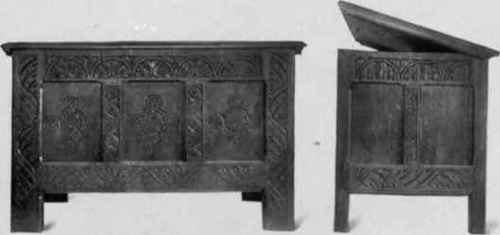
Figure 11. Oak Chest, third quarter seventeenth century.
Figure 12 shows a simple chest with no carving, except on the panels, which are carved in an excellent palmated scroll design. The chest is in the Bolles Collection, the property of the Metropolitan Museum of Art.

Figure 12. Oak Chest, third quarter seventeenth century.

Figure 13. Oak Chest, third quarter seventeenth century.
Figure 13 shows another oak chest in the same collection. The top rail is carved in a foliated scroll design, and each of the three panels in the same scrolls set about a rectangular centre.
Figure 14 shows chest of very different order from any met with among the English settlers. This chest is undoubtedly Dutch, and was Found by the writer in New York State. The panels show the arching of the English chest shown in Figure 2, hut the decoration is inlay or marquetry of a crude kind. Church scenes are on the three front panels; on one end the panel is decorated with plain blocking in alternate light and dark wood, the blocks about one and one-half inches square; the other end has a church, showing side view and steeple, the windows being cut in relief. The stiles are inlaid with three stripes of dark wood, and the capitals are of the same dark wood. The top is panelled with heavy mouldings and decorated with two large inlaid stars. The dentilled cornice which appears beneath the moulding on the cover is about the only suggestion of English chests. It has a large spring lock, and above the lock on the inside appears the inscription "I. N. R. I.," suggesting at once that the chest was made for church use; but the lettering is so small and in so inconspicuous a place, and the chest throughout so crude in design, that we are inclined to believe that the pious inscription was placed above the lock to secure it against thieves. The small panels at the right and left of the front have inlaid the initials "L. W." and the date "1616." The W has at some time been substituted, as the panel plainly shows, but not very recently, as this, as well as the L, is badly worm-eaten. The dark wood of the marquetry is walnut, but the mouldings at the bottom and on the top are soft wood, evidently pine; the light wood is a foreign pine. The chest when found was in a most dilapidated condition, worm-eaten throughout; the parts, however, are practically all original, except the feet, which arc new.

Figure 14. Dutch Marquetry Chest, 1616.
Continue to:


My Books

