


Early Oak Chests. Part 4
Description
This section is from the book "English Furniture", by Frederick S. Robinson. Also available from Amazon: English Furniture.
Early Oak Chests. Part 4
1 See note in List of Plates.
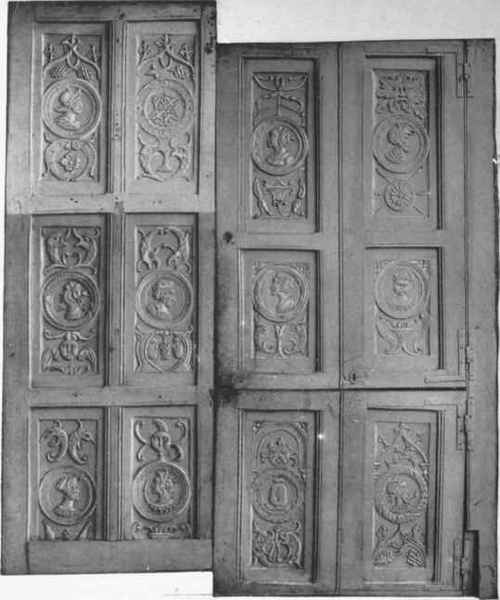
Plate XIV. Panelling From A House At Waltham Abbey Early 16th Century
XIV. Panelling from a house at Waltham Abbey. Early sixteenth century. V. & A. M.

Plate XXV. Coffer First Half Of 16th Century
xxv. Coffer, oak. First half of sixteenth century. The words 'coffer' and ' chest' may be regarded as synonymous, but 'chest' is preferable for anything but a really ' strong box.' V. & A. M.
To return to the Gothic chest, the architectural buttress, which in the Perpendicular period reached such striking developments, is found upon some few chests still remaining. The best example is, perhaps, that of Huttoft Church, Lincolnshire, which is figured in Parker's Glossary of Architecture. It has six buttresses of two stories each on the front, applied, as is the tracery of the arches between, to the planks of the chest. Though fairly elaborate with leafage and crockets, it has no particular fineness or beauty of line and curve. Originally it stood upon short feet, the outsides of which were columnar in shape, but they have disappeared. A worse fate has befallen the other buttressed chest which Parker figures. It was once at Guestling Church, Sussex, and was of the fifteenth century flamboyant or Flanders type. Mr. Fred Roe (Ancient Coffers and Cupboards, p. 75) informs us that only a single panel of it remained more than thirty-seven years ago. Engravings of it are to be found in various books besides Parker's. There is at Faversham Church, Kent, a very fine chest with a double arcading of nine arches with buttresses between.
This, Mr. Roe says, is 'the earliest example of a buttressed coffer existing in England,' whilst one of' absolutely identical design' is in Rainham Church, Kent. The Huttoft chest is later in date than these and has panels, and the doubtful peculiarity of its tracery being applied instead of being cut out of the solid.
Hitherto all the chests mentioned, with one exception, have been purely ecclesiastical in design, but there remains a small class of chests in which secular motives and figure-carving take the place of the arcades and tracery of church architecture. On these, as on some chests of the third class, are to be found remains of painting which must originally have made them as gorgeous as those of Italy. York Minster is the home of one of these scarce relics, of which the main panel of the front chiefly represents St. George slaying the dragon. The carving is very bold and free and in high relief (Plate VI.). It may be compared with a panel in the Victoria and Albert Museum, also reproduced (Plate VII.), which is undoubtedly by the same carver and displays the same subject with slight differences. From the evidence of the shape of St. George's bassinet, Mr. Fred Roe assigns this panel, which was doubtless part of a once-existing chest, to the reign of Richard II. He discusses very fully the likelihood of these chests and the other remaining ones of the same kind at Harty Church, Isle of Sheppey, Southwold Church, Suffolk, and another in the Victoria and Albert Museum said to be French, being really English work.

Plate VI. Chest, York Minster
VI.Chest, oak. One of the scarce type of so-called 'Tilting Chests.' Subject, the same as Plate VII., but reversed. York Minster.
Dimensions: Height 36½, Length 74½, Depth from front to back 30 inches. By kind permission of the Dean.

Plate VII. Oak Panel, Front Of A Chest, Carved With A Representation Of The Story Of St. George And The Dragon Specimens Of The S Curve
vii. Oak panel, front of a chest, carved with a representation of the story of St. George and the Dragon. V. & A. M.
As they form such a small class we need not longer delay over them here, except to state that the crow's step gable of the architecture of the fortified town in the Museum panel is one of the features which render the English nationality doubtful. So spirited is the carving, so great an advance is it upon the strictly architectural chests which we have been considering, that there is every temptation to claim it for our own.
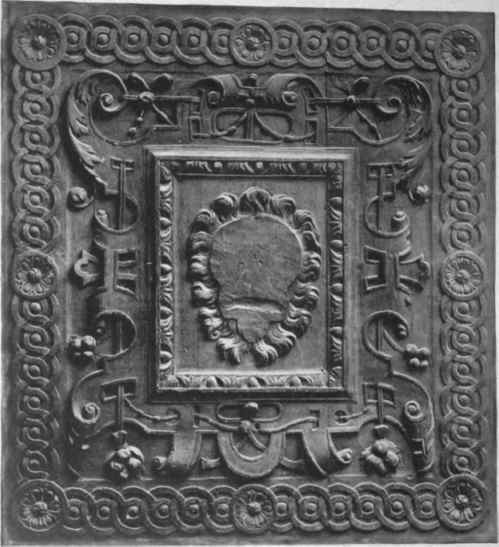
Plate XII. Oak Panel Late 16th Century Guilloche Bordering And Cartouche Lion's Face Missing
xii. Oak panel. Late sixteenth century. Guilloche bordering, and 'cartouche'; lion's face missing. The 'cartouche' lies between the guilloche and the centre rectangle. The carving inside the rectangle is the made of the missing lion mask. The property of the author.
Continue to:


My Books

