


Sculptural Art In The East
Description
This section is from the book "A History Of Furniture", by Albert Jacquemart. Also available from Amazon: A History Of Furniture.
This section is from the "" book, by .
Sculptural Art In The East
It was long questioned whether there has ever existed sculptural art in the East, and whether India, China, and Japan could send us anything beyond the grotesque and hideous figures of their monstrous idols. This doubt can no longer exist. The works that have now been collected by connoisseurs show how fully entitled are the conceptions of the East to rank with the highest manifestations of intelligence. There is even for the philosopher a very singular fact to be noted. It is a striking analogy existing between works of art, wherever produced, in corresponding stages of intellectual development. We can appeal to certain bronze statuettes representing the severe figure of an Indian sage in contemplation, which may be compared with the primitive conceptions of the Italian artists of the fifteenth century; or certain Japanese works that look copied from the graceful figures over the entrance doors of our Gothic cathedrals; or else certain formidable demons of the Chinese Tartars, that one might almost fancy had come down from the gurgoyles of the same cathedrals.
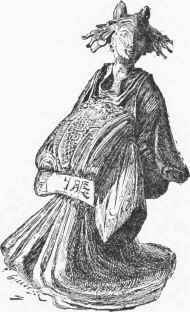
Female figure ; Japanese bronze.
From the technical point of view, nothing is more curious than the Oriental works. Huge figures cast in several pieces are put together by ingenious processes ensuring their solidity, while there are "cires perdues" modelled with a perfection that has never been surpassed, some chased with a finish worthy of the goldsmith, and which can only have been executed with instruments specially made for hollowing out the bronze and to polish and cut into the most secret folds of the draperies.
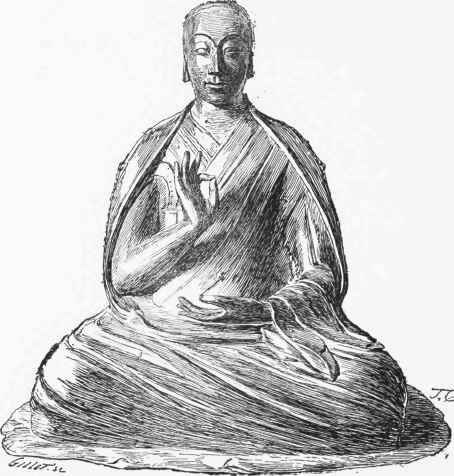
Sage in contemplation ; old Indian bronze. (M. J. Jacquemart's Collection.).
In this style India above all supplies the mast marvellous specimens, while for the cire perdue Japan has an evident superiority over China.
Assuredly the elegant interiors of the houses, those especially ornamented with large porcelain vases, jardinieres with flowers and the "fong-hoang," screens either in ceramics or else adorned with hard stones carved, cannot but be improved by setting up in the angles, these severe buddhas of fine patina, or sages in a contemplative attitude pondering over eternal truths.
As for the statuettes, their place is everywhere. It is a mere question of judicious selection, their elegant outlines and the daring beauty of their draperies enabling them to look to advantage, no matter what the surroundings. Nor is there any occasion to add that, in a tastefully furnished apartment, room may also be found for those gigantic symbolical birds, lifelike cranes fashioned as perfume-burners or candelabra, well suited to adorn a hall, or enliven a conservatory, rivalling, as they do, the rarest plants in elegance and refinement, or else to light up an ante-chamber protected by the threatening attitude of the dogs of Fo. Here also may be disposed the many-storied pagodas, their roofs ornamented with bells, and sheltering the divinities of the vaulted firmament. They will look well by the side of the huge tripods, or perfume-burners, whose feet are formed of statuettes or elephants' heads, with pierced covers surmounted by the imperial dragon or animals of happy omen.
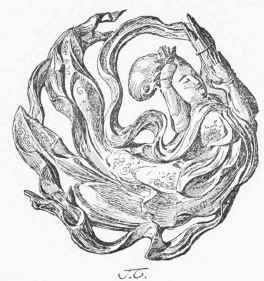
Female figure playing on an instrument; Japanese bronze with gold patina.
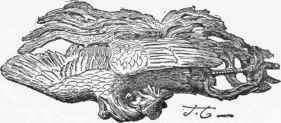
The Fong-hoang; Japanese bronze.
Continue to:


My Books

