


French Furniture. Part 7
Description
This section is from the book "The Old Furniture Book", by Hannah Hudson Moore. Also available from Amazon: The Old Furniture Book.
French Furniture. Part 7
The new conditions in France wrought changes in every detail of life. Simplicity, so called, was becoming the watchword, and once more antique models were sought for forms and decorations. Under the Empire the style was much less graceful, the lines coarser, and the elaboration of ornament heavy. Could anything be less pleasing than Josephine's bed at Fontainebleau, shown in Figure 80? It is one of the few unsightly things in that beautiful palace, where are now gathered so many works of art. The bedstead is covered with heavy chiselled ornaments in brass, and surmounted by a canopy held on pillars. This canopy is partly of carved wood and partly of embroidered satin. There are strings of gold beads hanging from this satin, and in addition heavy satin curtains very richly embroidered. These are edged with a long and clumsy fringe. The whole room is in keeping with the bed, for the floor is covered with a carpet bearing the imperial insignia all over it, and the hangings on the walls have countless spots in lieu of a pattern.

Figure 80. BED OF JOSEPHINE AT FONTAINEBLEAU.
It was at Fontainebleau that the sentence of divorce was passed on Josephine, and it seems possible that the sleepless nights which the poor lady endured must have been rendered more miserable by the unlovely character of her surroundings.
It is with pleasure that one turns to Figure 81, showing the bed of the great Emperor himself, at Grand Trianon, Versailles. It is a good example of the best Empire work, and is mahogany ornamented with ormolu mounts in classic style.

Figure 81. BED OF NAPOLEON AT GRAND TRIANON.
It was now the fashion to decry the furniture or costumes which had prevailed during the latter half of the eighteenth century, and to seek the Athenian models for gowns and furniture. Nor were these models used in their simple shapes, but transformed into quite other guise by the touch of French hands. Marquetry was no longer considered good taste, and David the painter was largely responsible for much of the theatrical effect which was noted both in costume and household belongings. After the fall of the monarchy, sales had been held, and what had not been destroyed had been sold. It was now necessary to fill again the palaces that had been denuded, and Percier, the architect, and Joseph Desmalter, the cabinet-maker, were the men chosen to do it. Desmalter is responsible for the use of mahogany commodes embellished with bronze and gilt like those which flank the bed in Figure 81. After the expedition to Egypt, Sphynx figures were introduced in bronze or brass to uphold tables and as arms for chairs.
These, however, did not become popular, and soon were replaced by classic heads.

Figure 82. ROOM AT FONTAINEBLEAU, WITH HISTORIC TABLE.
In Figure 82 is shown a room in Fontainebleau furnished in Empire style. The imperial N may be seen on the corners of the console tables and on the commode. The walls are covered with damask woven in geometric forms, and the rooms once so light and brilliant with their dainty arabesques and flowers, Cupids and birds on the ceilings, are now dark and severe. The splendid chandelier of Venetian glass is the sole reminder of a previous reign. The only piece of furniture in the room which is absolutely plain is the small mahogany table in the foreground. Upon this Napolen signed his abdication. In one of the rooms adjoining the leave-taking between Josephine and Napoleon occurred, after which he went to St. Cloud and she to Malmaison.
The commode shows as well as anything the marked change which took place in the styles under the Empire. The graceful curves of front and sides are gone; the feet are stumpy, and so short that the pleasing proportion between the parts is quite lost. The constant repetition of the laurel-wreath on chairs, walls, mantelpieces and furniture is very monotonous, and we miss the graceful curves of the acanthus and celery leaves.
In Figure 83 is a mahogany reading and writing desk combined. The brass ornaments are beautifully-chiselled, and, though some are lost, enough remain to show what a splendid piece of furniture it once was. They partake, in their delicacy, of the metal work of the previous century, particularly the escutcheons and the groups of flowers and musical instruments which are on the tops of the side pillars. The desk top lifts up, and inside there are pigeon-holes and drawers finished in satin-wood. The hole in the rail above the doors is not a key-hole, but in it fits a handle by which the whole upper part of the desk is raised on an iron rod so as to suit the height of whoever uses it. This piece is at the Museum of the Cooper Institute. The rage for furniture in Empire style was not confined to France alone, but crossed the channel to England, where it became even less attractive, and was also used by our own cabinetmakers, as has been shown in previous chapters.
The changes in the styles of French furniture, like those which took place in England in the same century (the eighteenth), were not any more definitely marked. One period overlapped another, certain characteristics were retained and put to new uses, so that a perfect style was arrived at only after years of growth.
With the name of Louis XIV. is associated the furniture of Boulle, with its wealth of wonderful inlay. The metal mount in its most correct and elegant form marks the period of Louis XV. The reign of Louis XVL and Marie Antoinette shows the change from the graceful curves of leg and construction lines to straight lines and less generous proportions, while the use of the metal mount is brought to the greatest extreme. The beauty of form taken from leaf and shell, wrought in metal and placed on the lines of fine construction which had marked the epoch of Louis XV., ran wild under the workers in the next era, and the fancy for overlaying with costly ornament blinded the eyes to the poor shapes employed, which were inspired by a search among classic forms. Even the severest form may become vulgar when overloaded with ornament, and with the reign of Louis XV. passed the production of some of the finest furniture ever made. What was poor under Louis XVI. became poorer yet under the Napoleonic era, and the men employed, instead of drawing from the choice models which still remained, still farther debased what in previous times had risen to the dignity of high art.
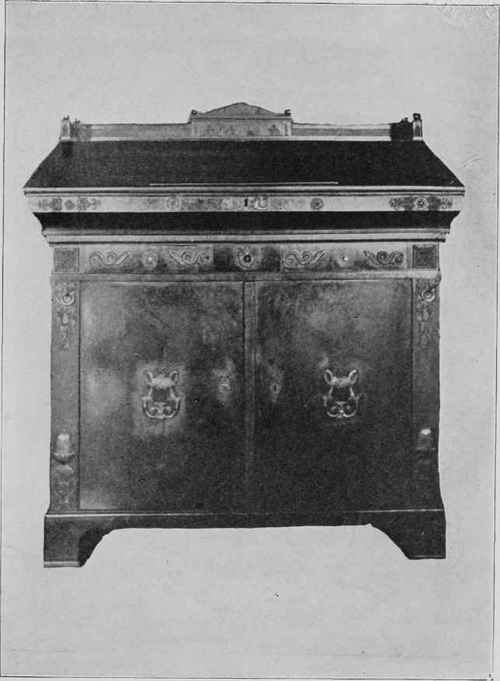
Figure 83. EMPIRE READING AND WRITING DESK.
Continue to:


My Books

