


Old Oak, Old Leather, Turkey Work, Etc. Part 7
Description
This section is from the book "The Old Furniture Book", by Hannah Hudson Moore. Also available from Amazon: The Old Furniture Book.
Old Oak, Old Leather, Turkey Work, Etc. Part 7
Another style of leather chair is shown in Figure 7, and its solidity is a great contrast to the Spanish chair previously shown. The woodwork is turned, and the heavy underbracing shaped, while the second bracing is a feature peculiar to this chair itself. The date of this piece is probably about 1650, or a little later, - about the same date as similar turned pieces which are covered with Turkey work. The leather on the seat is so old and worn that it seems as if it had never been renewed, while the back is much fresher and looks comparatively new. The seat of this chair is so high from the floor that a footstool was a necessity, and in the old inventories the item of "low stools," or "foot-banks "appears with some frequency. This chair is of about the same period as the Spanish leather chairs. Many leather chairs are found in the United States, both North and South, and are probably of English make. Some inventories mention them as "old," as early as 1667, and many were in use in different parts of the country.
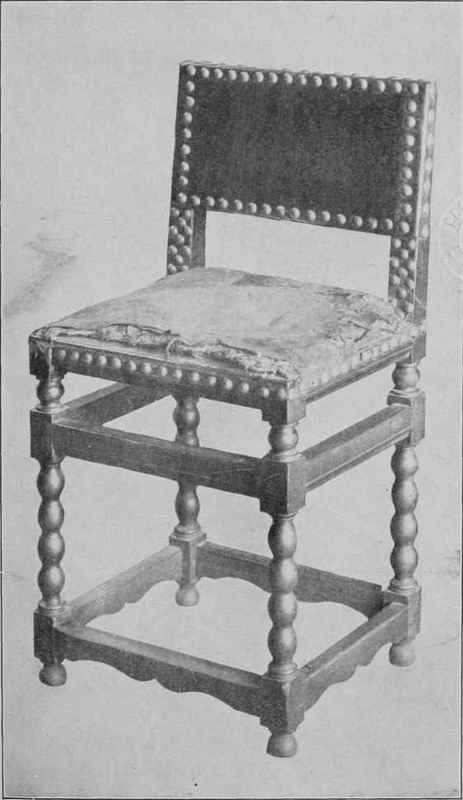
Figure 7. TURNED CHAIR WITH LEATHER COVER.
But while most of our early New England colonists were grappling with the serious business of life, almost content if they could scrape together enough to eat and to wear, and a substantial roof to cover them, in England life was taking a more ornamental aspect. Charles II., indolent and fond of luxury, came to the throne in 1660. Two years later he married Catherine of Braganza, a Portuguese princess, and both of them introduced a more elegant style of living; his French and her Spanish training leading them to require more comforts than had hitherto been known in England.
Among other things which were exported from Holland was cane furniture of a superior quality. It became very much the fashion, and was in Spanish or Flemish styles, both of which were copied or adapted by English cabinet-makers. Some of this furniture found its way to America, and there are pieces to be found showing all three styles, Flemish, Spanish, and English adaptation. In Figure 8 is shown an example of the English treatment of the Spanish style, at least as to foot; while the flat underbrace is English, the curved back and bandy leg are quite Dutch. The carving on the top is very beautiful, and the knees of the front legs carved, not with the usual shell, but with heads, and below these an oval with moulding. This chair is in the South Kensington Museum, London, and dates from about 1680. The wood is walnut, and the scrolls and foliage on the back stand out in high relief; the seat, originally as now, is covered with a rich brocade, with fine brass nails and a fringe.
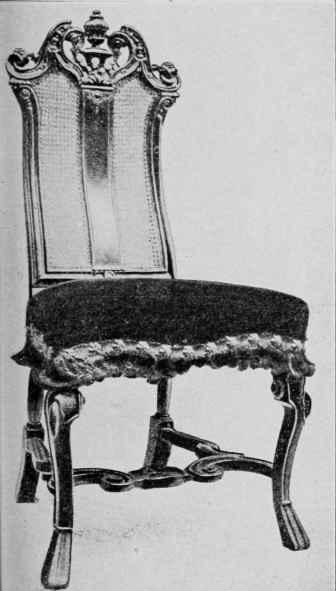
Figure 8. ENGLISH CHAIR. C. 1680.

Figure 9. CANE CHAIR, FLEMISH STYLE.
The second chair is one of about the same period, of very beautifully carved oak, and not restored. The arms are missing, but show the places where they originally were. It has lost its feet, but the exquisite carving on the underbrace and top is still quite intact and quite Italian in style. This chair is at the Waring Galleries, London.
A very splendid example of the Flemish treatment of the same style is shown in Figure 9, the oak woodwork being carved and turned, and the foot turning out in true Flemish style. The date of the chairs shown in both Figures 8 and 9 is prior to 1700.
The wealthy people of Charles' II.'s time all, indulged in these chairs. Before that period stools had been in general use, and only the master, mistress, or guest of honour occupied the few chairs possessed in a household.
In New England centres like Salem, Boston, or New Haven, even before the time of Charles II., there was in some of the houses comfort as we understand it. Mr. George Lamberton, of the New Haven Colony, sailed in 1646 to England upon business in the "Great Ship." She was never heard from again, and her loss crippled the little colony almost beyond belief. Mr. Lamberton's inventory shows a variety of items. He had as many as eighty napkins; bedding and table, chimney and board cloths in proportion; feather and down beds with their accompanying hangings. These with more than a dozen cushions to make soft the stiff chairs and settles, silver plate, four chests, ten boxes and trunks, eleven chairs, five stools, and three tables, both round and square, made up comfortable furnishings for a house with probably not more than four rooms. The colonists were not only "plain people," but there were those who came, shortly after the first settlement, who brought with them the household goods and clothes to which they had been accustomed. The "Journal of the Pilgrims at Plymouth ' tells not only of the stress of living and the struggle with Indians and forest creatures.
There was time to reprehend the frivolities of women's wear, and the pastor's wife was the chief offender in the matter of over-gay apparel. She was a young widow when Mr. Johnson married her, and brought goodly estate and personal belongings to her second husband. She continued to wear the clothes she had brought with her, and the chief exceptions were taken to the cork-soled shoes she wore, and the whalebone in the bodice and sleeves of her gown. Both the pastor and his wife seem to have been more than reasonable, since they were willing to reform the cut of their garments as far as they could "without spoiling of them."

Fig. 10. TURNED AND CARVED ARM CHAIR.
While the general habit of the Puritans was to keep their houses and apparel extremely plain, yet here and there among them bits of comfort and elegance would crop out. Among the stiff and straight-backed chairs, one with stuffing would be found, while in the more luxurious and easy-going South they were not so rare. The covering probably was " sett work or Turkey work;"' but then, too, brocade ones were found, and such a chair as is shown in Figure 10 would be an ornament in any home. It is a fine example of walnut-wood, turned and carved with bannister back and stuffed seat. The covering has been restored, but is of a pattern which was of the period. The out-turned Flemish foot is more ball-like in shape than is often seen, but it has the bowed knees which are so familiar.
Yet, if the chairs were none too comfortable, there were few families in any of the settlements that did not own at least one feather bed. If not feathers, then "flock beds " were used, that is chopped rags, or feathers and flock mixed, or, as a last resort, the down from the brown soft, cat-tails which grew plentifully in every marsh was utilized instead of more costly material.
Continue to:


My Books

