


Lesson XXVIII. Getting Out Stock
Description
This section is from the "Elementary Woodwork" book, by Frank Henry Selden. Also available from Amazon: Elementary Woodwork for Use in Manual Training Classes.
Lesson XXVIII. Getting Out Stock
Where there are no power saws it will be necessary to get out stock by hand. This will require two sawhorses, a handsaw and a ripsaw. The handsaw should be about 26 inches long and have about 8 points to the inch. The ripsaw should be about 28 in-ches long and have about 6 points to the inch.
The gen-eral princi-ples involved in getting
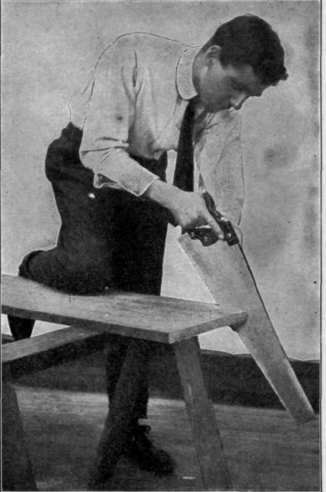
Fig. 94. Sawing with a Ripsaw.
out stock with these large tools are much the same as in working with smaller tools on the bench. Always take such a position as will allow of seeing a right angle at the side of the saw. Avoid a position which will cause you to look directly down upon or over the saw. The general positions are shown in Figs. 03, 94, and 95.
For making lines on rough lumber use a carpenter's square (Fig. 197) and one or two straight edges. One straight edge should be about 4 feet long, 3 inches wide, and 1/2 inch thick. Another straight edge 8 feet long, 4 inches wide, and | of an inch thick will be required
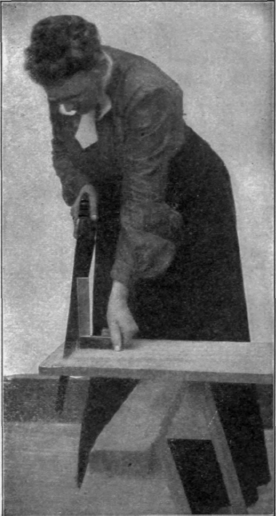
Fig. 95. Sawing with a Try-Square at the Side of the Saw.
where many long pieces are worked. For drawing the lines use a carpenter's pencil.
Calculate carefully all the dimensions, including all the allowances for working, and then draw the
lines carefully and saw to the lines. Each piece of rough lumber should be examined carefully before laying out, and the lines made with proper regard for grain, knots, sap, worm holes, etc. Often a small knot, when it can not be cut out, may be placed well away from the sides or ends where it will do little or no harm. Twisting and bending while working are often the result of poor judgment in cutting out the stock. A constant watch for these points will save much time and material.
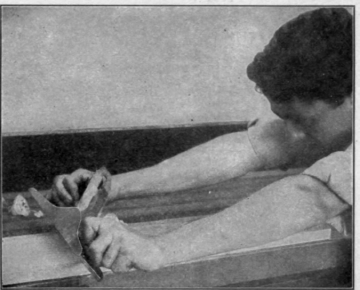
Fig. 96. A Plane Used as a Straight Edge.
Probably the most common error in getting out stock is to work all of a board or plank into one sort of stock, when by using a part for one exercise and leaving the remainder for a different exercise would give better results and save much extra labor and material. In dressing wide stock the plane may be used as a straight edge, as shown in Fig. 96.
Continue to:


My Books

