


Hatch Covers And Miscellaneous
Description
This section is from the "The Elements Of Wood Ship Construction" book, by W. H. Curtis. Also see Amazon: The Elements Of Wood Ship Construction.
Hatch Covers And Miscellaneous
Hatch covers are generally built up of two planks edge bolted together as shown in Fig. 147. The total width of the cover depends upon the length of the hatch and the number of covers to be fitted, but it should not exceed 24 inches. Narrower widths are even better. Handholds are fitted at the two opposite corners of the cover. An enlarged detail of one style of handhold is shown in Fig. 148. No matter what style of handhold may be fitted it must in no case project above the surface of the hatch cover. The opening underneath the bar should be large enough to admit all of the fingers of an ordinary man's hand.
In addition, the hatch covers are numbered, generally with roman numerals cut in with a chisel, beginning with number one at the forward end of the hatch on each side. Since there will be two covers numbered one, and two numbered two, etc., they must in addition to the numbers have the letter P or the letter S cut on them, according as they belong on the port or starboard side of the hatch.
Weather deck hatches must be fitted with canvas tarpaulins to make them watertight. There are two general methods of fastening these tarpaulins in place which are shown in Figs. 149 and 150. In Fig. 149 the fastening consists of a line of cleats, usually cast steel, spaced from 18 to 24 inches apart around the hatch, and hatch battens of flat iron bars under which the tarpaulin is laid, the battens being secured with hardwood wedges driven in the jaws of the cleats as shown. Battens of hardwood may be used in place of the flat iron bar. In Fig. 150 a line of heavy staples, made usually of ⅝ inch diameter stock is set around the coamings at about the same spacing as would be used for cleats. A wood hatch batten is used on each side and end of the hatch, these battens being of hardwood and slotted to slip over the staples. The tarpaulin has grom-mets or eyes worked in it so that it also may be slipped over the staples. The wedges are half round in section and are driven through the opening of the staple.
Practice on large steamers seems to favor the cleat and iron or hardwood batten fastening as shown in Fig. 149. On small Pacific Coast steamers the staple and hardwood batten arrangement is quite generally used.
In addition to this fastening for the tarpaulins it is quite common to fit either two heavy iron straps or two wood beams over the tarpaulins to keep both the covers and tarpaulins down when the ship is pitching heavily as in a storm. These straps or beams extend fore and aft for the full length of the hatch, one being fitted on each side in line with the centers of the covers. They are securely fastened at the ends with bolts, fitted with handled nuts, the bolts being so arranged or hinged that they will drop out of the way when the hatches are open.
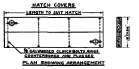
Figure 147. Hatch Details.
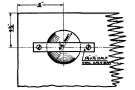
Figure 148. Enlarged Detail of Cornet Showing Proportions of Hand Hold.
Hatch Cleats And Staples.
Figure 149.
Figure 150.
Continue to:


My Books

