


Chapter II. Glossary
Description
This section is from the "The Elements Of Wood Ship Construction" book, by W. H. Curtis. Also see Amazon: The Elements Of Wood Ship Construction.
Chapter II. Glossary
Bevel
A term used to indicate that one side of a timber is not square with another side. Bevels in ship work are referred to as "standing" or "under." See Fig. 72. Bevels are indicated from the molding, or laying out face of the timber, and from this face a standing bevel will be outsquare, and an underbevel insquare.
Bilge
The sharp turn of the frame between the floor and the straight side. A term used in referring to details located in the vicinity of the bilge, as "bilge ceiling," "bilge shores," "bilge plank," etc.
Bilge Water
Water inside the hull of a Ship gained through leakage.
Cant
A half frame which has been swung out of square with the center line of the ship. Forward cants would be swung in a forward direction, and after cants would be swung aft. To cant means to swing, or lean.
Deadrise
The slope of the under part of the floor on the midship frame, which is straight, that is, that part of the floor between the keel and the beginning of the turn of the bilge. Deadrise may be stated in terms of inches to the foot, or it may be given as so many inches in the half breadth of the ship. For instance, in a vessel having a beam of 44
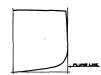
Figure 69. Section With Tumble.

Figure 70. Section with Flare.
Tumble And Flare.
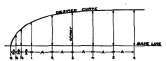
Figure 71. Figure 72. Offsets And Half Breadths.
Various Styles Of Metal Fasting.

Figure 73. Standard Square boat Spike.

Figure 74. Standard Round Boat Spike.

Figure 75. Plain Drift Bolt.

Figure 76. Headed Drift Bolt.

Figure 77. Plain Button Head Bolt.

Figure 78. Swelled Neck Button Head Bolt.

Figure 79. Carriage Bolt.

Figure 80. Machine Bolt.

Figure 81. Clinch Ring Used on Drift & Button Head Bolts.
feet, the half beam would be 22 feet. If the deadrise was given as a total of 11 inches, the slope would be « inch to the foot. The total deadrise would be measured where a straight line, extended from the flat of the floor, would intersect a plumb-line drawn down from the side of the ship at the deck line.
Deadwood
Timbers and fillers along the center line of the ship, to fill in between ends of keelson and keel, and on top of keelsons forward, or on top of shaftlog aft.
Fastening
A general term applied to nails, spikes, bolts and treenails, used in fastening up a ship. Various kinds of metal fastening used in the hull are shown in Figs. 73 to 81, inclusive.
Flare
A term used in describing a section of the ship having the general shape shown in Fig. 70.
Half-Breadth
One-half the breadth through the vessel at any given point. One-half the total breadth of any figure symmetrical about a base line. If the curve in Fig. 71 was extended on both sides of the base line and was the same on each side, the distances marked offsets would then be half-breadths. Half-breadths may be taken at regular intervals in the same manner as offsets.
Half Frame
Any frame set square with the center line of the ship, but which does not cross the keel.
Limbers
Small openings or channels cut in the floors of frames, or on other timbers, to permit drainage of the bilge water to the pump suctions.
Offsets
The distances at regular or irregular intervals from a straight line, called the base, to a curve. Offsets are ordinarily taken at regular intervals and if it should be necessary to close space them at any point they are spaced at some even fraction of the common interval. See Fig. 71.
Parallel Body
That portion of the ship amidships, where all of the frames are of the same size and without bevel.
Square Frame
Any frame in a vessel which crosses the keel and is fitted with floor timbers.
Tumble
A term used to describe the form of a ship's section, such as shown in Fig. 69.
Continue to:


My Books

