


Main Rail
Description
This section is from the "The Elements Of Wood Ship Construction" book, by W. H. Curtis. Also see Amazon: The Elements Of Wood Ship Construction.
Main Rail
The main rail has already been mentioned but only in a general way. In ordinary types of ship construction this member forms one of the principal upper strength members, and is therefore carefully fitted and fastened. It should be in very long lengths, with scarfs of standard or longer length, set on edge, with standard nibs, and thoroughly edge bolted in the manner shown in Fig. 167. These scarfs are quite frequently made with a hook.
The fastening is generally by button-headed bolts driven into the stanchion head, rail clamp, and bead strake, and arranged as shown in the figure. To render this fastening effective the clamp is generally through clinch fastened to the bead strake, the common arrangement being two spikes for working fastening, and two clinched bolts to each stanchion, the bolts being button headed and driven from the outside. The main rail fastening is set down in counterbores, which are plugged.
Very often the main rail is mortised about one inch over the heads of the stanchions, but this must be very carefully done to be of any real value to the work.
The special type of bulwark in Fig. 168 is shown here for the interest it may have for the reader in making comparisons between the different types of construction prevailing. It is a modification of the type of steel reinforcement that has been previously shown for shelter deck vessels. One of the principal points of interest is the fact that the main rail in reality consists of a steel plate set over the stanchion heads, and that the main rail, so called in the figure, acts principally as a fender for this plate.
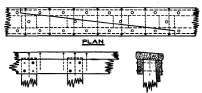
Figure 167. Main Rail Scarfs And Fastening.
Scuppers And Freeing Ports
Scuppers must be provided in all hull weather decks. Freeing ports are required in all bulwarks in way of wells, on account of the larger quantity of water from which it may be necessary to free the deck.
A section showing a deck scupper as quite commonly cut, is shown in Fig. 169. The hole is oval in shape and is lined with heavy lead flanged over on the wood at each end and fastened with copper nails. Strainers are often fitted on the inner end, but are not so necessary where the opening stands on edge as in the figure. Extra chocks should be fitted where such scuppers are cut so that the lead will be supported for its full length.
On small western steamers the freeing ports are often arranged as shown at Type A in the same figure. It will be seen that they consist of openings formed by cutting out sections of the first bulwark strake above the head strake. In vessels, where the lower edge of the head strake is set even with the top of the waterways, the openings are cut in the lower half of the head strake. They are not fitted with hinged covers, and will of course admit water as well as let it out from the spaces enclosed by the bulwark.
The type of freeing port most generally favored consists of a large opening cut in the bulwark as shown at Type B. This opening is fitted with a metal cover hinged at the top, so that it will swing outward only. This arrangement will permit large quantities of water to flow from the decks enclosed by the bulwarks, but will permit very little to flow into these spaces, should the port be submerged. The total area of freeing ports required on any ship is fixed by the rules of the Classification Society under which the vessel is to be classed.
Mast Collars, Wedges And Steps
Where masts pass through decks they are fitted with hardwood collars and wedges arranged generally as shown in Fig. 170. The collar is made up of from four to six pieces, or segments, and is scribed down through the decking to the beams and partners. The collar is fitted before the mast is stepped, then the hole is carefully lined and trimmed to the proper size and taper for the wedges. The method of lining has been previously explained. The taper on the wedges may vary somewhat but should not be less than « inch to the foot. The wedges are made longer than finally required, and after the mast has been stepped and secured in its proper position, they are carefully driven down hard as far as they will go, then trimmed off even at the top. After this work has been completed, a petticoat, or boot, as it is also called, of heavy canvas is fitted around the mast and to the deck to make the job watertight.
Mast steps should always be of hardwood, and well fastened in place. The mortise of mast to step is frequently made of the common blind type as has been shown on stern posts. The form of mortise shown in Fig. 171 while rather complicated, is designed to secure the greatest possible strength in the thwartship direction.
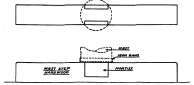
Figure 171. Showing One Form Of Mortise Used In Stepping Masts Miscellaneous Details.
Continue to:


My Books

