


Hull Erections. Continued
Description
This section is from the "The Elements Of Wood Ship Construction" book, by W. H. Curtis. Also see Amazon: The Elements Of Wood Ship Construction.
Hull Erections. Continued
Since the main rail is not carried around the stern it is necessary to either stop it off short, forward of the break of the poop, or carry it up to the poop deck as shown in the figure. The latter arrangement gives the best appearance. The curved portion of the rail is sawn to actual shape, and should be in short sections to avoid undue cross grain.
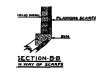
Figure 163. Solid Work Around Stern Type-Ii. Section-A-A.
Molds for the timber comprising the solid work may be lifted course by course from the ship, or from the loft floor. If lifted from the loft floor, the sawing must be very carefully done to avoid hollow places which cannot be dressed, or joinered out. As put in place they are generally rough sawn, the dressing, or joinering being done afterwards.
It should be noted in connection with all of these erections, that the planking, bead strakes, etc., above the main deck, or upper deck line, are run without taper, the one exception being, in Fig. 163 at the stern where the planks below the bead strake, and which are still above the deck line have to be treated as hull planks, and are therefore tapered.
Solid work is generally butted square and the butts may be arranged as shown in Fig. 165. Where the main rail is carried solid without break around the stern, as was explained in the discussion of Fig. 162 it is customary to scarf all of the rail butts in the manner shown in Fig. 164, except at the forward ends, where of course the rail would continue forward unbroken. Where solid work butts are scarfed the arrangement would generally be as shown in the figure.
The common fastening arrangement for solid work is shown in Fig. 165. All bolts are drifts, driven blunt. The arrangement shown is subject to modification as may be required by the particular arrangement of the work.
Figure 166 shows a quite common arrangement of planking on the sides of the forecastle. The bulwark planking is returned just aft of the bawse pipe bole. Above the main rail course there is a panel of thin planking having the sam thickness as the bulwark planking, which is returned a little further forward than the bulwark planking. These returns at this point are necessary because all planking entering the rabbet in this vicinity must be the same thickness. If the thin planking were continued to the rabbet, it would be necessary to cut the rabbet further aft on the stem than the rabbet for the thick planking shows, or if carried to the same rabbet a portion of the rabbet would show outside of the planking. Either arrangement would leave an unsightly job. There is a method, where the thin planking extends over the whole side of the forecastle, of running it to the same rabbet. This is done by either leaving the frames next to the stem full on the outer face, or shimming them out, so as to throw the outside face of the thin planking at the rabbet flush with the outside face of the thick planking. The rabbet for the thinner planking is then cut from the same outside rabbet line, but only to the depth required by the thinner planking, thus leaving an unbroken exterior. This method is often used to avoid the return above the main rail course, in which case the strakes corresponding to the bead strakes above the main rail course would be left without the beading, and would be tapered at the rabbet to the thickness of the thin planking.
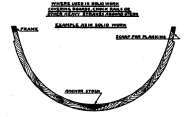
Figure 164. Arrangement Of Scarfs.
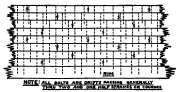
Figure 165. Arrangement Of Butts And Fastening In Solid Work Around Stern.
Monkey rails, where fitted, are usually built up of solid work as shown in the figure and fastened in the same manner as described for solid work at the stem.
The frames in way of the bridge erection are extended to the bridge deck in the same manner as shown at the forecastle. The outside planking detail may vary somewhat but in general, very much the same detail of thin strakes, bead strakes, etc., will be used as have been shown for the end erections. If a panel is used above the main rail in way of the bridge, it will be returned at each end in the same manner as shown at the break of the forecastle in Fig. 166. The bulwark planking is generally carried through without break.
The hull erections are generally ceiled inside with thin ceiling from the waterways to the clamps. Very often tongue and groove stuff is used. Clamps should be fitted for landing the beams, and they are fastened very much as hull clamps.
It is customary in many yards, to saw the poop and forecastle beams with the full camber on the top face, leaving the bottom face straight. However where the arrangement of interior bulkheads permits they may be, and often are, sprung in the same manner as hull beans are sprung. Beams for bridge erections generally have the same partial camber sawn on both upper and under sides, the balance being sprung. Hull erection beams are generally fitted with hanging knees, it being the best practice to fit one to each beam end in way of the bridge, and three or four on each side of the poop or forecastle as may be required.
The common arrangement of coverboard, or covering board, scarfs around the after end of the poop is the same as that shown in Fig. 164. On the forecastle it will also be necessary to scarf in the coverboard in relatively short lengths, and the scarfs may be arranged in the same form as has been previously shown in connection with the waterways at this point.
Against the apron, or stem, if there is no apron at this point, there should be a deck hook, in way of the forecastle beams. The coverboard should also be fitted with a natural crook hook cut to the same shape as waterway hooks, and well fastened. There should be a stout breast hook set just under, or even with the top of the small rail on top of the monkey rail, this being well fastened through the monkey rail and to the stem.
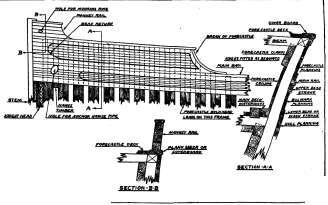
Figure 166. Forecastle Erection Details Of Outside Finish Etc.
Continue to:


My Books

