


The Svetasvatara Upanishat. Part 13
Description
This section is from the book "Studies In Saiva-Siddhanta", by J. M. Nallasvami Pillai. Also available from Amazon: Studies In Saiva-Siddhanta.
The Svetasvatara Upanishat. Part 13
And may we hope that some ardent student of the Kural will work out from it a perfect theory of ethics, both private and intentional.
One more remark, and this will introduce us to the chapter of the book we have taken up for translation and elucidation. It is usually remarked, following the main divisions of the book into Dharma, Artha and Kama  that the author has left out the discussion of the last Purushartha or Moksha,
 on the ground that religion is a matter which will give room for difference and dispute. But is it true that there are no universal truths of religion and did our author leave them unsaid? His own contemporaries did not understand him as doing so, but have stated in their encomiums that he has explained all the four Purushartams and that he has shown the path to Moksha. And the Rev. Dr. Pope in his short paper on the Ethics of Kural holds that Tiruvalluvar bases his ethics on the grand truths of Tripadartha. Pathi, Pasu and Pasa. In fact, his creed is not a godless creed like that of the Jains or Buddhists. In this respect, there is disparity between the Naladi and this work. Our author's God is the 'first Cause and Lord'
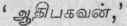 He is 'Intelligent,'
 He 'resides in the heart of his creatures'
 ' He is 'Immaculate, untainted by likes and dislikes',
He is the ' Lord of Lords ' and ' king of kings ' 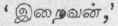 He is ' incomparable ',
 He is the 'source of all Dharma and Beneficent',
 He 'has eight attributes',
 (i.e. self-dependent or self-possesed, the Pure, Self-Luminous, the All Knowing, the Ever-Free, the Beneficent, the Infinitely Powerful, and Infinitely Blissful. Parimelalagar rejects all other interpretations of
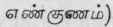 and the Eternal Truth
 and the Perfect and Good Being
 No amount of learning is of any good unless a man believes in the existence of God and worships His feet in all love and truth. And without such knowledge and such conduct, the mere attaining of ethical perfection is of no 'use
 etc). The true way to get rid of our bonds is to reach the feet of the Ever-Free. And these bonds are not mere myths but they are caused by our own ignorance, Avidya, Ahankara or Anava which is eternal, Anadi. And then, the chain of causation following karma into endless births and suffering is worked out, and the means or Sadana required to get freed from these bonds are fully shown, and of all the means, the greatest Sadana is to reach Him who is past all thought and speech; and unless this is done, it is useless to hope to get our cares destroyed. And as all these principles are fully explained in chapter 36 on
 'How to perceive truth,' we have translated the same below, adopting almost the language of Dr. G. U. Pope, together with the famous commentary of Parimelalagar, with some running notes, to show how far this is embodied in the Advaita-Siddhanta. Of course the language of the Kural is the language of the Saivite writers of the past 2000 years; and no wonder, the truths expounded by all of them should be the same.
Continue to:


My Books

