


Packing For A Hike
Description
This section is from the book "Time Out for Living", by Ernest DeAlton Partridge and Catherine Mooney. Also available from Amazon: Time Out for Living.
Packing For A Hike
Food
There are many tricks about packing food that help lighten the work of the hiker. For example, waterproof bags are unequaled as containers for loose foods, such as rice, beans, dried fruits, flour, and cocoa. These bags can be made easily from light canvas and waterproofed by dipping them in hot paraffin.* Each bag should be labeled in ink before it is waterproofed. Obviously the bags should not all be of the same size, since it is not desirable to take the same quantity of each food. For example, one would not carry as much salt as flour. A bag about the size of a small salt sack is good for beans or dried fruit. The food bags should have tie strings sewed near the top. Food packed in this way is easy to fit into the pack. There are no corners to stick into your back and no lids to fall off, allowing the contents to spill.
Not only are bags good for packing food, but they are also handy for hanging the food in camp out of reach of small animals. As the bags are emptied they take less space. Eggs can be safely packed in a bag of flour or cereal and will not break if handled with ordinary care.
A Ditty Bag
Many a hiker has been saved in an emergency by a ditty bag. A broken shoelace, a rip in one's clothing, a lost button, a ripped seam in a shoe, all of these difficulties fade away when the hiker reaches into his pack and finds the trusty old ditty. A small canvas bag is satisfactory for this purpose.
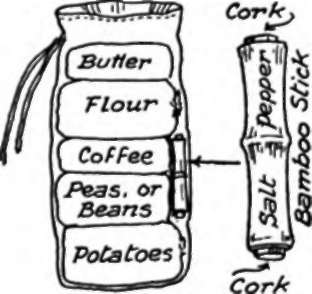
FOOD BAG
'soft' foods on top. Eggs may be put in the flour bag.
* Or by using the preparation described at the bottom of page 49.
It need not be waterproofed but should be plainly marked "Ditty" in ink.
Sooner or later the hiker will find that the following articles come in handy in time of need: small sewing kit, scissors, cotton thread of two or three colors, beeswax for waxing thread with which to sew shoes or the pack, buttons of various kinds, safety pins, darning yarn, some strong cord string, and extra shoelaces. There is real satisfaction in having what you need when you need it on the trail.
Useful Odds And Ends
Besides the contents of the ditty bag, there are other odds and ends that will add to the comfort of the hiker. A small but strong piece of rope, mosquito netting, especially if you are staying overnight, extra hobnails if you wear them, some soap that floats, a jackknife, a small candle, compass, and a flashlight. Some hikers like to carry small, hard candies, too. Naturally, as things are used, they should be replaced.
Extra Clothing
Such ordinary things as handkerchiefs, extra socks, and a change of underwear should not be overlooked. They are essential to cleanliness on the trail. If one is to be away several days, other changes of clothes are necessary too.
The First-Aid Kit
The experienced hiker is prepared for any emergency. For this reason, the first-aid kit is an important part of the hiker's equipment. An expensive kit is not necessary. As a matter of fact, the hiker can make his own very easily. A small tin box with a lid that snaps down can be the starting point. To this add a roll of gauze an inch wide, a roll of waterproof adhesive tape one and a half inches or more in width, a small pair of scissors, a small bottle of iodine or mer-curochrome, three or four safety pins, and some Halazone tablets for purifying drinking water. There are other pieces of equipment that could be added, but these are the essentials.
The adhesive tape will be found to be one of the most useful articles one can take into the woods. Not only does it protect injuries to the body, but it is also useful in many other ways.
It will repair a small hole in a canoe temporarily, seal holes in cans, repair rips in clothing without showing if it is placed under the tear with the sticky surface upward. Be sure to take adhesive tape, whatever you do.
There is no use carrying a first-aid kit unless it is used. Scratches, blisters, and slivers, although small in the beginning, can cause the hiker untold trouble unless they are properly and quickly taken care of. Blisters on the foot, for example, should be taped over before they break and scratches on the hand painted with iodine or some other disinfectant. First aid is the simplest way to prevent infections that may become serious.

Treat minor scratches and cuts as soon as possible.
Some Interesting Things To Do
1. Write a letter to a friend inviting him to go on a hiking trip with you. Suggest in the letter what he should wear.
2. Find some person in your neighborhood who has had camping and hiking experience and ask him to show you the equipment he uses.
3. Make two lists of hiking equipment, as follows: (1) Equipment you now have. (2) Equipment you would like to secure. Arrange this latter list in order of preference. Underline those pieces you can make yourself at very little expense.
4. Collect and make a set of hiking equipment as cheaply as you can. Your set might include a frying pan, knife, fork, spoon, cup, dish, clothing, pack, food bags, and ditty bag. Display them to the class and explain where you got them and how much they cost.
5. Make a list of things you would include in your ditty bag.
6. Make a set of waterproof food bags. Keep track of the cost.
7. Assemble a small first-aid kit that could be carried on a hike.
8. Read the chapter in the Boy Scout Handbook on first aid. Jot down all the new ideas you glean from it.
9. Find out where you could get the material and how much it would cost to make the pack frame described on pages 57-60.
10. With one or two friends, take a hike to some interesting spot near by. Make certain that you dress properly and plan your meals wisely. Keep track of the expenditures for the trip and report to the class how the whole affair worked out.
11. Secure a topographic map of your own neighborhood by writing to the U. S. Geological Survey, Washington, D. C, or by buying it from some large stationery store near by. Learn how to read this map and plan a short hike with it.
Helpful References
Boy Scouts of America, Handbook for Boys. (50# Boy Scouts of America, Hiking. (A
Merit Badge Pamphlet) Girl Scouts of America, Adirondack Indian Pack Baskets.
Girl Scouts of America, Campers'
Handbook. Hanks, C. S., Camp Kits and Camp Life. Solomon, B., Hiker's Guide. Wallace, D., Packing and Portaging.
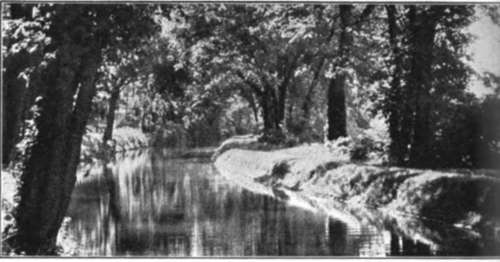
A Tempting Trail.
Continue to:


My Books

