


His Attendance And Tenure. Continued
Description
This section is from the book "Handbook For Scoutmasters. Volume 1 & 2", by Boy Scouts of America. Also available from Amazon: Handbook For Scoutmasters.
His Attendance And Tenure. Continued
Getting Parents' Cooperation
Parents may need reminders too. Secure their cooperation at. a parents' meeting, and explain to them that their sons are expected to attend all gatherings of the Troop. You will find parents willing to support you, provided they understand the routine and know of the activities of the Troop.
Records Of Attendance
The most important reason for keeping records of attendance is to have a continuous and up-to-date check of all absentees. Whenever a boy has been absent for a few times without apparent reason, the Scoutmaster should try to get in contact with him to find out if he intends to leave the Troop, and, if so, why. No boy should ever be permitted to be reported as dropped until every effort has been made to retain him.
And "Lost Interest" is no excuse. It is a reproaching finger pointed at the Troop: "You failed to keep him interested."
Transfers
That the boy moves to another town is no reason why he should be lost to Scouting or why Scouting should be lost to him.
Before he leaves provide him with a transfer blank properly filled out with his personal record and with your signature, and suggest to him that he get in touch with the Local Council office of his future "hunting grounds" so that he may find a place in a suitable local Troop.
Holding The Older Boy
A well-run Troop with a well-planned program is able to hold its boys far beyond the four-year tenure goal. That has been proven in thousands of instances. But even at that, it does happen that the enthusiasm of the fifteen or sixteen-year-old seems to slacken, and his attendance falls off.
What are the reasons? First, of course, must be considered his added outside activities. He may be a member of the high school athletic teams, and of any number of other school organizations. His school work may have increased, and a girl may have entered into the picture. But also, he may feel that the Troop meetings and hikes are getting stale; that the "kids" in the Troop are getting more and more objectionable; that he doesn't really belong any more.
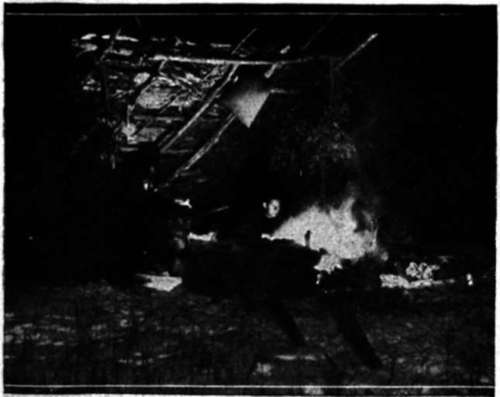
The trail from Tenderfoot to First Class has been mastered. The problems of camping have been solved. The outdoor world is theirs.
To hold him, the Troop program may have to be keyed up to take care of his expanding interests, and he must be made to bear plenty of responsibility for it.
Advanced Camping
The Scoutmaster must realize that the older boy does not like to stand still, he likes to feel he is progressing. He likes more difficult hikes. He likes to try his hand at more difficult handicraft projects, to explore new fields. This need may be met by providing special wilderness camping facilities under special leadership for the older boys of the Troop. Not only do such advanced trips give the young men in the group a chance to explore and have new experience, but they increase the interest that the younger boys have in staying in Scouting and advancing in Scout skills so that they too may participate when they are ready.
Extending Responsibility
As boys grow older they should be given more responsibilities. Who doesn't like to feel that he is becoming more important in the scheme of things as time goes on? This is one reason why thousands of older Scouts are finding satisfaction in filling positions as Patrol Leaders, Junior Assistant Scoutmasters, Scribes, Quartermasters, etc. These jobs need not be confined to positions of leadership. Many boys have special hobbies and they make excellent instructors in their subjects, if given the chance.
It does not matter so much whether the boy is leading the singing or editing the Troop paper, so long as he feels he is doing something that dignifies his position in the Troop.
Social Activities
Many successful Scoutmasters find it worth while to have occasional social events for the older Scouts to which they can bring their young lady friends. There is no reason why a young man need to choose between Scouting and his girl friends. We must build up a realization in his mind that there is no conflict between the two and the way to do this is for him to be invited to enjoy both of them together occasionally. Incidentally, this may open the eyes of the young lady as to what Scouting really is and that is quite important for the attitude of the young man.
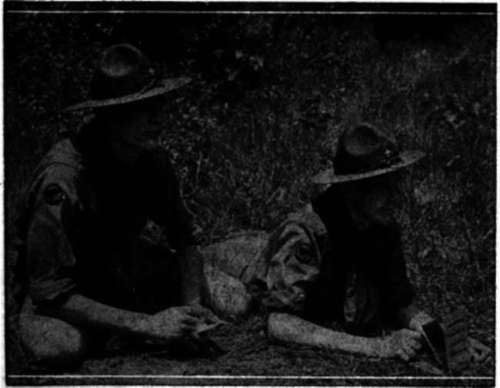
Like those of the Indians in the days of Custer, their heliographs wink from hill to hid. New trails have opened wide to them.
The Merit Badge Program
The Merit Badge Program is a phase of Scouting which can have tremendous appeal to the older boy if proper guidance and direction is given by the Scoutmaster or other Troop leaders. The boy should be encouraged to pursue a general field of his own choosing. Not only will it result in greater benefit to the Scout himself, but it will equip him to be of more service to his Troop.
Senior Scouting In The Troop
An added feature for holding the older boy is the fact that at 15 years of age he can become a Senior Scout. This does not mean that the boy should sever his connections with the Troop or that he should not continue his activities as a Patrol Leader, Scribe, etc. On the contrary, most Senior Scouting will be done in the Troop and Senior Scouts are expected to continue their activities in the Troop program. It should be made clear also that a Scout need not secure the special insignia of a Senior Scout if he does not wish to.
Even though in many cases there may be only one or two boys of Senior Scout age in a Troop, still these Scouts become eligible for Senior Scout status. If. however, there are a sufficient number of Senior Scouts in the Troop and if the Scoutmaster feels that there is a need for extra activities for these boys, he may organize in his Troop, one of the special Senior Scouting units provided in the Senior Scouting Program of the Boy Scouts of America, namely a Sea Scout Patrol or an Explorer Patrol. (See Part XIV.)
Recognition Of Tenure
Upon the completion of each year of satisfactory service in the Troop, the Scout is entitled to a Service Star, consisting of a gold star with circular felt backing-green for one year's service, red for five-to be placed on the left breast of the Uniform shirt, over the pocket.
Make the presentation of the Service Star an event. Extol the Scout for his work, explain the significance of the star, and create an enthusiasm in all members of the Troop to win theirs.
Veteran Scouts
After five years of duly registered service in the Scout Movement, a First Class Scout or a Scouter may, upon application, become a Veteran Scout, provided he agrees to live up to his Scout obligations, to keep local Scout authorities in the community in which he lives informed as to his availability for service to the community in case of emergency, and to take as active a part in the promotion of Scouting as the circumstances and conditions in his case permit.
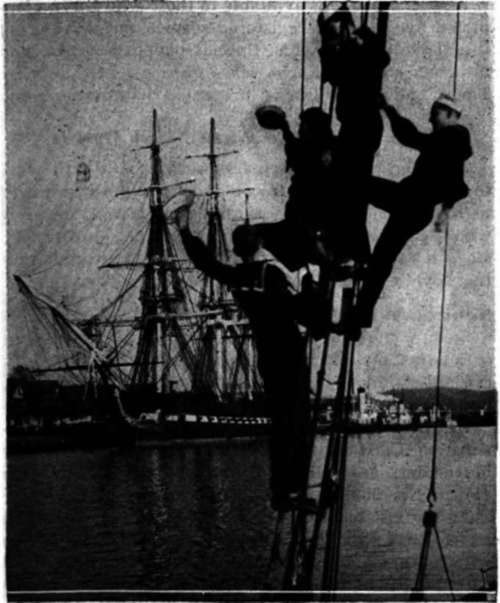
Sea Scouting gives the older boy a program he needs and wants. Ships, adventure, the language of the sea and a distinctive Uniform.
A special badge is available to those who have completed five years of registered service and who meet the above requirements. Special badges may be had for each additional five years of registered service. These badges should be presented with ceremony.
Eventually The Gate Must Open
Thus far we have been talking as if our aim were to hold Scouts in the Troop indefinitely-and never to have them leave. As a matter of fact, every boy who joins is some day going to leave - unless he stays on as a leader. It is of great importance that the boy be given the proper kind of send-off.
Scouts Who Move
Be sure that the Scout who moves to another town or another district is provided not only with proper credentials for joining a Troop in his new locality, but is also encouraged to do so.
He will of course, take with him his current Registration Card that proves him a member of our Movement, as well as Transfer Credit Certificate (Form No. 502A) properly filled out.
At the last meeting he attends he should be made to feel that although he may be far away, the Troop will continue to consider him a member of the "old gang" and will look forward to his occasional visits.
Associate Scout
A boy who goes away to school or who, because of his work hours, is not able to attend Troop Meetings, can keep in contact with his old Troop by becoming an Associate Scout. As such, he is registered with the Troop, paying the regular re-registration fee, and thus preserving his credit toward becoming a Veteran Scout.
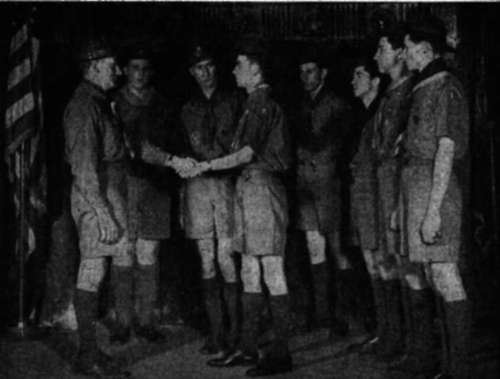
At the Reunion, the Scoutmaster greets "his" boys-the seme who posed with him, on page 231, five years before.
An Associate Scout is required to attend at least one meeting of his Troop each year and in all other respects is guided by the obligations of a Scout.
Junior Alumni
While many Scouts who can no longer participate regularly in the Troop's activities become Associate Scouts, there are others who simply drop out-quite often with regret, and certainly always to the concern of the Scoutmaster.
A procedure is available, on an experimental basis, which makes it possible for the Scoutmaster to deal with this situation in a more satisfactory manner as has previously been the case, through the establishment of the "Junior Alumni."
To become a member of the Junior Alumni, the Scout should normally have had at least three years of actual registered membership in Scouting. He must then present satisfactory evidence, acceptable to the Scoutmaster and the Local Council, that his reasons in asking to be excused from regular attendance are valid. Further, the boy must indicate that it is his intention to continue to be guided by the Scout Oath and Law and the ideals of Scouting, and that when conditions make it possible, he hopes to return to some kind of active relationship to Scouting, either in his home town or some other territory.
Troop Alumni
Many Troops provide old Scouts who have passed twenty-one years of age with the opportunity to become members of the Troop Alumni Association. The more active of these associations are comparable to the alumni associations of schools. Some Troops conduct an annual "remote census" to check up on the whereabouts and activities of their former members and to maintain the interest of these "remote" alumni by sending to them news of their old Troop.
The Troop Reunion
To keep the traditions of "Once a Scout-Always a Scout" alive, the more active Troop sends out a call every year for a reunion of its old members. To these reunions, invitations are sent to the Troop's Associate Scouts, its Junior Alumni and Troop Alumni members, its present leaders, Senior Scouts and Troop Committee members. The reunion sometimes takes the form of a dinner, sometimes is run as a hike (see page 670, vol. 2).
Continue to:


My Books

