


Newstead Abbey
Description
This section is from "The American Cyclopaedia", by George Ripley And Charles A. Dana. Also available from Amazon: The New American Cyclopædia. 16 volumes complete..
Newstead Abbey
Newstead Abbey, the family seat of Lord Byron, situated on the verge of Sherwood forest. England, 8½ m. W. of Nottingham. The building was originally a priory of black canons, founded in 1170 by Henry II., and at the dissolution of the monasteries was granted by Henry VIII. to Sir John Byron. It was then a fine specimen of the early Anglo-Gothic, unsurpassed in elegance of composition and delicacy of execution, and "stood embosomed in a happy valley," the slopes of which were covered by the broad oaks of Sherwood forest. The new possessor converted a portion of the building into a dwelling; and his successors have altered, embellished, or added to it, until it presents a singular mingling of opposite styles of architecture. The fifth Lord Byron, great-uncle of the poet, pulled down a large part of the house, cut down extensive plantations, and did all he could to injure the estate, from some cause of irritation against his son and heir, who however died before him. In 1817 Byron parted with Newsteadfor £180,000 to Col. Thomas Wildman, an old schoolfellow, who carefully preserved whatever relics of the poet he found there, and spent more than £200 000 on the reparation of the property, which on his demise in 1859 was put up at auction, the reserved price being £180,000. As the highest bid was but £121,000, the estate was bought in by Col. Wildman's representatives, and subsequently it came into the possession of William Frederick Webb, who now (1875) owns and occupies it.
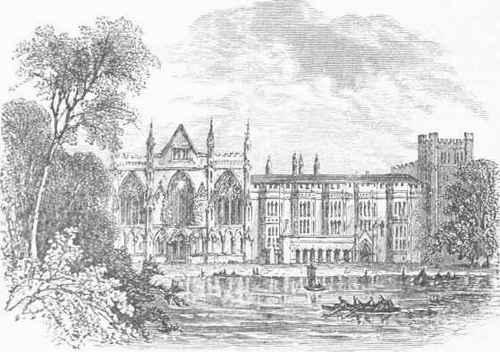
Newstead Abbey.
Continue to:


My Books

