


Lake Como. Part 21
Description
This section is from the book "Lake Como - John L. Stoddard's Lectures", by John L. Stoddard. Also available from Amazon: John L. Stoddard's Lectures 13 Volume Set.
Lake Como. Part 21
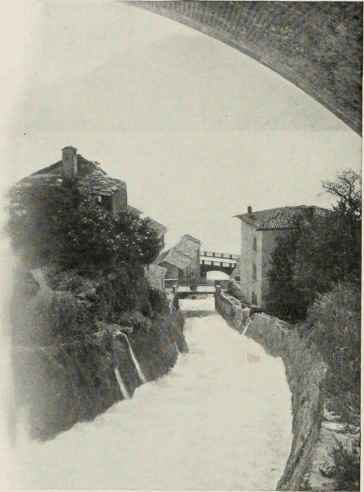
The Fiumelatte Near Varenna.
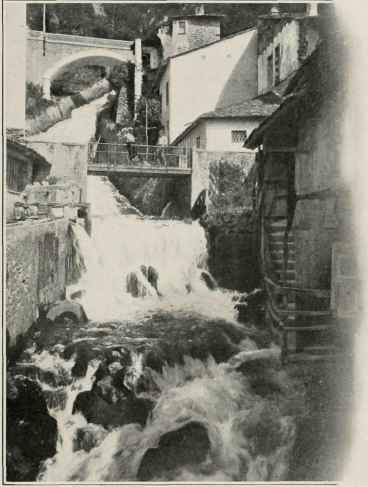
The Fiumei.Atte Made To Work.
The natural tendency of travelers to measure everything around Lake Como merely by aesthetic standards is illustrated by the shock they feel, on learning that Bellano - nearest neighbor to Varenna - is a manufac-turing town. "What! Manufactories on the Larian lake?" they cry; "Impossible!" Yet even polenta-eating peasants cannot live exclusively on lovely scenery, - or, for that matter, on the tourist, - and possibly the traveler's resentment at the incongruity of such establishments upon these shores may be diminished by the discovery that they are only silk factories, after all!
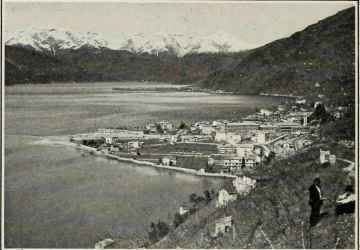
Bellano.
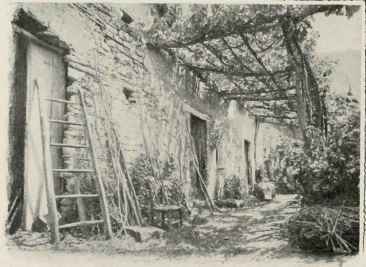
A Cottage Near Varenna.
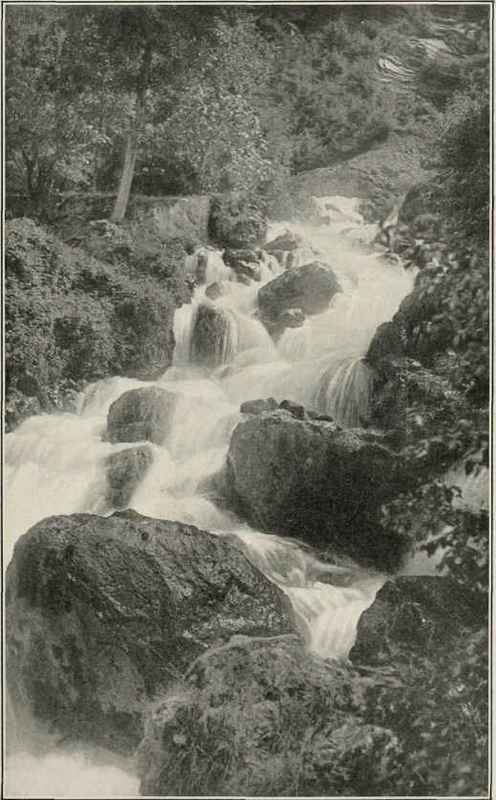
The Fiumela.Tte, Near Varenna.
So easy is it to associate such an occupation with ideals of beauty!
Moreover, if excuse were needed for Bellano's enterprise, it might be found in the circumstance that it was one of her citizens, Pietro Boldoni, who, just four centuries ago, first introduced this branch of labor on the lake.
Bellano, therefore, is a favorable point at which to study briefly this great industry, which plays so prominent a part in the development of modern Italy. Of course the art of manufacturing raw silk did not have its origin here. Like many other useful things, we owe the process to old China, where sericulture was invented more than four thousand years ago. For centuries the Chinese guarded jealously their secrets in respect to rearing silkworms and to reeling silk, and any exportation of the eggs or fresh cocoons was punishable with death. At length, however, the invention slowly made its way to India, and thence through Persia into Asia Minor. Moreover, in 555 a.d., two monks, who had lived long in China, and had acquired there a knowledge of the methods used, brought some of the silkworm's eggs, concealed in hollow bamboo canes, to Constantinople, and placed their information at the disposal of the emperor Justinian. From such a small beginning did the making of raw silk gain a foothold in the western world! Yet only very slowly did it spread through Europe, and it was not until the twelfth century that it entered Italy. To-day, however, though China still remains the first raw-silk-producing country in the world, yielding some thirty-five per cent, of the whole supply, Italy holds the second place, and leaves all other rivals far behind her. Singularly enough, however, she remains backward in the actual weaving of the article. It is in Lombardy that the greater part of Italy's raw silk is produced, and on the Lombard plains and in the region of the Italian lakes the traveler sees innumerable specimens of the mulberry tree, upon the leaves of which the silkworm feeds. The treatment which these trees receive is wonderful. In May they stand, apparently by millions, green with verdure. In June the most of them are bare - stripped of their foliage not by insects, but by men. In July they are often hideous, with leafless branches trimmed to stumplike mutilation. "Nothing but leaves " is no reproach to mulberry trees, for leaves are practically all that is required of them, to serve as sustenance for hungry worms. A stranger might suppose that any plants would die from such divestiture; but their adroit despoilers understand precisely how to cut them back, and fertilize the soil about their roots, so that, though shorn repeatedly, they live and thrive for many years. It is exceedingly interesting and instructive to watch the gradual transformation of the silkworm into the cocoon. It certainly has a small beginning. Thus, all the eggs from which two thousand worms are hatched, can be contained upon a single leaf, yet for those same two thousand insects, on whose industry so much depends, at least a dozen spacious shelves must be prepared. On these are placed the new-born worms, which from the start are kept continually covered with fresh mulberry leaves.
Continue to:


My Books

