


South Tyrol. Part 4
Description
This section is from the book "South Tyrol - John L. Stoddard's Lectures", by John L. Stoddard. Also available from Amazon: John L. Stoddard's Lectures 13 Volume Set.
South Tyrol. Part 4
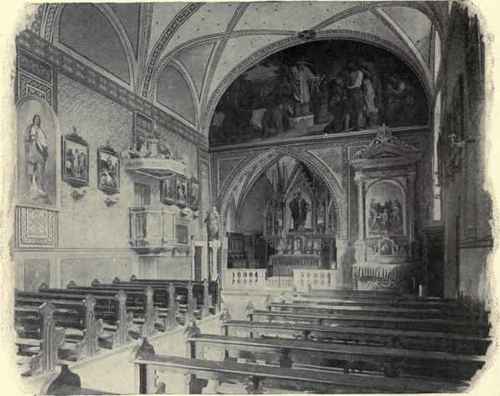
Interior Of The Church.
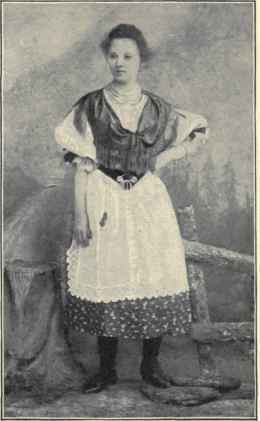
A Tyrolese Maiden.
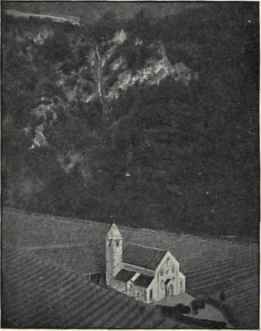
ST. Valentine's Church, From The Mountain.
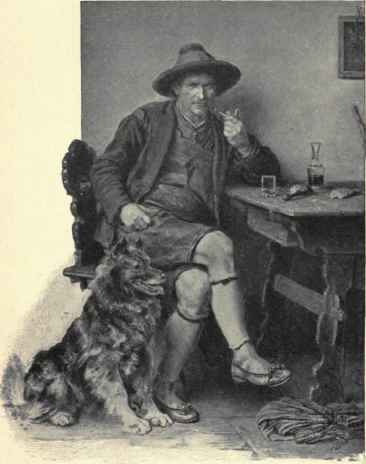
A Tyrolese Peasant.
This ignorance concerning the first St. Valentine is the more surprising, because for many centuries a service has been regularly celebrated here on the fourteenth of February, - the anniversary of his death. The probable explanation of the circumstance is the fact that the Tyrolese saint was born on what was already called St. Valentine's Day, and that he received on that account the name . of his patron, - Valentine. In time, however, his fame in the Tyr5l eclipsed the memory of his predecessor, much as a brilliant planet casts into comparative obscurity a greater but more distant star. Accordingly, though the fourteenth of February really commemorates the martyrdom of one saint and the birth of the other, it now recalls to the Tyrolese only their local hero, and not the man for whom the day was originally named.
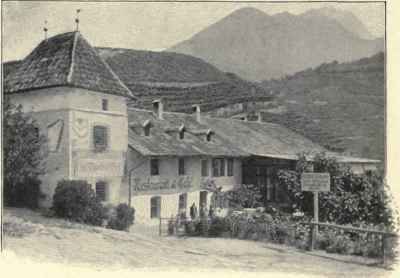
ST. Valentiner Hof.
Such thoughts occurred to me on the fourteenth of last February, when seated near St. Valentine's Church in a sheltered nook of peace and beauty, called St. Valentiner Hof. For centuries this curious old building, clinging to the hillside, was the home of powerful and well-born Tyrolese; but it is now merely a modest restaurant, where visitors from Meran are fond of drinking afternoon-coffee, either on the terrace, or in its glass-enclosed veranda, flooded with Tyrolean sunshine. Here, on the saint's day, as the music of the service floated toward me from the church, there blended beautifully with the deep tones of the organ and the voices of the choir the notes of feathered songsters, wheeling gracefully around the old gray spire, as if even they were influenced by the anniversary, and were confirming the poetic legend (old as Chaucer's time), - that on St. Valentine's Day birds choose their mates. Strange, is it not? that, though the interchange of valentines was practiced by the pagans, and though the association of the custom with St. Valentine was purely accidental, yet here, as everywhere in Christendom, the saint's name still suggests a tender sentiment; and even into this tiny corner of the Alps, where the Tyrolese anchorite built his hermit cell, eddies a portion of that universal flood of human passion, which more than aught else in the world decides the destiny of every soul, and bears mankind mysteriously on its bosom, some to soft airs and islands of the blest, others to shipwreck and despair. In fact, St. Valentine's Church has always been so great a favorite with the residents of this vicinity for the celebration of their marriages, that thousands of proud grooms and blushing brides have gone forth from its door to found new homes, and lighten life's hard labor with the smile of love. Nor is this custom limited to the peasants; for the rich and aristocratic also - notably in the month of May - often select St. Valentine's for the consecration of their nuptials.
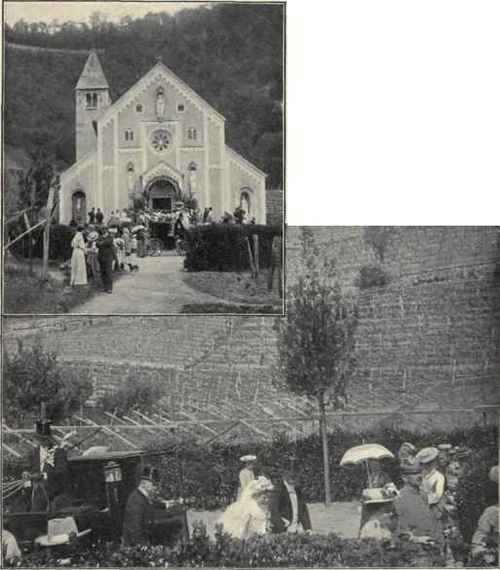
A Wedding At ST. Valentine's.
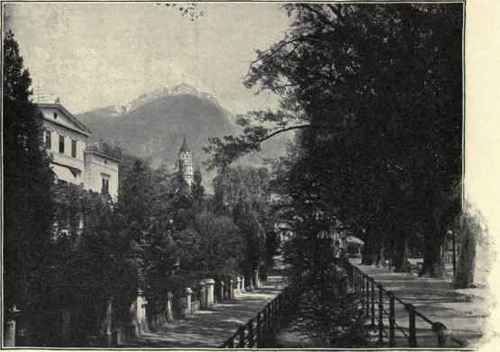
Meran In Summer.
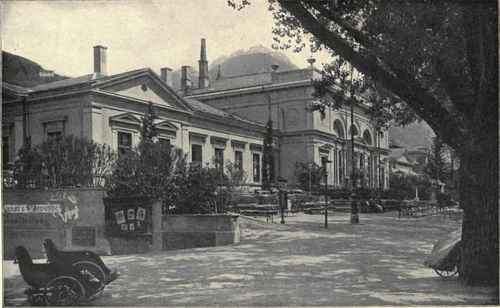
The Kur-Haus, Meran.
In the heart of old Meran stands a peculiar looking structure, so small and yet so massive in appearance, as to suggest the monster strong-box of some mediaeval millionaire. It occupies the centre of a little square, much as a solitary boulder might appear, if it had fallen thither from the neighboring mountain. On three sides, buildings frame the open space enclosing it; while, on the fourth, rise almost perpendicularly, in the rear, the sunny, vineyard-terraced cliffs of the Küchelberg, up which ascends in carefully protected zigzags the admirably built Tappeiner Way. Scores of pedestrians pass this time-worn edifice daily, as they go to or return from that most popular promenade; but scarcely any one halts before it, or seems to consider it worth a visit. Yet, as the residence of several distinguished personages, it has played a prominent part in Tyro-lese history, and has a special interest for English-speaking travelers from its associations with a Scottish princess. James I. of Scotland was, for his time, a man of rare accomplishments.
Continue to:


My Books

