


Malta. Part 11
Description
This section is from the book "Malta - John L. Stoddard's Lectures", by John L. Stoddard. Also available from Amazon: John L. Stoddard's Lectures 13 Volume Set.
Malta. Part 11
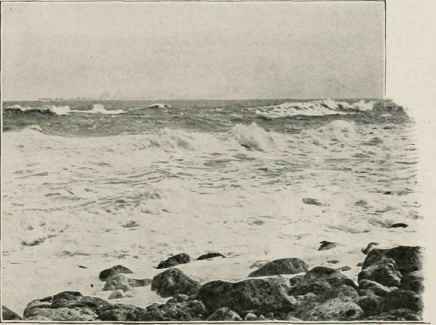
Into Threads Of Sunlit Spray.
More numerous, however, than the souvenirs of saints, and more impressive even than the bolts and bars drawn by Great Britain round this island citadel, are the memorials here of Malta's warrior monks. We come upon them everywhere. The most imposing edifices are of their construction; and though they serve at present as the English government buildings, law courts, barracks, libraries, and clubs, such uses for these stately palaces seem anachronous, and we involuntarily associate them with the famous Order of the past, rather than with their actual occupants. It is impossible to mention, in the limits of a single lecture, all the splendid architectural monuments commemorative of the Knights at Malta, but to my mind the grandest and most typical relic of their glory is the church which they erected to the honor of their patron, St. John the Baptist. Remembering Sir Walter Scott's avowal that he considered this the most magnificent church he had ever seen, I knew that I should find here a superbly decorated sanctuary ; but the reality far surpassed my expectations. Its sumptuous ornamentation is easily explained.
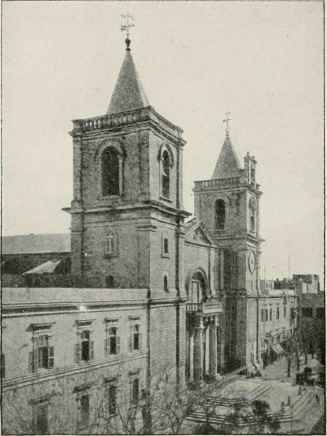
Church Of ST. John, Valetta.
The Chevaliers of St. John had all the fondness for display and carelessness of cost proverbially characteristic of the corsair, combined with chivalrous devotion to their church and creed. Accordingly, it was to them a matter of pride as well as piety to make their principal sacred edifice as rich and beautiful as possible. They certainly succeeded. To them this church was what St. Mark's had been to the Venetians - a treasury for Turkish trophies, a consecrated storehouse for the spoils brought back by them from conflicts upon sea and land. To add to its embellishment, or fill its coffers, was their chief ambition; and in accordance with the rules of the Fraternity, every Grand Master, when elected to his office, and every Knight, on being promoted to a higher rank, was bound to increase in some distinguished way its wealth or splendor.
Yet, as is often the case in the Orient, the exterior of this famous structure gives no suggestion of the gorgeousness within.
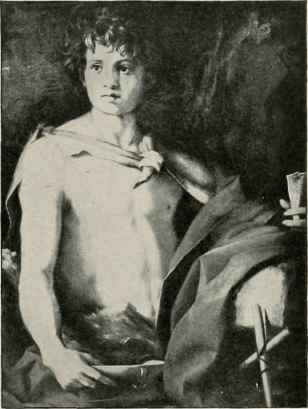
The Youthful ST. John.
Cararaggio.
Despite the beautiful figure of the Prince of Peace above its portal, its massive walls resemble those of a fortress, and call to mind the facts that it was built in troublous times, and that the men who founded it were warriors, as well as worshipers. But when I had passed beyond the heavy curtain at the doorway, I felt as if I had stepped into a gigantic cavern lined with precious marbles and mosaics - a marvelous combination of minster, mausoleum, and art museum, presenting a bewildering number of chapels, altars, paintings, statues, columns, shrines, and tapestries, as well as many imposing mortuary monuments. A full examination of its treasures seemed impossible. I halted at one end of the long nave, uncertain upon what I should fix my attention first. Before me stretched away a glittering plain of variegated marble, divided into more than four hundred rectangles, about six feet in length and three in breadth. At the first glance these looked to me like spaces for Mohammedan prayer rugs, such as I had seen marked on the floors of mosques in India. A moment's scrutiny, however, revealed the fact that they were richly decorated coverings for tombs. In truth, this splendid nave is a long, stately avenue paved with multi-colored and emblazoned gravestones, fitted together like a beautiful mosaic, and worn continually smoother and more glistening by the worshipers who walk or kneel upon the sculptured titles and armorial bearings, now almost as unheeded as the men who cherished them. Beneath each finely carved and exquisitely tinted slab reposes some brave Knight, who, when instinct with life, achieved heroic deeds, and, with his comrades, was the cynosure of half the world. Where is to-day the vital force that animated all this crumbling dust three centuries ago, and made it clever, eloquent, and bold ? Dwells it as spirit only in another world? Has it become incarnated in other shapes that walk the earth, unconscious of their past? Or is it working out a different destiny in budding flower, ardent flame, or tossing wave? The question, as I breathed it half involuntarily, stirred for a moment the dull, incense-laden air, and died away in silence. But the unanswered query haunted me persistently, as I walked on above the mailed forms now resting, as they once fought, side by side, sharing the universal fate, yielding at last to a Grand Master mightier than them all.
Continue to:


My Books

