


Malta. Part 9
Description
This section is from the book "Malta - John L. Stoddard's Lectures", by John L. Stoddard. Also available from Amazon: John L. Stoddard's Lectures 13 Volume Set.
Malta. Part 9
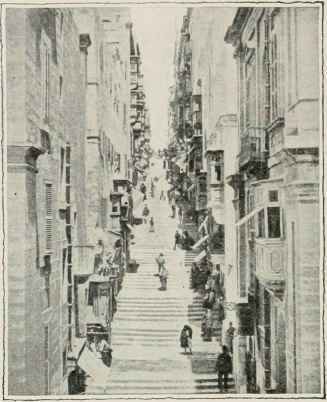
Street Of Santa Lucia.
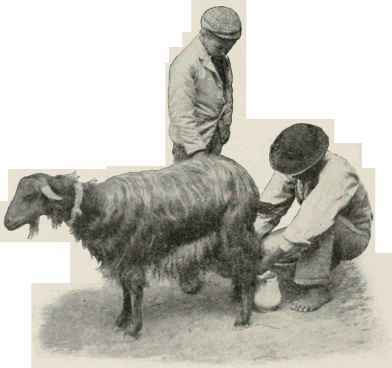
Fresh Milk In Valetta.
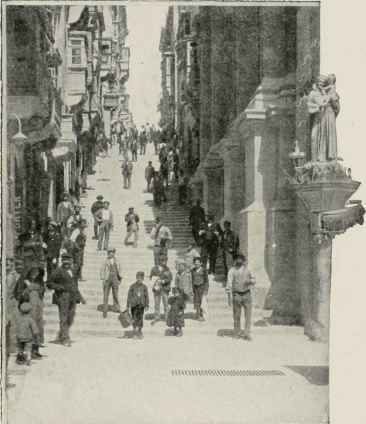
Street Of San Giovanni.
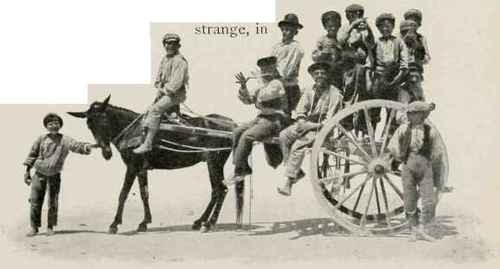
A Maltese Group.
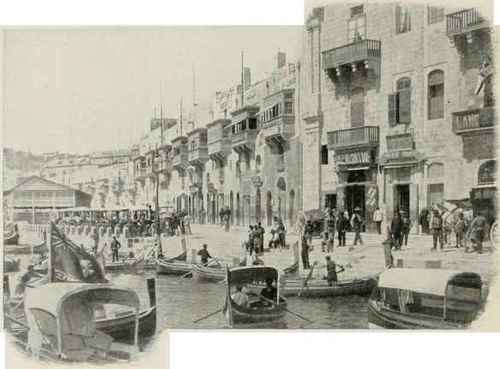
A Polyglot Port, Valetta.
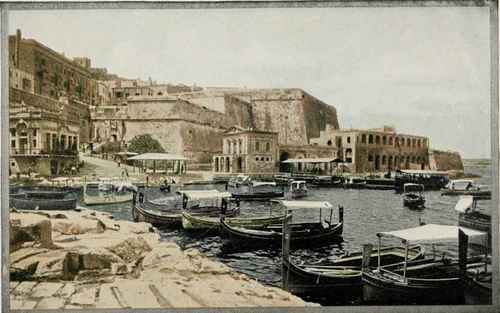
Porta Marsamuscetto.
Unfortunately, poverty in Malta goes hand in hand with her twin sister, ignorance. The Maltese are prolific, and the islands are already overpopulated. The census of 1892 placed the number of inhabitants at about one hundred and sixty-seven thousand, and the yearly increase averages eleven hundred. This rapid growth of population on a very limited area will soon present a serious problem for political economists. That thousands are already pinched with penury is only too apparent to any one who ascends the stairways of Valetta; for beggars swarm on these "Starvation Steps," as they are called, to take him at a disadvantage as he climbs. Maltese mendicants are, however, easily satisfied, and thankfully receive one of the tiniest coins in the world, known as a "grain," and worth one tenth of a penny. The only consolation that the sympathetic traveler finds in looking on these wretched paupers is the fact that in this genial climate, where frost and snow are quite unknown, suffering from cold is rare. What makes the misery of the poor in northern lands so terrible is that a lack of warmth is added to an insufficiency of clothing and the pangs of hunger. Nevertheless, as I have said, the dominant note of Malta is not melancholy, but mirth. These children of the sun are seldom sad, because their wants are few, and they have time to interest themselves in every incident, however trivial, thoughtless as schoolboys who have never known a care. Many are said to maintain life on a daily diet of one or two raw onions and a bit of bread, their beds at night being the pavement of the sloping streets, their pillows the stone steps, their only residence the "Grand Hotel of the Stars".
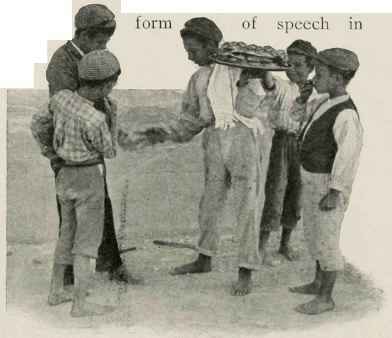
The Maltese Of The Future.
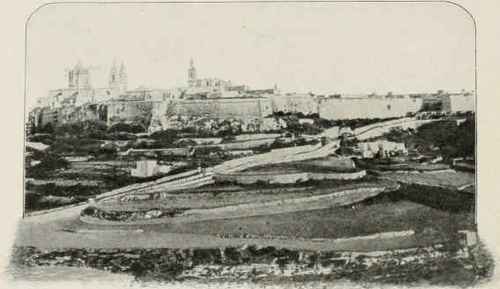
Citta Vecchia, Malta.
Malta's chief source of interest is Valetta, but this is relatively modern. To go behind the dazzling curtain which the Knights of St. John drew between their own age and the ancient history of Malta, one must journey six miles inland to its former capital, Citta Vecchia. Not that this has a thousandth part of the vivacity and novelty of Valetta. On the contrary, except for the presence of its sumptuous Cathedral of St. Paul, the old Maltese metropolis seems moribund. Yet who can wonder that it is decrepit? Its dark, disintegrating walls date from an age compared to which Valetta's birthday is but yesterday. It is believed by all to have been founded seven centuries before the Christian era, and there are those who trace its origin to an antiquity still more remote. Its inland situation on a rocky height was doubtless chosen for security. In Cicero's time it was already famous for its cotton fabrics, which he mentions, calling the city also "Melita," from which the present name of the island is derived. For more than two thousand years this was in turn the capital of all the different sovereignties which ruled the island until the building of Valetta by the Knights. Hence, on account of its associations, as well as for the noble view of land and sea which it commands, I was abundantly repaid for visiting its quaint and narrow streets. But memories and mendicants were my sole companions. The pavements echoed to my footsteps. I do not know an inhabited city in the world whose ancient glory has so thoroughly vanished. I had a feeling that the place was haunted. Silence has here succeeded sound, and spirit substance. Its grandeur, once material, is now only ghostly. We feel its presence, but we cannot see it. Its old intrinsic fire is gone, and turning its face sadly toward its brilliant past it now shines only by reflected light. Pathetic efforts have been made occasionally to revivify it, but in vain. Exceptional privileges have been offered to its citizens, in the hope of inducing people to reside here, but the islanders generally avoid it as if it were a tomb. It follows, after all, the law of life. The younger city by the sea has steadily supplanted it, absorbing all its vigor and vitality, and finally, leaving it seated solitary on the hillside, like a withered crone, peering through bleared eyes at her pretty grandchild playing on the shore.
Continue to:


My Books

