


Chapter I. Locality Differences As They Affect. Apiary Management
Description
This section is from the book "Honey Getting", by Edward Lloyd Sechrist. Also available from Amazon: Honey Getting.
Chapter I. Locality Differences As They Affect. Apiary Management
We are only beginning to understand the importance of a study of bee beha-
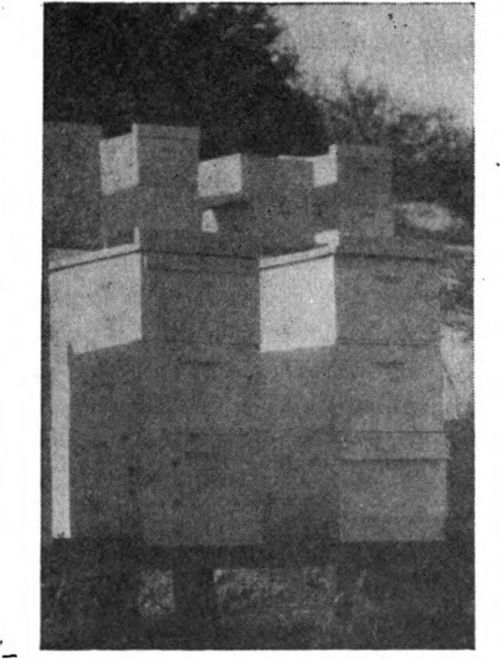
A hot location with hives in full sun, on stands.
vior if a success is to be made of beekeeping. One phase of behavior that is attracting more and more attention is the modification of the activities of the bee in accordance with locality difference. In the honeybee, as in all animals governed by instinct, uniformity of response to like stimuli is always to be assumed. Under the same external conditions bees always respond in the same way and so far as practical beekeeping is concerned, the activities of bees are only their reactions to the external influences brought to bear upon them.
The stimuli to which bees react may differ in quality of intensity in different localities. The same stimuli in any locality always produce the same reaction. This simplifies beekeeping because the beekeeper knows that when there is produced, naturally or artificially*, certain series of external conditions to which bees must react, the results will, in every case be the same.
There was a time when men believed that bees behaved according to their own sweet will and that one never could tell what the bees would do or when they would do it. This belief was held because the foundation principles of beekeeping, the mainspring of colony action, had not been discovered. Beekeepers all over the world puzzled over their problems and talked over their difficulties among themselves.
The result is that certain things have been discovered to be fundamental and applicable to all locations and all situations. * Appendix Note 1.
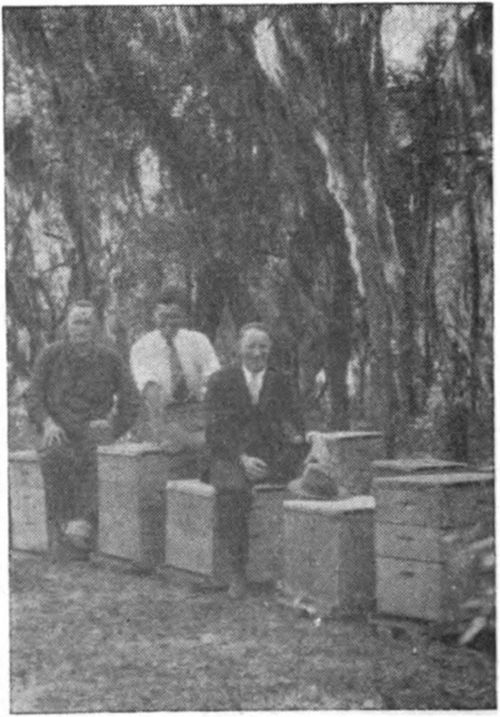
A shady location where ground does not become too hot.
These fundamental truths of beekeeping are few and simple; but it is necessary that they be known, understood, and applied, before a beekeeper can be successful as a honey getter. Although an occasional good crop is produced by one who knows little of bee behavior, no one can have uniformly good results under varying conditions of season and location unless he is willing to devote some time to the study of bees and their reactions to the various influences which cause them to behave as they do.
Continue to:


My Books

