


Repousse On Wood. Continued
Description
This section is from the book "Elementary Metal Work", by Charles Godfrey Leland. Also available from Amazon: Elementary Metal Work.
Repousse On Wood. Continued

Fig. 84. Study of Weeds, entirely in Outline, with Tracers.
Let it be impressed on the mind that the pupil, before going further, must learn to run the lines and execute the matting or grounding with perfect ease, confidence, and accuracy. One hour of earnest work at this stage may save weeks or months of feeble and amateur-like labour in the future. Fig. 84.
To prepare brass for work, either pass it through a roller if it be not perfectly smooth, or else iron it flat with a common flat-iron. Then rub the surface with fine sand-paper, or with pumice stone or emery powder. Then screw it to the board.
To draw the pattern on brass, execute it first on thin strong paper with a very black soft lead pencil or with a crayon pencil. Then lay this, face down, on the brass. To hold it in place you may gum the edges to the metal. Then with an agate burnisher or a paper knife, or any smooth hard substance, rub the back, and the pattern will be transferred. If not quite distinct, draw it over with pencil or ink.
Another way is to lay black carbon-paper on the brass, and on this the design, and go over the whole with an agate or bone point, or even a very hard lead pencil.
A third method which I have often employed, is to lay the pattern on the brass and go over it with a prick-wheel, which may be bought for 9d. at the shops. Fig. 85. This will leave lines of small dots in the metal. Go over them with pencil or ink.
Having the pattern on the metal, outline it with the tracer, and note that the accuracy and clearness with which this is done will determine the value of the whole work. Then execute the matting. Take great care not to cut through the brass; if you attempt to produce a finished line at the first effort you will be sure to do this. To avoid it go over the line.

Fig. 85.
Ancient brass was so hard and brittle that it could not be easily worked on wood. It was the discovery by me, that as now made it is more ductile, which led to working on wood. But if the pupil finds that after much hammering the brass becomes hard, and brittle, and breaks easily, it may be softened by laying it on a fire till it is quite hot, or even red-hot. This process is called Annealing. To dispense with it, endeavour to avoid too much beating and needless repetition of matting. The art of producing the most effect with the least work will come with practice. As a rule, annealing is seldom required in working on wood. If the brass be cut through, any tinsmith will solder the breaks, but it is well to learn to do this yourself.
Where there are very small curves and corners, the worker must use the smallest curved tracers, and the pointed matt. Figs. 86, 87. With a little experience he will soon overcome all such difficulties.
Working on wood is only discredited by some because they have never patiently experimented with it and discovered all its capabilities. When the pupil has found out by careful work how far he can go and what degree of relief he can produce, - and this is far greater than is generally supposed, - he can greatly increase the relief in two ways. One of these is to take the metal from the wood, and glue on to the latter, where a high relief is needed, another piece cut to shape. On this the metal will, with careful work, assume a high relief.
Another method is to apply, or fix, a lump of cement on the wood, and work on it. This forms a transition stage to working on the mass of pitch, but is extremely easy. Where the pitch and brickdust cement cannot be had, shoemaker's wax mixed with dust or dry clay forms a tolerable substitute.
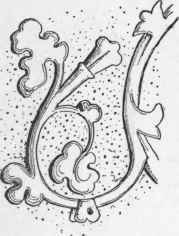
Fig. 86. Study of Small Curves.
What is to be specially noted in minor art work is, that perseverance and ingenuity will enable any pupil, with even scanty resources, to accomplish more, and develop more readiness and confidence, than if he had a well-fitted workshop and every convenience. He who learns by attending carefully to the rudiments to make the very utmost out of everything (which is seldom done), will, when provided with abundance of tools and materials, make surpassing progress. I have known boys of thirteen and fourteen years to produce on wood, in my school, beautiful repousse work in high relief, which skilled workmen declared it was impossible to make save on cement or pitch.

Fig. 87. Ornamental Plaque.
A block of lead one inch in thickness is specially adapted to sheet-silver work, and for fine or delicate brass repousse. It is not nearly so easy as working on wood where large patterns are used, nor does it permit such bold relief. Lead is generally used by jewellers.
It is worth observing, that if the pupil has really mastered working on wood, it is much less difficult than working on pitch, so far as moderate reliefs are concerned (which are all that are required in more than half the articles made in sheet metal), while the results are, of their kind, fully equal to anything made on pitch or cement, if the worker gives the same amount of care to them. In the Middle Ages an enormous proportion of all the decoration, now so much admired, whether in wood-carving, wall-painting, or leather-work, was the result of a thorough knowledge of the merest rudiments.
I would have it, however, distinctly understood that I do not at all give preference to wood, or anything else, over pitch or cement, especially for deep relief and elaborate work. But I insist on it, that in every instance where I have heard or read of wood being decried altogether, I have found that those who did so were utterly ignorant of its capacity or what can be done on it. Neither did they understand what Karl Krall, one of the first artists in England, has recognized, that working on soft wood is the most practical, easiest, and cheapest method for beginners, and is therefore the best. It is very important that, for such beginners, everything shall be as simple as possible, therefore, as hammering on wood is far simpler than on cement, young people can learn by it more readily.
It was entirely from its great cheapness, ease, facility of transport, and cleanliness, that brass-work on wood became very suddenly popular, and if repousse on cement has since followed in its wake and is now extensively followed, it owes its prosperity to the beginning made by the former.
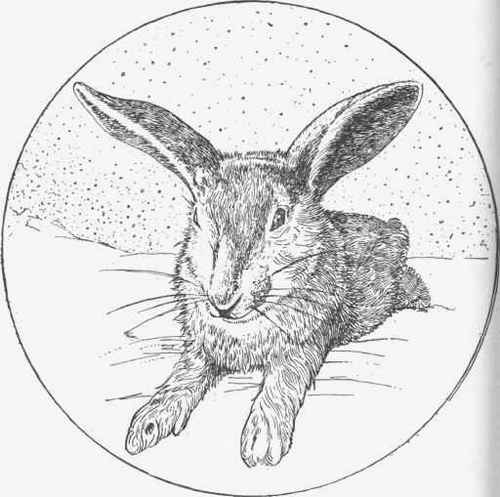
Fig. 88. Repousse, worked with Fine Tracer or Etched.
Repousse can also be admirably executed in raw hide, i.e. of oxen or cows, which, when dry, is hard and yet tough. This is a material as yet little known except in America, where the most durable trunks in the world are made of it. In Italy the most beautiful of leather-work was made of raw hide, stamped or cut.
It is worth noting that all the process for working sheet brass on wood is almost exactly applicable to sheet-leather work, so that in learning one we learn the other. Even the same tools are in a great measure used.1
Relief may be increased by placing on the wood layers of pasted paper, felt, or card, or pasteboard, the use of these depending on the thickness or quality of the metal. Willow-wood, when it can be obtained, admits of a very deep relief.
All kinds of lines can be executed on metal surfaces by stamping with the hammer, but for these, of course, different matts or tracers are needed. With a very small and not too dull (nor too sharp-cutting) tracer (e.g. - ), and with one or two slightly curved (e.g.
 ), one can execute hair on animals, and in fact all the ordinary details of pen-drawing. Care must be, however, taken not to cross over or mix lines when it can be avoided.2
It is not unusual, even when there is a large surface covered with a small embossed, chased, or repousse pattern, to polish the whole equally. The result is to greatly diminish the contrast of light and shadow, which it is the real object of embossing to produce; and what is more, this relief disappears with every fresh cleaning. The numerous and minute details often so freely imparted as to how to use machinery, tools, sand, lime, dipping in aquafortis, etc., must be consulted with great caution by all beginners. Rotten-stone, or any ordinary soft cleaning powder, with spirits of turpentine or sweet oil, and then an application of petroleum with a soft rag or chamois, will answer all ordinary purposes.
Oxalic acid is very thoroughly cleansing; care should be taken
1 Vide "Leather Work." Whittaker and Co.
2 This is also a good rule in pen-drawing; many very eminent artists, such as Callot and the late Rev. Mr. Petit, often executed very elaborate pictures with very little crossing of lines.
to wear gloves while using it, as it is very painful and even poisonous in scratches or cuts. The best preparation with which I am acquainted is a German paste made and sold by Barkentin and Krall, Regent street, who will supply all that is needed for repousse work.
But while the pattern or relief should, it is true, be kept well polished, the ground may in many or most cases be even darkened slightly to advantage, as by rubbing paint or sulphate of ammonia into the minute dots and scratches of the matting. It is not merely because this makes an object look antique and interesting that this effect is beginning to be imitated so much in art, it is because it really produces a vivid relief, and contrasts shadow with light, also defining the pattern more distinctly. To secure this latter object all pains should be taken in decorative art, especially where the design is at all elaborate or complicated. In most ordinary repousse work the outline at least may be thus darkened to advantage.
All weak amateurs, and those who are feeble as regards design, are greatly given to produce large aggregates of petty ornament, and it is precisely this kind of work which is soonest and easiest polished into invisibility.

Continue to:


My Books

