


Choosing Fish
Description
This section is from the book "The Profession Of Home Making", by American School Of Home Economics. Also available from Amazon: The Profession Of Home Making.
Choosing Fish
Fresh fish have full lifelike eyes, red gills, silvery, not slimy skin and scales, firm tail, not flabby and drooping, and firm flesh. Plump short fish are better than long thin ones of the same variety. The time of their transfer from the water to the table should be as short as possible. While fish as a whole is not so nutritious as meat, it may often take the place of meat on our tables. It is the province of the cook to supplement the fish with such sauces as will supply both flavor and nutriment.
In general, the methods of cooking fish are the same as those followed in cooking meats. The flesh should be thoroughly cooked, but not overdone. Oily fish, like salmon and mackerel, are best broiled. Almost any fish may be baked whole or in fillets. Boiling is an extravagant method of cooking unless the water is used for a soup or a sauce. Steaming is better than boiling, as more of the flavor is retained in the fish. Frying in salt pork fat is a desirable way to cook fish lacking flavor or fat, but for uniformity in cooking the kettle of deep fat is to be preferred to the thin layer in a shallow pan.
If a fish lacking in fat is brushed over with oil or melted butter and broiled under gas, the result gives the best effects of frying without the disagreeable odors.
Fish stock may be kept for several days if convenient, or it may be used as the basis of a sauce to serve with the fillets of the flesh.
Since so many varieties of fish lack fat, rich sauces are generally considered a necessary accompaniment. The composition of the fish and the way in which it is cooked should decide the kind of sauce to be served with it. Acids like lemon juice, pickles, and tomato are often agreeable additions to a fish sauce.
Sauces with Fish

For Fish Stock,
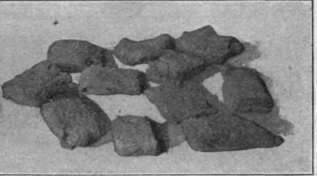
Ready to Fry

Fish Stuffed And Trussed For Baking
Continue to:


My Books

