


Crab-Apples. Part 4
Description
This section is from the "American Horticultural Manual Vol2" book, by J. L. Budd. Also available from Amazon American Horticultural Manual, Part Two.
Crab-Apples. Part 4
Howard (Hamilton)
Probably a hybrid of the native crab (Pyrus Iowensis) with the cultivated apple (P. Malus). Originated near Oakville, Iowa; first brought to notice by a Mr. Howard, and later it attracted notice in the orchard of Jesse Hamilton, of Morning Sun, Iowa, about fifteen years ago.
Fruit large; size two and one-quarter by two and one-half inches or larger, roundish cylindrical, flattened at ends; surface green; dots obscure, many, whitish; cavity regular, acute, with stellate russet; stem long; basin wide, medium deep, with a few minute wrinkles; calyx open; segments erect convergent. Core closed, small, rounded, nearly sessile; cells obovate, entire; tube cylindrical, wide, extending to center of fruit; stamens extremely marginal, touching the segments; seeds few, small, plump; flesh greenish white, with the acid astringency of the wild crab; use culinary. A very late keeper.
Hesper Blush
Fruit medium, roundish, regular; surface a clear rich yellow, blushed on sunny side; dots white, minute, sometimes a few russet dots; cavity regular, russeted; stem long; basin shallow, wrinkled; calyx closed. Core closed or half open; flesh yellowish white, pleasant subacid, good for table or culinary use. November.
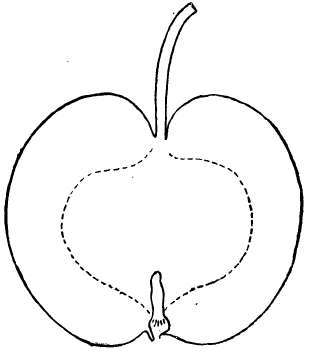
Hesper Blush Crab.
Hyslop
An old and widely known variety. Tree of strong growth, rather spreading. Wood light-colored, a little downy. Its late season and showy appearance makes it valuable for market.
Fruit large, produced in clusters, roundish, tapering, regular, sometimes obscurely angular; surface smooth, nearly or entirely covered with very dark solid red, with heavy blue bloom, a beautiful fruit; dots minute, yellow, obscure, many; cavity obtuse, regular; stem long, slender; basin flat, corrugated; calyx small, closed; segments divergent. Core closed; tube conical; stamens median; flesh yellow, acid; good for culinary use and for cider. September to November.
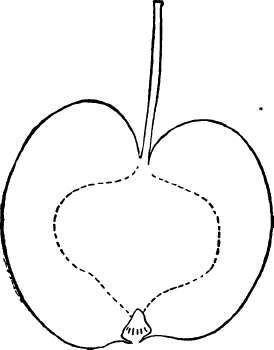
Hyslop Crab.
Island Gem
Origin, town of Grand Isle, Grand Isle County, Vermont.
Fruit medium, round, slightly oblate, red, with yellow ground; flesh yellow, mild, subacid, hardly good; use cider and jelly. Season, October (in Champlain Valley).
Jumbo
Origin, Newport, Vermont. "Probably a hybrid."
Fruit very large, oblong; surface bright red over yellow ground, flavor a mild acid; quality best to very best for dessert and kitchen. November and December.
Kentucky Mammoth
Supposed origin Kentucky, as it was received about thirty years ago under the above name from Charles Downing by B. A. Mathews, Knoxville, Iowa. Evidently a native crab hybrid (Pyrus Iowensis x P. Malus).
Fruit much like the Mercer, but lighter green and more ob late. Desirable for culinary use as a substitute for quinces.
Continue to:


My Books

