


Description Of Apple Varieties: C. Part 4
Description
This section is from the "American Horticultural Manual Vol2" book, by J. L. Budd. Also available from Amazon American Horticultural Manual, Part Two.
Description Of Apple Varieties: C. Part 4
Cogswell
Origin, Griswold, Connecticut.
Fruit above medium, roundish, oblate, regular; surface rich yellow, nearly covered with red, marked and streaked with bright red; dots many, areole; cavity large, thinly russeted; stem short, rather slender; basin small, shallow. Core small; flesh yellowish, fine-grained, tender, juicy, scarcely subacid, rich aromatic, very good to best. December to March.
Collins (Champion)
Originated thirty-eight years ago on the old Merriam farm near Fayetteville, Arkansas; named in honor of the introducer, Geo. Collins; tree a vigorous grower in nursery and orchard, very productive.
Fruit large, roundish oblate, slightly unequal; skin of medium thickness, tough; surface moderately smooth, with some fine leather-cracking, yellow, washed with dull and bright red, splashed and striped with crimson; dots light russet, many with dark centres; cavity large, regular, deep, flaring, russeted and slightly lipped; stem about one inch long, of medium caliper, curved, largest at twig; basin large, regular, deep, abrupt, slightly furrowed and downy; calyx medium, closed, or partially open; segments short, wide, converging. Core medium size, conical, clasping, partially open; seeds few, of medium size, plump, brown; flesh yellow, satiny, moderately coarse, crisp, moderately juicy, subacid, good. Winter. (U. S. Agr. Report, 1895.)
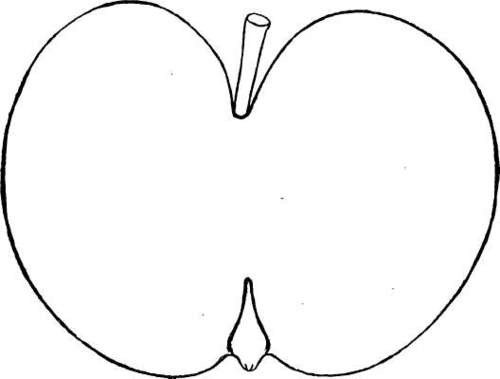
Cogswell.
Colman
A cross of Jonathan with Northern Spy pollen, originated by A. F. Colman, Corning, Iowa. 1902 was the third year of bearing; tree productive.
Fruit large, round, somewhat truncated; surface waxen yellow, thinly striped and splashed bright red, mixed on sunny side; dots minute, white, obscure, few; cavity deep, narrow, regular, acuminate, with small stellate russet patch; stem very short; basin smooth, cup-shaped, narrow; calyx closed; segments flat convergent. Core closed; cells ovate, slit; tube conical; stamens median; seeds numerous, plump; flesh white, juicy, spicy subacid, quality excellent, worthy of its parents. Early winter. Promising for dessert and market.
Early Colton
Origin unknown; tree vigorous, upright, spreading.
Fruit medium, roundish toward either end, slightly ribbed; surface pale greenish yellow, often with brownish red blush; dots large, many, obscure, greenish; cavity narrow, regular, shallow; stem medium stout; basin shallow, corrugated, narrow; calyx nearly closed; segments divergent, rather long; tube funnel-shaped; flesh whitish, crisp, juicy, sprightly subacid, good. August.
Cooper
Origin unknown; supposed to be some old Eastern variety; by some thought to be from France; tree vigorous, productive.
Fruit large, roundish oblate, regular, sometimes unequal; surface pale waxen yellow, with a few stripes and splashes of bright mixed scarlet and very distinctly marked carmine; dots few, minute, brown; cavity wide, regular, green; stem medium, green; basin regular, abrupt, deep; calyx small, closed. Core small, closed, meeting; seeds numerous, plump, short, dark; flesh pale yellow, tender, juicy, vinous, mild aromatic subacid, good to very good. September and October.
Continue to:


My Books

