


Pathologic Features Influencing Prognosis
Description
This section is from the book "Early Detection And Diagnosis Of Cancer", by Walter E. O'Donnell. Also available from Amazon: Early Detection And Diagnosis Of Cancer.
Pathologic Features Influencing Prognosis
Some estimation of the prognosis of a particular lesion is possible on the basis of certain pathologic features. These are summarized in Table 7.
It should be apparent that these criteria are by no means absolute. The entire clinical and pathologic picture must be taken into consideration in estimating prognosis. Furthermore, such criteria are far more valuable in evaluating group experience than in predicting the outcome in an individual patient.
Involvement of axillary nodes is probably the most commonly used criterion in assessing prognosis (Fig. 47).
Histologic grading of breast cancer according to degree of differentiation continues to have its proponents and critics. Its contribution toward estimating prognosis is a matter of controversy, although majority opinion at present would appear to downgrade its value.
Inflammatory carcinoma of the breast has a very poor prognosis. Diagnosis of this particular variant of breast cancer, as well as the presence of distant metastases, rests primarily on clinical grounds rather than pathologic evidence. Therefore these features are not included in Table 7 despite their obvious influence on prognosis.
It might be added here that breast cancer in the pregnant or nursing woman carries an unfavorable prognosis. Nevertheless, pregnancy should not in itself cause a patient to be classified as inoperable. The age of the patient per se does not appear to be a decisive factor, although it was formerly thought that breast cancer in young women had a distinctly poor outlook.
Table 7. Pathologic Features Influencing Prognosis Of Breast Cancer
Pathologic feature | Prognosis | |
Favorable | Unfavorable | |
Site of origin in breast | Outer half, especially upper quadrant | Inner half |
Size of primary tumor | Small | Large |
Histopathology | Papillary, gelatinous, or medullary | Anaplastic carcinoma |
cancer | ||
Skin fixation | Absent | Present |
Evidence of diffuse infiltration | Absent | Present |
beyond duct or lobule | ||
Involvement of axillary nodes | Absent | Present |
Involvement of internal mam- | Absent | Present |
mary nodes | ||
Plasma cellular reaction around | Present | Absent |
tumor | ||
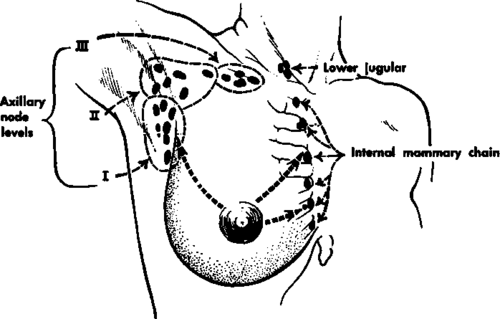
Fig. 47. Pathways of spread of breast cancer.
Continue to:


My Books

