


Cabbage
Description
This section is from the book "Food And Health: An Elementary Textbook Of Home Making", by Helen Kinne, Anna M. Cooley. Also available from Amazon: Food And Health: An Elementary Textbook Of Home Making.
Cabbage
The method given makes cabbage a delicious and attractive vegetable, as delicate as cauliflower; and the odor in the kitchen is not noticeable.
Select a small cabbage, with the ribs in the leaves not too thick. Prepare the cabbage before washing it by cutting out the stalks from below with a sharp knife. Separate the leaves. Have ready the largest kettle available, nearly full of rapidly boiling water. Drop in one cabbage leaf at a time, pressing each one down with a long-handled spoon or skimmer. Do this so slowly that the water does not stop boiling. Leave the kettle uncovered, and allow the cabbage to cook from 12 to 15 minutes, depending on the thickness of the leaf stalks. Remove the leaves with a long-handled skimmer, putting them into a colander standing on a plate. Immediately pour the hot water down the sink drain, turn on the cold water to flush away the odor, and fill the kettle with cold water. While the cabbage is cooking, you have made a pint of butter sauce, adding a teaspoonful of salt, and have prepared 1/2 cup of buttered crumbs. Cut the cabbage leaves slightly, placing them in a baking dish; pour the sauce over them, sprinkle the crumbs on the top, and brown the crumbs in the oven.
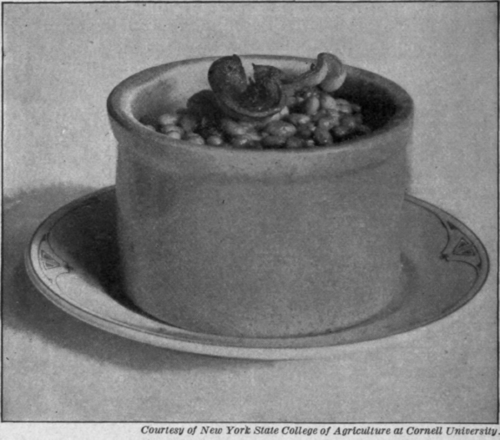
Fig. 104. - Baked beans. The beans are thoroughly cooked, but firm and whole.
Continue to:


My Books

