


Lesson 21. The Kitchen
Description
This section is from the book "Food And Health: An Elementary Textbook Of Home Making", by Helen Kinne, Anna M. Cooley. Also available from Amazon: Food And Health: An Elementary Textbook Of Home Making.
Lesson 21. The Kitchen
How can we make the kitchen comfortable and pretty, pleasant to work in for breakfast, dinner, or supper?
One warm, pleasant day, when the girls' club had its meeting at Marjorie Allen's home, one of the members who went into the kitchen to help make the lemonade, exclaimed:
"Isn't this the pleasantest room in the whole house?"
Is our own kitchen at home so comfortable and attractive that our friends can say something like this?
The Pleasant Valley girls had the chance to furnish a kitchen, beginning with the walls and floor, in the Ellen H. Richards House (page 289); but at home we seldom can do so much as this. However, if we have a plan, we can do one new thing at a time, and make changes slowly. If our kitchen is small, it saves steps; if it is large, it is airy; and in either case we will make the best of it.
"May-haves" and "must-haves" in the kitchen. We may have the kitchen pretty and we must have it clean; and it ought to be convenient in saving steps and in making the work easier to do.
A pretty kitchen. Marjorie Allen persuaded her mother to let her help plan the doing over of the kitchen. They put a soft shade of buff paint on the wall, because paint is cleaner than paper; and the floor was painted brown. Mrs. Allen had made a braided mat, in the winter days and evenings, of soft brown and buff with a touch of blue in it. There was a dull blue-and-white cushion in a rocking chair, and some old-fashioned blue-and-white dishes on the shelf. The window shelf at the south window held some plants; and they planned to have a vine outside this window for shade in summer.
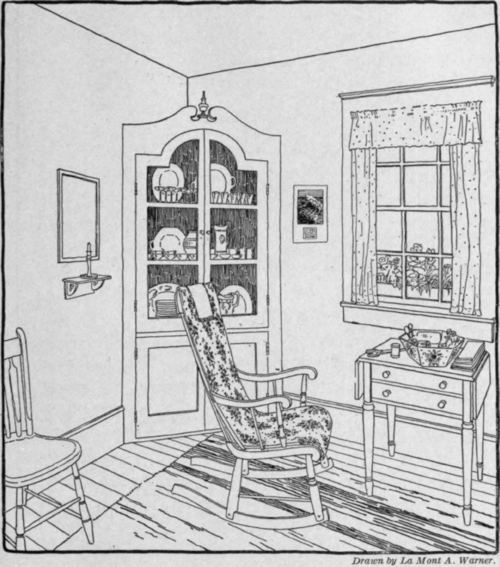
Fig. 82. - " Isn't this the pleasantest room in the whole house?" A corner of Mrs. Allen's kitchen.
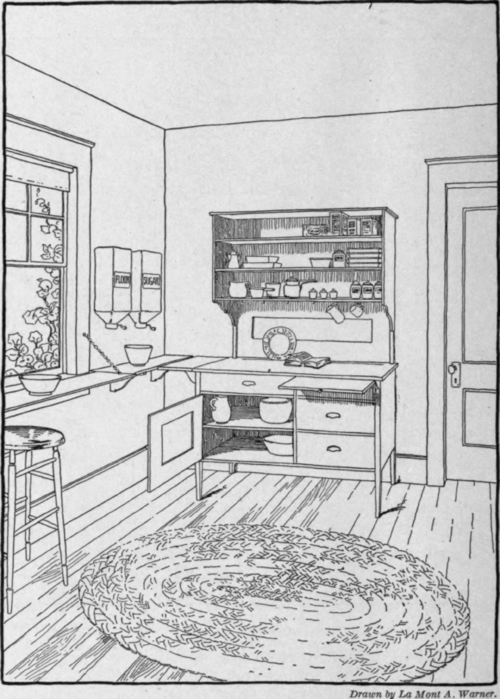
Fig. 83. - Another corner of Mrs. Allen's kitchen. Mrs. Allen made a braided mat in the winter days.
A clean kitchen. In speaking of beauty, we are not able to leave out the thought of having things that are easily cleaned, you see. A woven "rag" or braided, mat can be taken outdoors, scrubbed with a brush and soapsuds, and rinsed with clear water thrown on from a pail or hose; or can be washed in a tub.1 It is a good rule to have nothing in any part of the kitchen that is not washable.
The floor. It may be smoothed off, and painted or oiled. A floor covering that is expensive at first, but that lasts for many years, is an inlaid linoleum or cork carpet; it is warm and soft to the feet, keeps out damp, and is easy to keep clean. This is something for which to save up money, if you believe in cleanliness and comfort. Begin with having it in the pantry. Let it lie on the floor to stretch from use for a month or two; then cement it along the edges. This ought to keep out mice and ants.
The walls. Paint is the very cleanest and best finish. It costs less in the end than paper because it lasts longer.
The sink. Whatever the sink is made of, have it open underneath. This is the only way to be sure that it is really clean around the sink. If there is a closet underneath, it may be damp, and we may "tuck away" things, and then feel too tired to clean the closet out.
1 Rag rugs and strips are in fashion again. Mollie Stark's grand-mother makes them for her friends.
Here is a picture (Fig. 84) of a sink hung from the wall. This is made of enameled iron. If the sink is hung in this way, it can be placed high enough so that Mother's back is in proper position. On page 136 is a picture of a sink that is too low. When the sink rests upon legs, these come of a standard height, inconvenient, and harmful for tall people. If you have a wooden sink, plan to change it for something else as soon as you can. Plain iron is better than wood.
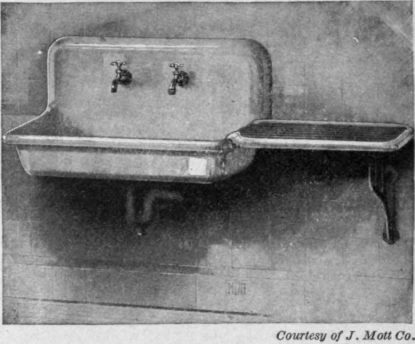
Fig. 84. - An enameled iron sink hung from the wall.
Saving steps. One day, after school, Marjorie Allen with a foot rule in her hand began to follow her mother round the kitchen, measuring her footsteps behind her, instead of helping with the supper as usual. Then she drew a plan of the kitchen, with lines to show where and how far her mother walked in getting supper, like Fig. 85. Mrs. Allen was amused at first, but, when Marjorie told her how many miles she traveled a year, she was interested; and after supper, they all sat down to calculate what could be saved by changing some things in the kitchen. All the girls had been reading at school the bulletin about the Home Kitchen;1 and, although Miss James warned them not to trouble their mothers that night by turning the kitchen "topsyturvy," they could hardly wait until Saturday to try some change. See if you can save steps by changing movable things about at home; of course, if your mother is willing.
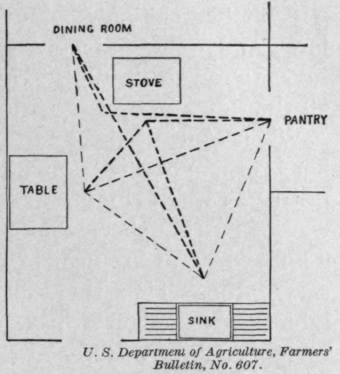
Fig. 85. - A large kitchen with inconvenient arrangement.
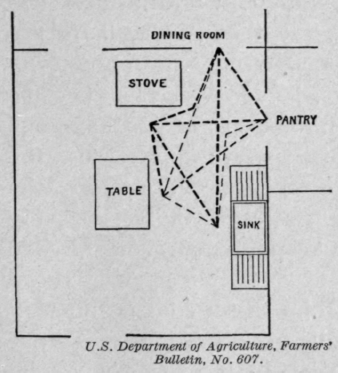
Fig. 86. - The same kitchen has been improved.
1 See U. S. Department of Agriculture, Farmers' Bulletin, No. 607.
A kitchen cabinet. You are fortunate if you have a large and well-aired pantry for keeping food; but it saves time and strength to have some materials at hand all the time.
When Marjorie began to talk about buying a cabinet, her brothers decided to make something that would do nearly as well. Figure 83 shows what they did in the way of putting shelves around the kitchen table. The flour and sugar are near by, you see; and all the little things, too. Then they put casters on another smaller table, and nailed on strips of wood around the top. This was for running dishes and food in and out of the dining room, kitchen, and pantry; for their rooms were large.
Continue to:


My Books

