


Lesson 21. The Kitchen. Continued
Description
This section is from the book "Food And Health: An Elementary Textbook Of Home Making", by Helen Kinne, Anna M. Cooley. Also available from Amazon: Food And Health: An Elementary Textbook Of Home Making.
Lesson 21. The Kitchen. Continued
Cooking utensils. For good work you need a few well-selected utensils. Enameled ware and aluminum are among the more expensive kinds, but both are serviceable. Steel or iron are materials that wear well and are useful in frying pans especially. There is nothing better than a well-worn iron spider which has become perfectly smooth from years of use. If you have one of these that you think of throwing away because the under part is encrusted with a black covering, give the pan a thorough boiling in a solution of lye, washing soda, or soft soap, and then keep it among your kitchen treasures.
Water in the kitchen. John Stark said on another day: "Father, I want to talk to you seriously. What would you think of going without the addition to the barn another year, and having a force pump in the cellar so that mother can have hot and cold running water in the kitchen, and we all can have a bathroom?" What do you think his father said? He was a little doubtful about the school where they studied such things; then he remembered that at the Farmers' Institute he had heard another farmer talk about just this thing. And what did he do? He wrote to the State University and asked for advice about water on the farm. They gave him some practical help, and now the Stark home has a good water supply.
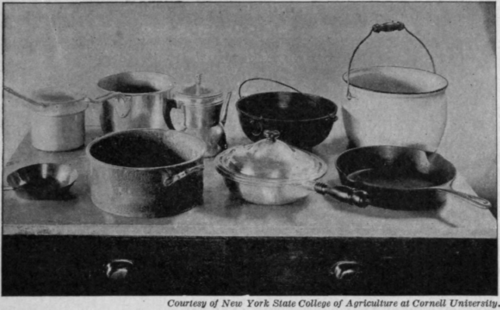
Fig. 87. - For good work you need a few well-selected kitchen utensils.
Running water, what a blessing! If you have a spring of good water on high land and the water can be piped into the house, you are wealthy. Sometimes, several neighbors can do this together. Happy is the small town that has a pure supply and can pipe it into the village!
What are some simpler methods that can be used on the farm?
Here is a drawing (Fig. 88) of what one family did in a cemented rain-water cistern, with a pump in the kitchen.
Pleasant Valley. When crops fail, and business is poor, we cannot put in expensive waterworks. As the water in the Groves' well was a little hard for washing, they always had rain barrels for water from the roof, being careful to let the rain wash off the roof before it was turned into the barrels. This picture shows what Mr. Groves devised one day when the family was talking about saving steps. He ran a short pipe into the kitchen from the barrel, with a spigot on the kitchen end of the pipe. The pipe was arranged so that the barrel could be taken off and down to be cleaned. Also there was a netting over the top of the barrel. Why? To keep out mosquitoes, of course. This plan does not work in a very dry summer, but Mrs. Groves found it a help, and so she had another one put by the shed where the washing was done in warm weather. The next step was

Fig. 88. - Mr. Groves put up a rain barrel to catch water from the roof, and ran a short pipe into the kitchen from the barrel.
A tank in the attic. More convenient still is a water tank in the attic, with a good hand pump that pumps the water from a well or cistern. One tank of this kind needs many strokes a day to keep it full, but the family prefer this exercise to carrying water in and out in pails. A windmill or a steam pump is the next advance in way of improvement, and electricity is best of all. Perhaps, some day, we all can have it.
Some other ways of saving strength. Machines in the kitchen save just as much as machines for farm work. We have seen pictures of the bread machine, and of the Dover egg beater. A meat chopper, screwed to the table, is quick to use and easy to wash. There are some things for sale that are foolish to buy, - like an egg opener that an agent carried about Pleasant Valley one day. But there are many useful devices that you want to plan to buy, when you know that they are good. You can have some problems in arithmetic and physics that will help you to understand why a machine is a saving.

Fig. 89. - A water system with a wind-mill furnishes running water to the house and barns.
Exercises And Problems
1. Examine a Dover egg beater. Count the cogs on the large wheel and the small. How many times will one turn of the large wheel turn the small wheel? The handle turns the large wheel, and the small wheel the blades. How many "beats" will the white of egg have in the bowl for one turn of the handle?
Beat the white of a fresh egg in a bowl with a fork, until the white is so dry that you can turn the bowl upside down, and count the number of beats as you work.
Now, here is your problem. How many beats do you save if you use the Dover?
2. The Pleasant Valley home-making class studied the working of a pump and a "windlass" for a well, in their Physics, to find out how they worked. Suppose you do.
3. Mr. Stark put in a windmill to pump water into a tank for the house and barn and garden. How does the wind pump water?
4. Draw a plan of your own kitchen at home, like the one in Fig. 85. Can steps be saved?
Review
1. Do you like the same breakfast in summer as in winter? Why not?
2. Can you tell why a farmer takes a more hearty breakfast than a man who works in an office all day?
3. Give three different ways of making coffee. Which way would you prefer to use for breakfast?
4. What are some meat dishes that are not expensive and are easily prepared for breakfast?
5. Is there any reason for cooking cereals?
6. How do you want your oatmeal cooked for breakfast?
7. What is polished rice?
8. In what ways have you seen rice boiled?
9. Do you know any way to use rye and corn products as food?
10. When eggs are plentiful, how can you preserve them for use in the winter?
11. Tell how you will have eggs cooked differently every morning for a week.
12. If you want to raise eggs to sell, what things about eggs will you remember?
13. Do you know how to make popovers?
14. What makes quick breads light?
15. Can you make any suggestions for saving steps in the kitchen?
16. Plan a kitchen that can easily be kept clean.
17. How may one have running water in a kitchen?
18. What machine for saving strength would you like to have in a kitchen?
Continue to:


My Books

