


Lesson 9. Preparing Supper How May We Help In Preparing Supper?
Description
This section is from the book "Food And Health: An Elementary Textbook Of Home Making", by Helen Kinne, Anna M. Cooley. Also available from Amazon: Food And Health: An Elementary Textbook Of Home Making.
Lesson 9. Preparing Supper How May We Help In Preparing Supper?
Supper is one of the pleasantest meals of the day, because the hardest work is over for all, and there seems to be more time for the family to chat pleasantly, without a feeling of hurry. In summer the supper comes at the coolest hour, and in the winter there is a feeling of comfort in the warmth of the fire and the brightness of the lighted lamps.
If a girl has not learned to prepare a meal, supper is a practical one for her to begin with; it will give her mother a little leisure at the end of a busy day, and the girl herself is back from school, and glad to do something to help. Miss James, the teacher of the Pleasant Valley School, gives credit for home work, as a part of the household arts work; but this should not be needed to make an energetic girl ready for the task. Marjorie Allen, Mollie Stark, and the other girls were discussing music at one of their club meetings, for they have a chorus in Pleasant Valley; and they all agreed that the time to play or practice upon the piano or organ is not while Mother is getting a meal or washing dishes. What do you think about it? After you have helped with the work, then in the quiet of the evening, when all the grown people can listen and join in the music, is not that a better time?
Setting the table. This is a pretty piece of work for the little ones before they learn to cook. Marjorie Allen makes a play of the table setting for the younger sisters and brothers. They have a table-setting song, and march back and forth in time to the music. Cannot some one of you make a rhyme for this occasion?
The dining table. The table may be standing in the kitchen or the living room, or, if the house is large, there may be a separate dining room; but this is not necessary, and, while it is very pleasant in many ways, it does make more steps. One of the houses in Pleasant Valley has a large old-fashioned kitchen across the back of the house with the cooking conveniences at one end, and at the other, a place for the dining table. Near the table is a corner cupboard that holds enough dishes for the table. That end of the room is cool because there are two doors. The oldest daughter has made a screen from a clotheshorse covered with a pretty chintz-patterned calico; and, when the meal is ready, she stands the screen where it cuts off the heat of the stove. There could not be a pleasanter place for a meal, when Father comes in from work, and Mother is glad to rest a minute.
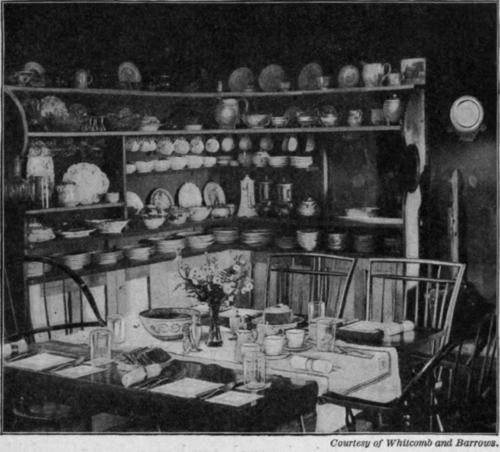
Fig. 33. - An easy way to set an attractive table.
In the Allen family, the father and brothers have a knack for carpentering. When farm work was slack, they added a piazza to the house outside the kitchen, screened it in; and they have all their meals there in warm and pleasant weather. A shelf on each side the window ledge makes it easy to pass things through from the kitchen. Several other families in Pleasant Valley followed this fashion. (Fig. 75.)
What shall we have to cover the table? The table itself is probably an extension table with a smooth top.
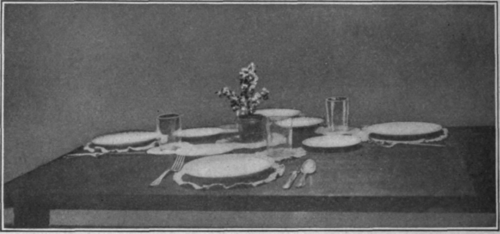
Fig. 34. - A table laid with doilies. The napkin should be at the left.
A dull finish is better than a polished top, because it does not become spotted or scratched so easily.
For a cover, have you ever tried white table oilcloth in the summer? It looks cool, can be washed off quickly at the end of each meal, and saves laundry work in hot weather. Why should a large tablecloth be used in summer or, indeed, in winter? Miss Travers, from the State College, advised the members of the Woman's Club to give them up and instead to use doilies or strips of cloth or larger cloths that just cover the table. Some of the members, of course, did not want to give up their linen in the shape of large tablecloths; but, after all, is not the simplest often the most beautiful as well as the most labor saving?
Here is a picture (Fig. 35) of a table simply laid with strips placed across in such a way that they lie under each place. These happen to be made of Japanese toweling, with blue or brown figures, that costs only ten cents a yard, and is easy to wash; but strips of plain toweling are pretty used in the same way, - a rather fine "crash," for instance. Or you may use squares of cloth with a simple edge, called doilies.1 These can be made in sewing lessons at school, or for extra home work. Paper napkins in the summer are a great convenience; and why not for all the year? If cloth napkins must be used, have small ones.
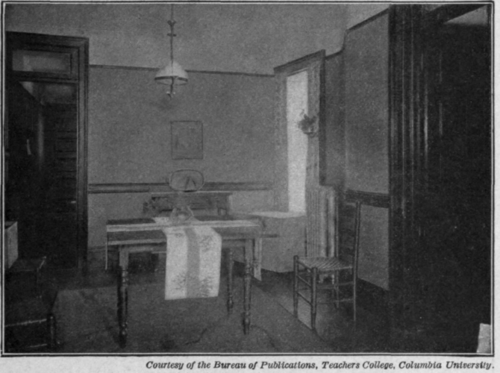
Fig. 35. - A table laid with strips of blue and white Japanese toweling.
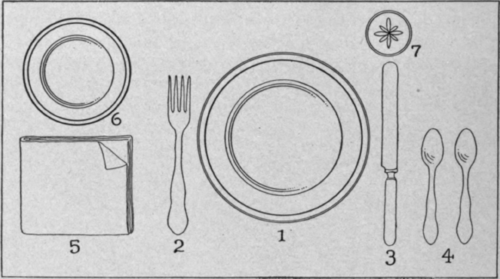
Fig. 36. - A plan for laying one place. 1, plate; 2, fork; 3, knife; 4, spoons; 5, napkin; 6, bread and butter plate; 7, glass for water.
Laying the table. To have everything clean and fresh is the first important thing; next, to have plates, spoons, and forks laid straight. The drawing (Fig. 36) shows a simple way of laying a place. The napkins should be placed at the left. Stand salt and pepper shakers where they are easily reached, and have mats, straw or crocheted, where the hot dishes are to stand, with a tablespoon ready for helping the food. Always know what food is to be put on the table, and plan dishes accordingly. In cold weather, at least, heat the plates and dishes.
1D'Oyley was the name of a merchant in England in the eighteenth century.
Busy people sometimes leave a few of the articles on the table from meal to meal. If you do this, it is necessary to cover the table to keep off a stray fly; and you should be careful that all crumbs are brushed off before the cover is put over. It is neater to clear off the table after every meal.
Continue to:


My Books

