


The Bucket System Of Distribution
Description
This section is from the "Blast Furnace Construction In America" book, by J. E. Johnson, Jr.. Also see Amazon: Blast Furnace Construction In America.
The Bucket System Of Distribution
When the Duquesne furnaces were designed, as I have previously explained, practically all the traditions of blast-furnace design were discarded and the engineers struck out on lines boldly new in almost every direction. This was true in regard to the filling system which was invented for that plant by M. A. Neeland, then chief engineer of those works.
When the plans for the plant were started there were only two mechanically filled furnaces running, one with the Brown top at Sharon, previously mentioned, and one at the Lucy furnaces with the upper hopper closed by an "orange peel" which their superintendent recommended be not adopted.
A set of drawings for a skip-filling system had been made, but when Mr. Rotoff (since deceased) came to the plant to be superintendent of the furnaces which it was proposed to build, he rejected this design absolutely as he had had experience with the very unsuccessful skip-filled furnace at the Lucy plant where the segregation of the lumps and fine had manifested itself very clearly and had demonstrated how completely it could prevent the satisfactory working of the furnace.
The top now to be described was designed by Mr. Neeland to overcome this difficulty, and it has been very successful in doing so. To accomplish this result he decided to use a type of bucket for hoisting the material which could be accurately centered on the furnace top before dumping, and then be dumped uniformly in all directions.
The huge bucket used has its bottom closed by a bell the central rod of which suspends the whole from the truck which runs on the inclined hoist. The general arrangement is shown by Fig. 46.
The scale cars on which the buckets are set run along under the double row of bins from which the buckets are charged with the required material. Each bucket in turn is then brought into the central plane of the skip where it is picked up by the hook on the inclined truck (Figs. 47 and 48) and carried to the top of the furnace. There the front end of the truck, with the bucket hanging to it, enters a vertical slide in the center line of the furnace top and is lowered vertically to a seat over the top of the gas seal. The further downward movement of the slide lets the bell bottom of the bucket pass down inside the gas seal, carrying the counterweighted gas-seal bell with it. The bucket then discharges and the return movement of the slide raises the bell bottom of the bucket back to place, allows the gas seal to be seated by its counterweight, and finally picks up the bucket itself on its own bell, and the return trip of the truck takes it back to the bottom where it is unhooked and another loaded bucket picked up. The arrangement is well shown by Figs. 49 and 50 which show the bucket resting on its seat in the furnace top and its bell on top of the gas-seal bell.
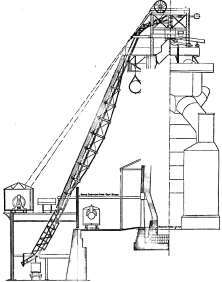
Fig. 46. General arrangement of Norland top.
It will be seen that there is no horizontal velocity whatever to the stock, and that if it is reasonably level in the bucket an equal amount is discharged on each sector of the bell. It is, in fact, as if the hopper of the double bell top were filled under the bins, brought up to the top of the furnace and dumped, instead of being filled by the intervention of the skips. It is worthy of note that the bins are arranged in parallel rows on each side of the scale-car tracks so that the buckets are filled alternately from opposite sides, thus balancing up the irregularity which would have arisen from the great segregation on one side of the bucket had it been filled always from one side. At the same time it is no more than fair to add that Mr. Neeland had this matter of segregation very much in mind, and he designed the bins with the shortest possible chutes to give a low delivery velocity and so arranged that the stream of material strikes as closely as possible on the apex of the bell bottom of the buckets.
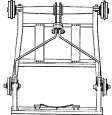
Fig. 47, 48. Bucket carriage of the Neeland top.
In more recent years this system of filling has been improved by the addition of a motor on the scale truck which rotates the buckets either through a certain definite angle after they have been filled, increasing by a fixed amount for each bucketful, as for instance 90, 180 and 270 deg., or else the buckets are rotated continuously, while charging, so that the charge may be distributed in uniform rings, thus securing an equable distribution of lumps and fines in every portion.
Continue to:


My Books

