


6. Fence Guards And Sidewalk Sheds
Description
This section is from the "Safety In Building Construction" book, by The Travelers Insurance Company Hartford, Connecticut. Also see Amazon: Safety In Building Construction.
6. Fence Guards And Sidewalk Sheds
Before the wrecking operations begin, protection against falling objects must be provided for persons who pass by buildings that are to be demolished, when such buildings stand close to a street or to a much-frequented thoroughfare of any other kind. Under some conditions the entire sidewalk is fenced off for a distance corresponding to the width of the building to be wrecked, and a temporary plank sidewalk is laid in the street and immediately adjoining the curb. This fence keeps passersby out of the danger zone, and all the material that falls during the wrecking operation is confined within the space between the fence and the building. Whenever a fence of this kind is used it should be constructed of boards set tightly together and extending to a height of at least 7 feet, so that passers will be unable to look over or through it, and will therefore have no incentive to loiter in the vicinity. The temporary sidewalk should have a strong railing to prevent persons from being struck by vehicles that might approach too closely if no railing were provided.
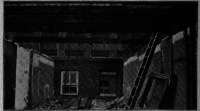
Fig. 2. Method of Lowering Floor Beams in Demolition Work.
In place of the arrangement just described it is much more common to construct a shed, covering the entire width of the sidewalk in front of the property. Structures of this kind must always be strong and substantial, because it frequently happens that heavy objects fall upon them from considerable heights. Moreover, materials are sometimes stored upon the tops of these sheds (although this practice is not to be recommended) and for this reason, also, substantial construction is essential. (See paragraph 10).
It is advisable to install a fence and toe-board on the top of the sidewalk shed at its outer edge, to prevent materials or objects of any kind from sliding or rolling off into the street, whether they are stored upon the shed or fall down upon it from above. Stout wire netting having a mesh not larger than half an inch square is often used in the construction of these fences, and when netting of this kind is firmly secured in position it answers the purpose admirably. For additional protection against falling objects, strongly-framed wire netting should be installed at either end of the sidewalk shed. This should extend upward from the top of the shed at an angle of about 45 degrees, and out beyond the end of the shed for a distance of from three to five feet.
Sidewalk sheds are usually supported on sills 10 inches by 12 inches, or larger. These sills constitute a tripping hazard on the street side of the shed, and in a number of cases persons have fallen over them when passing into the street between the uprights. To eliminate this hazard a railing should be secured to the uprights so that persons cannot pass between them. (See also paragraph 16).
7. Removing Material From Upper Floors
Except in isolated locations material should never be thrown to the ground. The danger of this procedure, when the building to be demolished is on a city street, is self-evident, and in addition much valuable material would probably be ruined by throwing it down. Lumber that is to be preserved should be lowered to the ground or to the top of the sidewalk shed by means of ropes or suitable tackle. Laths and broken boards should preferably be tied in bundles and lowered in the same manner, but in some cases they are thrown a short distance on to the sidewalk shed. Care should always be taken to see that no one is in a position to be injured by the falling material. The workmen should be specially forbidden to throw heavy masses or large quantities of material from the upper floors down upon the lower ones.
8. Material Chutes
Wooden or metal chutes should be provided, in all cases, for the removal of bricks and other loose debris, and they should be completely inclosed so that it will be impossible for the material to escape from them before it reaches the bottom. To prevent the descending material from attaining a dangerous speed, the chutes should not extend in an unbroken line for more than two stories. A gate or stop should be placed at the bottom of each chute, and should be provided with suitable means for closing it to stop the flow of material. If material becomes jammed in the chute, do not attempt to loosen it by hand, but use tools of some appropriate kind.
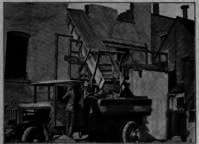
Fig. 3. A Wooden Material Chute.
Place a danger sign at the discharge end of every chute, and do not permit workmen or other persons to stand near a chute, nor to leave teams near one, except while loading from it. Flashboards of extra height should be placed on motor-trucks or wagons that are to be loaded from a chute, to prevent material from bounding into the street.
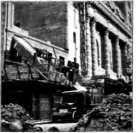
Fig. 4. Wooden Chutes for Demolition Work.
Continue to:


My Books

