


A Charles The First Room
Description
This section is from the book "The Art Of Decoration", by H. R. Haweis. Also available from Amazon: The Art Of Decoration.
A Charles The First Room
The calmer style of Charles I.'s day, when the national mood was revolving slowly from magnificence to severity, a mood which culminated in Puritanism but which was not wholly Puritanic, has for me a very distinct charm. It is a healthy protest. A room of that period may contain all the best points of the Renascence without having wholly lost its real old English character. The refined lady of birth in buckram and satin, with her soft hair frizzed over the ears and knotted behind, her lace-edged apron, and cuffs guarded by muslin over-alls1 that she cleansed herself, moved with a quiet housewifely grace through doors built with all orthodox pediments and broken arches after the manner of Inigo Jones. Her cottage-headed windows had roomy seats capitally panelled; her mantelpiece was chiselled by the hand of Old Stone: her casements were latticed with lozenge-shaped panes of glass not over clear. All the bolts and hinges were worthy, honest, solid, unmistakable, and hence often arrived at beauty - if by beauty we mean what gives pleasure, and if all feeling of reliance and satisfaction is pleasurable.
Her polished floors shone with 'elbow grease' like her sturdy furniture; her English-made tapestry (designed by Rubens), from the Mortlake works so warmly supported by Charles, was in places overhung by a few pictures, her portrait, no doubt, by Dobson, if not Van Dyck - we can see it now, and her whole character in her pleasant face - or a landscape by Gaspar Poussin.
1 An instance is seen in the portrait of Queen Henrietta Maria belonging to Mr. Alfred Morrison.
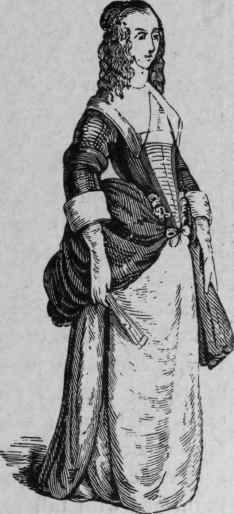
Fig. 33. - English lady, after Hollar 1640.
The broad, well-built room is full of sunshine, which lights up its darkish colouring, greenish hangings, and luminous reflections.
See, the dining-room boasts a ceiling decorated in grotesque by De Cleyn;1 the table is laid for a merry party; the wide fire-place is alight with wood embers reddening the tall fire-dogs; yonder cupboard full of china is half open; basin and ewer await the guests in the farther corner of the room: the draped table is already surrounded by square-backed, square-seated chairs, and garnished with tall greenish glasses and silver-handled forks and pointed knives; their leather case is visible on the sideboard. The salt-cellar still holds its old place in the centre of the table. It is repousse gold. Against the tapestry representing Alexander's Victory stand two 'long settles, with a carpet' (couches, or flat sofas). How clean the rooms are kept compared with the 'olden time,' now that carpets are so common, and so comfortable too ! The silver trenchers and bowls shine with labour, the big glasses shine and the flagons, down to the 'black jack ' of cuir bouilli and the heavy greybeard beside the master's chair; and the sides of the room, and the faces of the guests glance back from a score of surfaces in their own colours. The napery is white, well cared for, and abundant.
The blue and white pots on the shelf hold a few new pipes for the men, already fond of the new-imported weed ! and now the weighted brass clock, engraved with the fashionable sunflower and scrolls, strikes loud on its clear-toned bell.
1 There is such a ceiling at Holland House.
From hence opens her sleeping apartment, a goodly room too with its grave matronly air, its casements and wainscots, its vast oak bed (a little hearse-like now we think) dark with beeswaxing, having a heavy canopy carved inside and out with the conventional lozenge, sunflower, and Greek 'key pattern,' without any addition of paint once so popular; carved and glossy twisted posts and the head rich with Renascence columns and lion heads, amongst which its date is traceable in well-wrought letters. High-backed chairs stand beside also a foot-stool, a table, and the linen press from which the snow-white linen is removed to the lavender-scented drawers in the locked chest. Yonder a fine carved hanging press contains her cloaks and gowns, a cabinet holds her trinkets and smaller clothing, hood, muff, and riding-whip, clogs and long gloves. In one corner we see the rod with which her maiden smooths the wide expanse of counterpane day by day. Here hangs a convex mirror wherein all the room is diminished with one coup d'ceil; but on her table a silver-mounted mirror stands, which belonged to her mother and was very costly and precious; likewise the pomander of silver, efficacious for all sickness.
The upper part of the wall and the ceiling have been whitewashed. A small portrait by Holbein of her grandfather is set in the chimney-piece in ebony. Here lie the Caxton Bible, and the prayer-book bound in tortoiseshell with silver clasps, well used during those sad days of forbidden services and vigilant spydom when Royalist and Roundhead were bitterest and cruellest in the cause of charity and Christ's mercy.
There are the heavy brass candlesticks in fine repousse metal, holding the home-made beeswax candlesticks stuck on their spikes - too costly these to burn recklessly. Tabitha and Abigail dare not leave a speck or spot on this or that. Against the wall hard by the graven Venice mirror, hang pens, brushes, scissors, some tucked in straps, some hung on nails, a carcanet of beads, and the hour-glass.
The broidery-frame for crewel-work (or 'crool' she called it) of which curtains and counterpanes themselves are neatly made by her, must not be forgotten, nor the lute and inlaid spinet she thrums Palestrina's new music on.
Continue to:


My Books

