


Cables
Description
This section is from the book "The Art Of Decoration", by H. R. Haweis. Also available from Amazon: The Art Of Decoration.
Cables
Tables are too much neglected among us. If we would take hints for tables only from the Greeks, and beautify the furniture constantly meeting oureyes, instead of trying to use their costume, only fit for their times and climate, and their delicately moulded architecture, only visible under a bright sun and wrought in Pentelic marble, we might figure as a reasonable race of men.
No wood was too costly for the table-tops of ancient Greece and Rome. No labour was too great to keep them in order. Between the courses of the meal slaves rubbed the polished tables with oiled soft cloths. A single slab of delicately veined maple or citrus, nearly four feet across and half a foot thick; or daintily inlaid works in marble, porphyry, and ivory, nay, gold and silver, supported by ivory pillars and bronze claws, were common in old Rome, and the Renascence decorators revived the fashion. What can be a more superb table-top than that vast work in tarsia of precious stones, standing in the Borghese Stanza degli Specchi? among which stones some pieces only show you their rare glitter if you bow or kneel to catch the changing light as of rubies, or opals, or emerald fire within them.
In England, tables of metal or alabaster, porphyry, and other stones take' too low a temperature to be really pleasant to the touch, and a table, to meet its real use, must not discourage touch. Therefore delicate wood inlaying is fitter for us than stone inlaying, however vivid and tasteful. A table should not be too beauteous to use. The Louis Seize tables were toys only, like the Louis Ouatorze cabinets. They would be too fragile to bear the weight of books and tea-cups; too tender to endure the hasty push of a housemaid, or even the harsh attrition of modern adulterated dress fabrics.
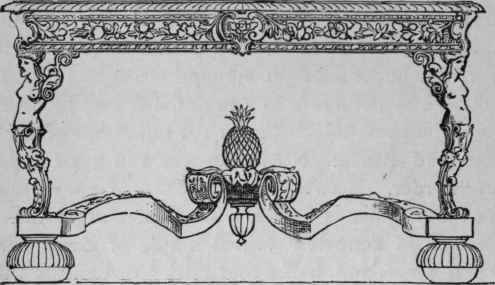
Fig. 61. - Silver table at Windsor Castle, time of Louis Quatorze.
The lovely silver table of which I give a cut belongs to Her Majesty the Queen, and on comparing it with the later table (temp. Louis Seize, on p. 162), we see how the decadence was proceeding in the direction of refinement and weakness - diminuendo I have elsewhere called it.
A table may be elegantly made if it stand aside, and be not put to coarse service, like a racehorse; still a table it must be and carry something.
The supports of tables might be far more varied than they are. The lumpish central support, with three gouty promontories, has been done to death. So have the emasculated prongs which maintain a 'Queen Anne ' table. The gilt stucco formed like loves and cornucopias is objectionable, for the most cherished tables, like the above-named gem in the Borghese, soon show signs of wear and tear; and everything which is eminently unpractical must be banished from such a place.
Le Pautre includes some novel designs for tables among his many plates, and various old missals give hints we could work out.
The most convenient and the most economical, and not the least pretty tables for English use, are the small oaken ones still to be found in the cottages of certain counties, some with the old ball legs in fours and eights a-row, some supported by quaint jambs of oak at each side, and always fitted with deep flaps.
Dining-tables of the 'telescope' description have been much criticised by the aesthetic, but I am sure they are the most convenient machines, and I find they never get out of order, are easy to shift and to enlarge - therefore there is no reason why they should be superseded. Their supports might be improved, of course, like everything else machine-made. Many an old Gothic or early Renascence table-dormant, in pictures and miniatures, gives us hints about the supports, which may be either 'legs' or arches.
Table legs should either splay out a little near the floor, which gives more purchase, as in a chair, when a weight is superimposed; or they should be perpendicular, moulded so as to give shadows broad enough to be visible in our gloomy atmosphere, and by no means too slender. Smooth ivory is a material that might oftener figure in our tables, whether large or small; it is less cold than marble, and a more agreeable white. It should not be carved, but it might be incised in black, or inlaid with steel and silver in quantities small enough not to excite cupidity - though that passion overruns this country so that it is a wonder we have any bell-handles or roof-leading left! and a pretty cloth can always preserve during use or conceal if need be.
I can well understand tables growing to be a 'hobby' with collectors, but they should never be dressed in rose point and velvets like a bride. Something should be left for the mistress of the house,
Continue to:


My Books

