


Directoire Furniture
Description
This section is from the book "The Practical Book Of Furnishing The Small House And Apartment", by Edward Stratton Holloway. Also available from Amazon: The Practical Book Of Furnishing The Small House & Apartment.
Directoire Furniture
The guillotine had done its work, the heads of the luxurious, extravagant, and charming nobility had fallen, and France was given over to parvenus, a government which fancied itself the parallel of the republics of the past. Antiquity was no longer, then, an inspiration; it became the only desirable thing under the sun, to be transferred, literally and bodily, into the whole life of the present - its ideals, its manners, its dress, and its furnishing. If ever an illogical idea was logically and completely applied it was here. We may admire the thoroughgoing as a quality, because of its "finish", without being at all enamoured of its results. In furnishing, those results were the pomposities of the Empire.
But the process, as always, was gradual, and meanwhile .....A sense of humour will always discern a touch of the comic in the ultra-heroic, and there was more than a touch in the way that, for the time being, beauty outwitted illogical logic. The monarchy and its furniture were anathema and must be changed! Antiquity must prevail! But it so happened that the furniture of the monarchy was itself based on antiquity, custom cannot be swept away overnight, the love of beauty inherent in such a race as the French does not immediately die upon the prescription of a group of upstarts. The furniture of the monarchy was changed - and became that of the Directory.
Let us view some of that furniture as reproduced in Plates 141 and 142 and the interiors in Plates 140 and 143. All this is not so bad, is it? Would that some of our modern iconoclasts could achieve such beauty! How it was brought to pass has just been hinted - the designers of the period were not at once and completely able to embody the new principles with which they had been embued. For a few short years, then, their procedure took the form of a simplification of the previous style with minor changes. The rolled back and arms had appeared before the Revolution but were now more frequently employed: straight legs, especially front legs, remained, but now often gave way to those curved outwardly toward the foot: the wide upper cross-piece of the back now appeared. The illustrations will show the prevailing grace of form and chastity of ornament. Plates 90-93 illustrate modern breakfast-room furniture of this general type.

PLATE 140. A DINING-ROOM WITH 18TH CENTURY ITALIAN FURNITURE.
Chamberlin Dodds, Decorator, New York.
Table and Console painted: Venetian Lacquered Chairs. Wrought-iron Standards with Fruit and Flowers, Crystal Candelabrum and Side-lights, Hangings in Green and Silver Brocade with Stiver Gauze Undercurtains.
Photograph by M. E. Hewitt Studio.

PLATE 140. A DINING-ROOM IN DIRECTOIRE STYLE.
Chamberlin Dodds, Decorator, New York.
Putty-colour Walls, Furniture painted Putty and Green, Brocaded velvet on Chairs, Marble table-top in Black and Gold, Empire Standards in Green and Gold with Crystal Candelabra on top.

PLATE 141. "ANDRE" ARM CHAIRS, STYLE DIRECTOIRE.
Usually painted Oyster White with colour in the carvings and striping.
DIRECTOIRE TABLE.
Diameter 4 ft. Walnut and Painted finish combined.

PLATE 141. "ANDRE" SETTEE, STYLE DIRECTOIRE.
Length 4 ft., 6 in. Accompanying above chairs.
Manufactured by Chamberlayne, Inc., New York.
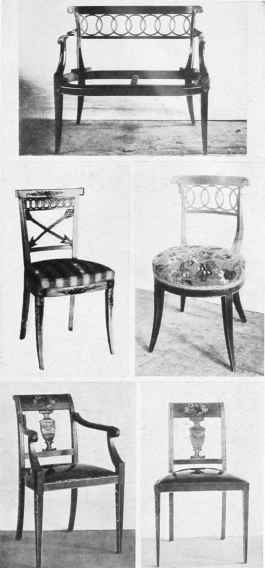
PLATE 142. CIRCLE-BACK SETTEE AND CHAIR.
Walnut with gold in carvings or Grey with gold and black.
ARROW-BACK CHAIR.
Soft yellow, carvings in gold, floral decoration.
"ELKIN" ARM AND SIDE CHAIRS.
Walnut with colour and floral decoration.
All Style Directoire.
Manufactured by Chamberlayne, Inc., New York.

PLATE 143. A CONSISTENT DIRECTOIRE DINING-ROOM.
W. J. Sterner, Architect and Decorator.
Walls might be of restrained panelling of the order of that in Plate 140, or papered, or of panelling with inserts of papers with Classical motifs as shown in Plate 143. In the latter interior the sconces with the eagle of the Republic and the Sphinx candlesticks are to be noted. The arm-chair here shown is on the verge between the Directoire and Empire style: a little awkwardness in the curves of the front legs is visible - otherwise its sweeping lines are admirable.
Continue to:


My Books

