


I. Architectural Furniture Development
Description
This section is from the book "The Practical Book Of Furnishing The Small House And Apartment", by Edward Stratton Holloway. Also available from Amazon: The Practical Book Of Furnishing The Small House & Apartment.
I. Architectural Furniture Development
By reason of architectural arrangement and special features some interiors are attractive before, as we sometimes say, a stick of furniture is placed: others lack all such advantages. Where means permit, many improvements are possible in undesirable properties and a study of the plates in this volume will suggest ideas. The possibilities embrace more tasteful stairways, doors and mantels, bow-windows, beamed ceilings, casement-windows or ranges of them, alcoves, and numerous built-in features. Not illustrated here is the closet with small panes of mirror-glass. Plate 50 shows an English Country-house interior of much attraction though it contains little portable furniture. See also the dining-room facilities in Plate 3.
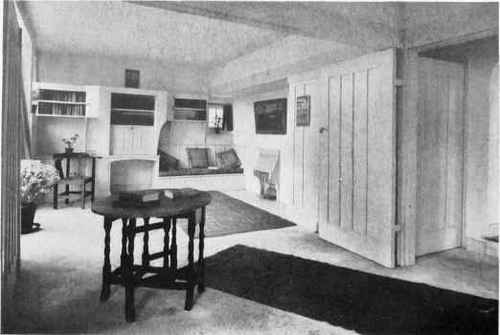
PLATE 50. BUILT-IN FEATURES IN A MODERN ENGLISH COUNTRY-HOUSE.
Harry Parker and Raymond Unwin, Architects) Letch worth, England.
In America nearly all the items mentioned above may be obtained ready for placing, and a number of them are illustrated in the accompanying plates - 51-54. This "Permanent Furniture" (and also stairways, windows, doors, porches and the like) was designed by Messrs. Trowbridge and Ackerman, the eminent New York architects, and descriptive booklets are sent to applicants by the manufacturers. A labour-saving device for the kitchen is illustrated in Part IV. All are thoroughly tasteful and of excellent architectural character. There are also many other attractive "lines" of built-in work.
In England the bow-window alcove for the dressing-table in bedrooms is common in properties of even moderate scope: they are of course provided in many well-planned American houses, but are not so frequently encountered as might be desired. Recesses often occur, and these may be taken advantage of where closet-space is limited. Attractive, colourful curtains for these, with perhaps an applique design, will add much to the decorative and individual character of the room. In an illuminating article by Mr. Shirley B. Wainwright, in the "Studio Year Book" of 1920 (The Studio Offices, London) a number of possibilities in this direction are described and illustrated in colour. His plan is to place at the upper front of the recess a simple piece of woodwork, often arched or curved, which largely prevents the penetration of dust. He also shows that these recesses may be enclosed with glazed doors or supplied with low cupboards with shelves above, the latter protected with woodwork and curtain as before.
Beamed ceilings with robustly treated walls (Plate 42) are often advantageous. In some cottages, houses of early English type, and many bungalows, it is appropriate that more or less of the structural woodwork should appear and be of the same character as the beams above. Built-in window-seats, alcoves, and the like, are an aid to this effect. Sometimes a large portion of the skeleton woodwork is visible: Mr. M. H. Baillie Scott, whose work is so well known both in England and America, is a past-master in this style of construction.
Continue to:


My Books

