


II. Furniture Development By Wall-Treatment
Description
This section is from the book "The Practical Book Of Furnishing The Small House And Apartment", by Edward Stratton Holloway. Also available from Amazon: The Practical Book Of Furnishing The Small House & Apartment.
II. Furniture Development By Wall-Treatment
At the very outset the reader should realise that in some of the smartest and most expensive decoration the walls are absolutely plain (as will be seen in a number of plates in this volume) and so should free himself from such a misconception as that such walls are a make-shift or "cheap" in effect. It is solely a question of the means best adapted to the securing of the desired result whether plain or decorated walls are chosen. Plain surfaces may be rendered decorative by the use of colour when desired.
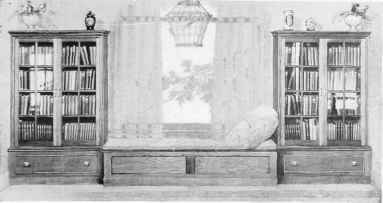
PLATE 51. BOOK-CASES AND WINDOW-SEAT COMBINATION.
The seat is made to fit the room for which it is intended.
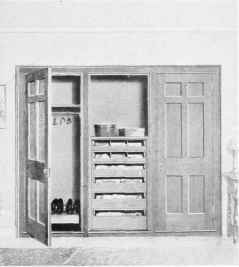
PLATE 51. A TRAY-CASE FOR THE BEDROOM.
Manufactured by Curtis Companies, Clinton, Iowa.

PLATE 52. CHINA CLOSET OF CLASSIC DESIGN.
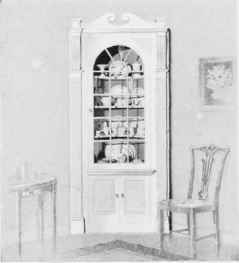
PLATE 52. CHINA CLOSET OF COLONIAL DESIGN.
Both are made either for flat wall or corner use.
Manufactured by Curtis Companies, Clinton, Iowa.

PLATE 53. CHINA CLOSET WITH ARCHED TRACHERY.
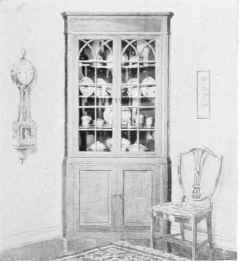
PLATE 53. CHINA CLOSET WITH GOTHIC TRACERY.
Both are made either for flat wall or corner use Manufactured by Curtis Companies, Clinton, Iowa.
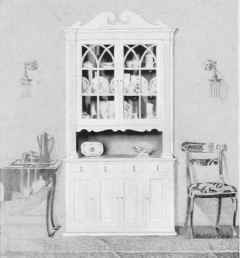
PLATE 54. DRESSER SIDEBOARD OF COLONIAL DESIGN.
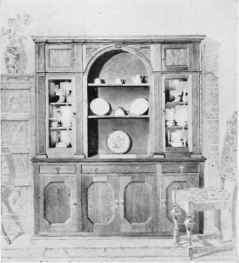
PLATE 54. DRESSER SIDEBOARD OF ENGLISH DERIVATION.
Manufactured by Curtis Companies, Clinton, Iowa.
In any ornament applied to walls the architectural lines should be followed and preserved. Cut-out borders in wallpapers are especially disturbing to these lines.
Unless ceilings are unusually low it is of decided advantage to set down the picture rail fourteen to eighteen inches. This in itself gives a slightly decorative effect, adds a homelike appearance, obviates the necessity of long, "stringy" picture-wires, and makes the hanging of the pictures themselves a far less dreaded piece of work. A canopy effect - the bringing down of the ceiling-tint to this rail - is desirable if the ceiling is high, or in some methods of decoration to be indicated, but it is not usually necessary. Where not done, the paper or tint above the rail should be the same as that below. The simplest possible form of decoration is that employed by Mr. Hall Thorpe in the cottage interior pictured in Plate 29. There this picture rail, the woodwork, and the top of the baseboard are painted in a different colour than the walls. It will be noted, too, that the baseboard is painted in the grey tone of the floor: this has the effect of apparently enlarging the room. Strongly coloured plain or decorated walls have been adopted by some modern decorators, particularly in France and America. A catholic taste is willing to consider all methods and sometimes this is advantageous, particularly if the premises consist of but a few rooms. Where they are many the carrying of strong colour over all the wall spaces would become tiresome, and the employment of various strong colours is destructive of unity.
The simple truth in the matter is this - that whenever the householder has to struggle against highly coloured or diverse wall-surfaces through a series of rooms he almost invariably comes to grief; whereas if he provides a comparatively quiet background he almost as universally succeeds.
On the other hand he may still preserve unity and yet endue one room, or two communicating rooms, with variety in this respect by, in those alone, much increasing the intensity of the general colouring. If, for instance, the usual tone is a pale modified yellow, such as cream or primrose, a reception-room may have walls of a strong yellow agreeing therewith or may have a handsome gold paper.
If he wishes to introduce special colouring or unusual features in the walls of such a room as a billiard- or card-room he may easily do so, for novelty is here his object. Something on this order might be done - and he may care to know that this is Parisian: Walls vivid magenta with gold design; windows hung with gold tissue; carpet dull gold with black velvet floor cushion; furniture black, a cabinet being inlaid in Eastern colouring and with a black vase holding a spray of rose Japanese cherry-blossoms; wrought-iron floor lamp with alabaster bowl throwing a rose-coloured light.* It will be noted that except for the walls, which give the strongly decorative note, this interior is restrained in colouring.
Is not the following rather illuminating upon the whole subject? William Morris designed many notable wall-coverings, yet a writer in the London Athenæum mentions that the last words he ever heard Morris say were these: "After all, plain whitewash is the most beautiful mural decoration".
The lining up of the walls with a wainscot or panel effect, or with vertical lines, or lines or borders around ceiling, corners, and window-and-door-openings constitute a number of resources to be taken advantage of in different ways. Naturally, the special designs made for private clients by eminent interior architects and decorators, and reproduced by their permission in this volume, would not be imitated; but the general disposition of their ornamental features will be useful to the reader in affording him hints for simpler treatments which a little invention and care will enable him to carry out. Reference is made to some of these illustrations for this purpose. Plate 71 shows a combined wainscot and panel effect which might easily be simplified by the general householder, the border between the two becoming a plain band. If the panel-lines are painted or papered the border might be the same; if strips are applied to form the panels then they should also be employed for the border. Attention is also called to the Frontispiece and Mr. Wainwright's dining-room design (Plate 8), Mr. Palmer Jones' Lounge in Plate 68, to Plate 45, Mr. Aschermann's designs in Plates 3 and 77, and the writer's in Plate 2.
* Good Furniture Magazine, July, 1920.
Stencilled designs carried close to the picture-rail, baseboard, and corners or other divisions are excellent, but these should be of strictly conventional character. Borders of the same type may sometimes be found in wall-paper and applied.
Walls blocked in a masonry effect are good where the furnishings are of bold, appropriate character. Plate 10 shows a stone wall in a room with period furniture but a masonry block is equally available for modern furnishing.
In this style of decoration ceilings are seldom very ornamental, though in specially designed interiors a moderate amount of design may be employed. In Mr. Palmer Jones' Lounge (Plate 68) it is coved and painted blue, and Plate 69 shows a barrel-roofed, panelled effect.
The usual flat ceiling may be painted a light colour different from the walls. In a room in which it is needful to import sunniness, and where considerable derivative yellow is used in the textiles, it would not be wise to employ that colour in the walls also; they may then be ivory or pale grey with a hint of yellow therein and the ceiling be a golden yellow. In more costly interiors a plain gold paper could be used instead.
The decorative possibilities of painted mantels or overmantels should not be overlooked. Even such simple treatment as that in Plate 29 is effective. Stone, brick and tile are also excellent where colour, texture and scale are properly observed.
Continue to:


My Books

