


Neo-Classic Furnishing In Italy
Description
This section is from the book "The Practical Book Of Furnishing The Small House And Apartment", by Edward Stratton Holloway. Also available from Amazon: The Practical Book Of Furnishing The Small House & Apartment.
Neo-Classic Furnishing In Italy
When it is remembered that during the eighteenth century the sons of the gentry of England were dispatched upon the "grand tour" for the completion of their education and the broadening of their views, it will be realised that the culture and refinement of Italy were universally respected. In decoration her great creative impulse had failed and she was now availing herself of the forms of French and English work, so that whatever contours were then there current might almost unfailingly also be found in Italy. Nevertheless a distinct talent was evident in the enduing of them with her own national characteristics, thus rendering them particularly valuable in our modern system of liberal furnishing. Under these circumstances it is unfortunate that so few of these pieces should be reproduced in American commercial furniture. Considerably more may be obtained through decorators.
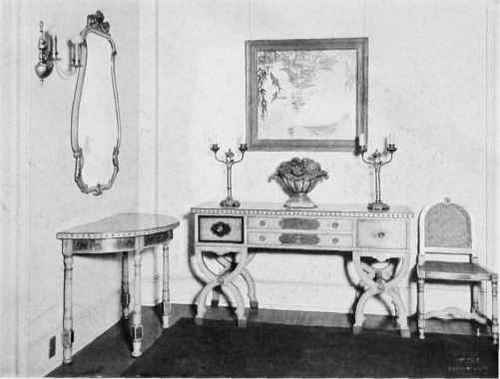
PLATE 145. "PADUA" DRESSER, OF ITALIAN TYPE.
Manufactured by Wm. A. French Furniture Co., Minneapolis, Minn.
In rich cream-colour with plaques and bands of dark blue with scrolls of vigorous colouring All overlaid with fine crackle.

PLATE 146. "ITALIAN EMPIRE" 10 PIECE DINING-ROOM SUITE IN FIGURED AND CROSS-BANDED CROTCH LIGHT MAHOGANY.
Manufactured by Century Furniture Co., Grand Rapids, Mich.
Sideboard 66 inches, Inlaid medallions of olive- and satin-wood in ends of Sideboard and doors of China-closet. The latter has mirror glass Table 40 x 60 in. closed, 40 x 120 in. extended. 2 Arm chairs and 4 Side chairs.
One of the cuts on Plate 140 illustrates Italian chairs of Queen Anne affinity. Plate 145 shows furniture of Neo-Classic type, and Plate 146 "Italian Empire" or rather Directoire inspiration. A sufficiency is generally procurable for purposes of interspersion with other furniture, as in Plate 144, but scarcely enough for an entire house or apartment, and it therefore does not seem necessary or advisable to recite the greatly varied decoration and furnishing of Italy during this period.
The same may be said of that of Spain, and for the like reason.
Continue to:


My Books

