


The Third Movement: Rococo Decoration. The First Portion Of The Eighteenth Century
Description
This section is from the book "The Practical Book Of Furnishing The Small House And Apartment", by Edward Stratton Holloway. Also available from Amazon: The Practical Book Of Furnishing The Small House & Apartment.
The Third Movement: Rococo Decoration. The First Portion Of The Eighteenth Century
Rococo Decoration
AS the Baroque movement was formerly considered one with the Renaissance, so have the Baroque and Rococo influences often, wrongly, been confused. Notwithstanding gradual transitions, the characteristics of the fully evolved movements are in each case most distinct; nor could it be otherwise, for the "temper" of these two epochs was quite different.
The severely Classic qualities of the Early Renaissance gave way, through the increasing magnificence of the "High" development, to the Romantic display of the Baroque. In sequence, the still more Romantic lightness, freedom, and grace of Rococo decoration take the place of the heavy Baroque.
Though, as we shall see, the new movement exerted its power in England to a certain extent, the Dutch influence of Queen Anne (1702-1714) naturally dominated, and even persisted through Early Georgian times (1714-1760). The home of Rococo decoration was France, and thence it spread throughout the Continent.
France
Signs of it had appeared during the later years of Louis XIV. The style of that reign has not been treated here, for it is too ornate for any purposes we are considering, though it was largely adopted for American "palatial" hotels till a few years ago, when a more normal taste prevailed. But the services to art of he Grand Monarque, the Roi-Soleil, the King who might well say "L'etat, c'est moi", were enormous, and France, now leader in architecture and decoration, held that proud position till the débâcle of all mobiliary art in the first quarter of the nineteenth century.
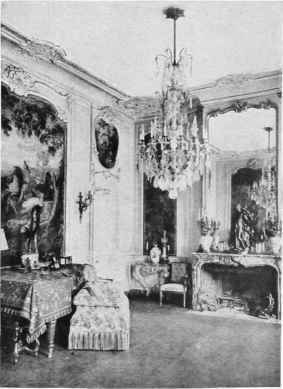
PLATE 124. RESTRAINED ROCOCO WALL-DECORATION.
Salon, Hôtel Delisle-Mansart, Paris From "Les Vieux Hôtels de Paris", F. Contet.
Courtesy of William Helburn, Inc.
Luxury, splendour, a ceremony wearisome to flesh and spirit, and a country ruined by wars and prodigality - such was the reign of the great king; and when, at the end of a dominance of seventy-two years, he went to his long home, as the writer has elsewhere said, "France arose and kicked its heels!" It has been remarked that there is a cause for every movement - this was the cause of the Rococo. The Rococo was a very graceful, very refined, and very free kicking of decorative heels. Tradition departed through the doorway, the straight line vanished through the window, and neither was seen again for fifty years. No nation other than France could under such circumstances have kept its head and produced so beautiful a style as the Rococo. No other nation did so retain its level, for in Italy, Spain, and Portugal the mode ran to excesses, too often but much more rarely seen in France, and this when they had no such political excuse.
Of perhaps no other decoration does the permanent background constitute such an integral part as in these French styles: it is necessary, then, to show a historic example of the simpler manifestation of this mode, that most suitable for modern homes (Plate 124). The writer will not say that the furnishing of the period may not be used with refined plain walls, and indeed it has been often done with successful results, but it is a pity to be obliged to denude the style of half its beauty. The panelling was in white or light tints with lines of the mouldings and carving in strong tones or gilding. Flock papers, in imitation of fabrics, appeared, and some of these are now reproduced. Chinoiserie of all kinds was a craze during this period.
Plate 136 (lower left) shows a bergére of the period, and other Louis XV furniture is supplied by the same manufacturers and by other makers. It is not particularly frequent in the general American commercial market but many reproductions may be bought of decorators.
The style of this furniture is so well known to those at all likely to employ it that it will not require any very detailed description; but it is worth saying that it contains scarcely a straight line and that all its contours are free, flowing, and instinct with grace. Greater reserve will be appreciated by many, and that we shall find in the succeeding age, but the restrained forms of Rococo furniture are very beautiful and some of the simpler, less ornamental contours persisted into Neo-Classic times.
The Rococo has been termed a return to nature. It was nearer that than any decoration that had yet appeared, but there is always danger in unqualified expressions - they sound well, but have a way of being inaccurate. If we compare the art of Louis Quinze with the nineteenth century L'Art Nouveau we shall find that the latter was one of the worst of failures while the Rococo was a brilliant achievement. Why? Seeking for an answer to the question shows us that L'Art Nouveau was almost wholly a return to the forms of nature and that the Rococo was not that: it was a natural ornament superimposed upon a foundation of art.
Not only in the restrained example given, but in its most florid manifestations (such as the Hotel de Matignon and Huet's Ape-room) the perpendiculars of panelling were straight lines and an entire sufficiency of horizontals remained to constitute a rectangular basis.
The writer has traced, from a photographic illustration, a Rococo chair. Every line is a curve: but pull in those that are convex and push out the concave, to an equal degree. The front and the back of this chair each have as their bases three sides of a perfectly measured rectangle, the fourth sides being the arch of the seat repeated in the arch of the back. A Rococo curvilinear chair with an absolutely Classic foundation! Does no one see these things! Because the morals of the age were of the loosest, art must be wholly decadent too! Strange reasoning, when pagan, unmoral Greece gave the world the greatest architecture it has known.

Diagram 7. - The Classic Foundation-lines of a Rococo chair.
Continue to:


My Books

