


The Rococo Decoration. The First Portion Of The Eighteenth Century. Continued
Description
This section is from the book "The Practical Book Of Furnishing The Small House And Apartment", by Edward Stratton Holloway. Also available from Amazon: The Practical Book Of Furnishing The Small House & Apartment.
The Rococo Decoration. The First Portion Of The Eighteenth Century. Continued
The tables were often, and the cabinets, commodes, and desks almost always, of marqueterie, or inlay, or Vernis-Martin, with the characteristic chiselled metal mounts: naturally even reproductions of such furniture are costly and a houseful of it requires a full pocket-book. Those desiring to furnish in this manner and able to do so will find both decoration and furniture treated and illustrated in Parts I and III of "The Practical Book of Interior Decoration." For a woman's smart apartment this mode is of great appropriateness. Others appreciating the decorative interest and beauty of the style may purchase a few chairs or small pieces, using them with pieces in Chippendale's French vein or with eighteenth century furniture of the later influence as will be described in the next section.
The graceful seating-furniture of the period was usually of natural walnut, though other materials were used and then painted and parcel gilt. Pieces entirely gilt are too pretentious for our purpose, but possibly one or two small gilt chairs might accompany other handsome furniture. The painting was sometimes very bright and sometimes in tints or medium tones, but in a modern example recently seen the dark greenish slate of the background was effectively relieved by the Rococo scrolled ornament in gold. There is a Trouville print, with Rococo cartouche of black on white with pale rose and green, that would admirably accompany furniture so painted.
For the first time in decorative history the colouring employed was light and was also bright. The point of view had been transformed, and furnishing changed with it. The huge salon and state bed-chamber gave way to the drawing-room, cabinet and boudoir: the tedious formality of Louis Quatorze (1643-1715) became the social life and luxurious ease of Louis Quinze (1715-1774): the full-bodied hues appropriate to previous robust conditions were superseded by the lovely hues properly accompanying a civilisation of great refinement. This colouring was far from quiet and there was much of it, but it was the colouring of the aster and the rose rather than of the dahlia and the tulip.
Appropriate design and texture naturally marched with colour - needlework, silks, damasks, and brocades in a multitude of charming patterns were used for coverings. Velvets were often plain. Soft crimson or deep rose remained for a long time among the staple hues for hangings. Clocks, candlesticks, and all other accessories were of like beauty of material and design. The most loving care was lavished upon small articles of every description.
England
We might be sure that if the Rococo spirit were to find manifestation in Britain it would be at the hand of Thomas Chippendale - not only because of his enterprise and his ability in adapting motifs from any source to his own design, but because love of the flowing line and rich carving was intrinsically a part of his genius (see mirror and chair in Plate 126). There were others who attempted the mode, but Thomas Chippendale remains the British exponent of the Rococo. There are, of course, purists who denounce the fancifulness, the fantasticality of his rock-shell mirrors and ribband-back chairs: the writer has no hesitation in admitting his general preference for Neo-Classic design over that of the Rococo, but surely we should all be broad-minded enough to relish the exuberant upon occasion, and be able to recognize great design whatever its motif. This furniture, naturally, well accompanies that of Louis Quinze in Liberal furnishing.
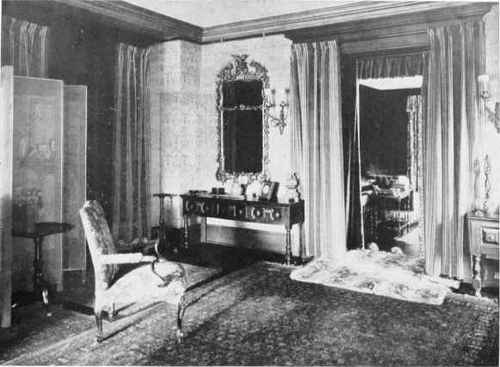
PLATE 126. A LIVING-ROOM IN LIBERAL PERIOD STYLE IN A PARK AVENUE, NEW YORK, APARTMENT.
Fabric-covered walls. Stuart and Chippendale furniture.
William Lawrence Bottomley, Architect.
Italy
This southern peninsula had now fallen upon evil days, being partitioned and disposed according to the wishes of alien powers. Poverty was rampant, initiative had failed, and its furniture-forms were mostly adopted from those of other nations. But its inate genius for art succeeded in displaying a very considerable degree of individuality in detail and ornament - the Venetian painted and decorated forms of this and the succeeding age are especially famous. In this furniture material and workmanship were often cheap, but the result was artistic. Original pieces are illustrated in "The Practical Book of Interior Decoration", and some furniture of the period is now reproduced and sold by the decorating trade.
While among antiques we sometimes meet with such extravagances as bombé commodes of bursting proportions and unbridled ornament, for the most part these pieces are of great charm and decorative quality. The painted ground is in light tones with vari-coloured decorations, among which some gilding is frequent. Natural woods were of course also used.
The employment of occasional pieces will be mentioned in the next section, on Neo-Classic furniture.
The Adaptability Of This Furnishing To Modern Uses
The style is intrinsically French; and it is not likely, therefore, to be adopted for a whole scheme of furnishing by those who are characteristically British or by Americans of "practical" temperament. On the other hand, the procedure, still current, either of decorating the various rooms of an abode in divers manners, or of filling a house with English styles except for the drawing-room in French mode, must strongly be deprecated. This is not Liberal furnishing; it is furnishing without reason. The home is an entity, and to destroy its unity by such procedure is not only illogical in principle but unfortunate in result.
There are those of every nation possessing temperaments sufficiently akin to the style to make it their choice and to find in it the greatest pleasure: others, appreciative of its beauty but finding other modes more generally suitable to their needs, may avail themselves of occasional pieces for the giving of relief and interest.
Continue to:


My Books

