


The Dutch Influence on Furniture In England
Description
This section is from the book "The Practical Book Of Furnishing The Small House And Apartment", by Edward Stratton Holloway. Also available from Amazon: The Practical Book Of Furnishing The Small House & Apartment.
The Dutch Influence on Furniture In England
There is but one point of likeness, occurring to the writer, between the furniture of France and that generally current in England during the first half of the eighteenth century - the universal use of the cabriole (serpentine) leg. As against the refined elegance of the Continental furniture we have been considering, we for the most part find in Britain the quiet, homelike forms of Queen Anne and the early Georges combining Dutch with Spanish and Portuguese influences. Exceptions are, of course, the decorated furniture of the years between 1714 and 1745, usually large, heavy, ornate, and often gilded, and the likewise almost always cumbrous pieces of William Kent. It is not these qualities only which prevent this furniture from being of much interest to us in the furnishing of small premises, but the fact that they are not made in American commercial furniture. Some attractive reproductions of medium-sized pieces, especially with the cabochon knee, may be found among decorators' furniture, and these are more frequent in England.
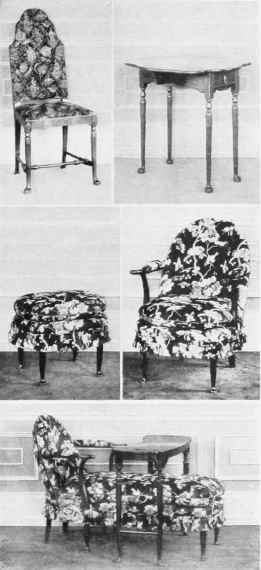
PLATE 125. QUEEN ANNE ARCHED BACK CHAIR. Width 18 in., Height 43 in.
QUEEN ANNE DROP-LEAF TEA TABLE. Height 30 in., Top 30 x 30 in.
MODERN STOOL, DUTCH STYLE. Height 18 in., Top 22 x 17 in.
MODERN UPHOLSTERED WINDSOR CHAIR. DUTCH STYLE. 46 1/2 x 24 1/2 in.
MODERN CHAISE LONGUE OR READING-COUCH, DUTCH STYLE Height 35 in., Length 53 in.
MODERN READING-TABLE, DUTCH STYLE. Height 28 1/2 in., Top 14 1/2 x 38 in.
All in Walnut.
Manufactured by Century Furniture Co., Grand Rapids, Mich.
For the most part, then, we have only to consider these homelike contours and their derivations developed by Chippendale, and these form a group rather apart from other styles. They are still Baroque, but differ too greatly in contour from the also Baroque and also Dutch straight-legged pieces of William and Mary properly to accompany them, and they are too simple to be employed with the ornate forms of that reign. On the other hand the succeeding age was of totally unlike inspiration. Other furniture which might be used with this is the Dutch, some sufficiently simple curved-leg William and Mary pieces, and certain cognate forms of Southern Europe (see the chairs in upper dining-room, Plate 140). As neither the first nor the last is very generally obtainable, it follows that this simple Queen Anne and Chippendale claw-and-ball foot furniture (Plate 129) must usually be employed alone. It is, however, sufficient unto the purpose, and small premises thus furnished will have much "homelike" quality. Lacquered furniture was a great favourite during this period and its use will add variety: the designs of textiles were of moderate size and the colourings good: pottery and china-ware were attractive, and "blue and white" is especially appropriate. Chinoiserie was here rampant, as in France.
Walnut was the staple wood of the period till about 1720 when mahogany began to come into general use.
This style is a favourite with the manufacturers of commercial furniture and there is much of it upon the market: care should, however, be exercised to secure faithful reproductions. An excellent wing-chair with appropriate covering is shown on Plate 112. At the top of Plate 125 is illustrated a charming arched-back side-chair, also with a well selected textile, and an attractive tea-table. The other simple pieces of Dutch origin on this plate may be used to advantage in this furnishing.
Large panelling (Plate 129) was the accepted background during this as well as the previous period. Those adopting it will find full particulars in "The Practical Book of Interior Decoration", and these should be consulted so that the suggestions of the decorator may be understood and appreciated. Both natural and painted woods were used, and gilding was frequently applied to painted mouldings and carvings. Not only white (as commonly supposed) was employed, but such tones as grey, grey-green, buff, brown, pale yellow, blue, green, and green-blue, and it will be seen that especially with gilding these were of great beauty.
If plain walls are a necessity, white or any of these tones may be adopted for either paint, plaster, or wall-paper, and naturally, in any case, the surface should be smooth and refined. Simple panelling may be provided at moderate cost by the use of applied mouldings.
Examples Of Furnishing
The living-room in an apartment in Park Avenue, New York, by Mr. William Lawrence Bottomley (Plate 126) is a rich, comfortable, and homelike interior deserving of special attention. It contains elements from about 1660 to 1760. Fabric-covered walls were frequently used during all this time, and striped draperies made their appearance in France during the reign of Louis Quinze - earlier than most suppose. The tables at each side of the doorway are of the former date, the remaining furniture of the latter, and caution must be employed in combining the two forms. That caution has been used, and the tables are not of undue weight for the other pieces. A Rococo mirror above a Restoration table sounds very daring indeed, but in this case it will be noted that the mirror is generally rectangular with arched, broken-pediment top, and that the two well conjoin. The arm chair is also in Chippendale's French vein. Apparently alien elements may therefore afford a very happy result at the hands of one of such discrimination and taste as Mr. Bottomley.
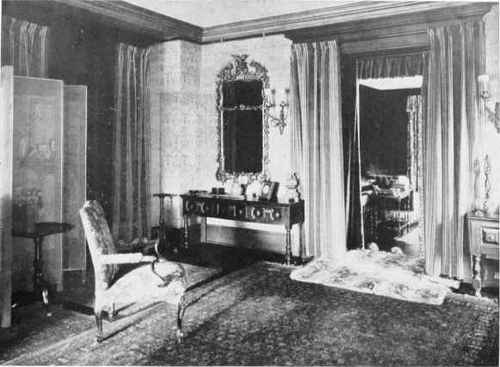
PLATE 126. A LIVING-ROOM IN LIBERAL PERIOD STYLE IN A PARK AVENUE, NEW YORK, APARTMENT.
Fabric-covered walls. Stuart and Chippendale furniture.
William Lawrence Bottomley, Architect.
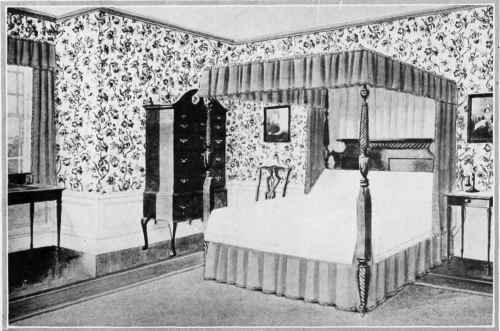
PLATE 127. BEDROOM WITH EARLY EIGHTEENTH CENTURY MAHOGANY FURNITURE.
By Courtesy of Robert Graves Co., New York and Philadelphia.
A modern use of early eighteenth century bedroom furniture appears in Plate 127. The draperies are red and the wall paper above the wainscot of red and blue pattern. A less insistent design in the latter would have been preferable.
Continue to:


My Books

