


II. Chests. Part 6
Description
This section is from the book "Colonial Furniture In America", by Luke Vincent Lockwood. Also available from Amazon: Colonial Furniture In America.
II. Chests. Part 6
An interesting variation of the Hadley chest is shown in Figure 31, which is the property of Mr. William J. Hickmott, of Hartford. The top rail, instead of being carved in the flower-and-leaf design, has carved, in letters resembling the scratch carving on the leaves, the following: "Thankful Taylor February the 18 1701." At each of the upper corners is carved a geometrical design. On the stiles, between the panels as well as on the outer stiles, is carved the flower-and-leaf design in its simplest form. The three panels arc in the design usually found only on the centre panel. At the base of each of the outer ones is cut two geometrical designs, and in the centre one is carved three rosettes. Below, the design consists of two of the flowers, with one of each kind of leaf, which carries over onto the stiles, and the rail at the bottom is ornamented with scrolls in scratch carving. About the panels are mouldings, which indicate that this chest is of later date than those shown above.

Figure 31. Carved Oak Chest with drawers, 1701.
Still another late variation of the Hadley chest, from the same collection, is shown in Figure 32. The top rail is ornamented with two pairs of the Hadley design reversed, and the same design is repeated on the drawers and rails below. The outer panels are in the usual design, but the centre panel is decorated with two units of the design set face to face instead of back to back. The outer stiles are grooved instead of carved and the chest stands on turned feet.

Figure 32. Carved Oak Chest with two drawers, 1700-10.
Figure 33 shows a three-drawer Hadley chest owned by the Deerfield Historical Society. The arrangement of the design is similar to that shown in Figure 28; that is, at the top the design on the rail carries onto the stiles, and then follows on the stiles a repetition of the design four times; on each rail and drawer is carved a double repetition of the design at each side of the centre; the initials are S. H., and a heart is carved above.
Figure 34 shows a further modification of the Hadley chest. The upper rail is carved in a single design on either side of the key-hole, and the panels are octagonal instead of rectangular and are reversed; that is, the two outer panels are in the design of the innei panel and the inner one is the same as the outer one the standard type. Then are split spindles on the stilts, which are plain, and turtle-hack bosses are on the drawer. This piece is the property of the writer. Figure 35 shows an unusual oak chest with one drawer, the property of Mr.

Figure 33. Carved Oak Chest with three drawers, 1690-1710.

Figure 34. Oak Chest with one drawer, 1690-1710.

Figure 35. Oak Chest with one drawer, 1675-1700.
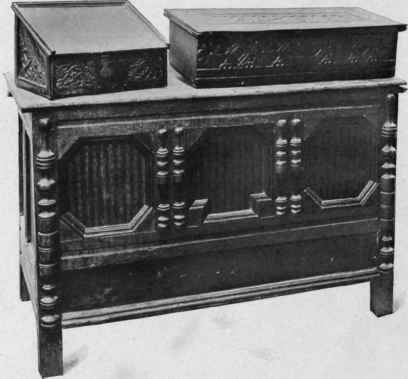
Figure 36. Chest with one drawer, 1700-10.
William F. J. Boardman, of Hartford. The top rail is ornamented with parallel vertical groovings. The panels are raised with a quarter-round edge, and there is a double set of four rectangular panels which give the appearance of eight small drawers. At the centre of each of these small panels is a rosette. The surfaces of the stiles and rails are ornamented with channel mouldings, and on the drawer are four series of five rectangular bosses with rounded edges.

Figure 37. Painted Chest with one drawer, 1700-10.
Figure 36 shows an example of a chest with the panels, which are of pine, painted with dark strips. Very large and ornately carved split spindles are applied, extending the entire length of the outer stiles; and double split spindles are applied to the stiles, separating the panels. This chest is in the Bolles Collection at the Metropolitan Museum of Art.
Figure 37 shows a painted chest from the Erving Collection. The painted decorations are all in their original condition and are in interesting and unusual designs. The tingle flower on the stiles, drawer front, and centres of the outer panels was probably intended to represent a tulip. The stiles are ornamented With applied split spindles. This chest was found in Maine.
Figure 38 shows an exceptionally fine painted chest in the Bolles Collection. The rails and stiles are well moulded with grooved mouldings and the surface is mottled. The outer panels are decorated with a well-executed design of what appear to be thistles, and on the centre panel is painted a circle within which are the letters E. L. and the date 1705. On the drawer front is painted a design of sprays of flowers and leaves.

Figure 38. Painted Chest with one drawer, 1705.
Figure 39 shows a small painted chest or hutch, the property of Mr. William J. Hickmott, of Hartford. It is 21 inches long, 201/4 inches high, and 121/4 inches wide. The piece is constructed like a ship chest, without stiles and rails, the sides being single planks of wood. The front of the chest part is painted to represent a spray of leaves, and on the drawer front are two similar sprays. A single-arch moulding borders the edges of the front and above the drawer.

Figure 39 Painted Hutch with one drawer, 1700-10.
Continue to:


My Books

