


Armoires
Description
This section is from the book "English Furniture", by Frederick S. Robinson. Also available from Amazon: English Furniture.
Armoires
For a complete discussion of the cupboards or 'armoires' (armaria, presumably from being meant to hold armour and weapons) of the Gothic period still existing, the reader is referred to Mr. F. Roe's Ancient Coffers and Cupboards. In England they are excessively rare. Probably the earliest were painted or covered with ornamental iron-work like that of the Brampton chest which is reproduced in this volume (Plate III.). Their fronts were flat, and contained perhaps two tiers of cupboard doors, in the manner of the German ones of the fifteenth century in the Victoria and Albert Museum. The typical English one is at York Minster, and is also of the fifteenth century (Plate II.). Its arrangement of partitions is irregular. On the left-hand side (of the spectator) there are two narrow cupboards one above the other, balanced on the right by a single narrow one stretching from top to bottom. The upper cupboard in the centre is a good deal shorter than the lower. Each of the centre ones has two folding doors. The other three have but one each. The ornament, as far as the woodwork goes, is confined to the top, which has low battlements ornamented with rosettes.
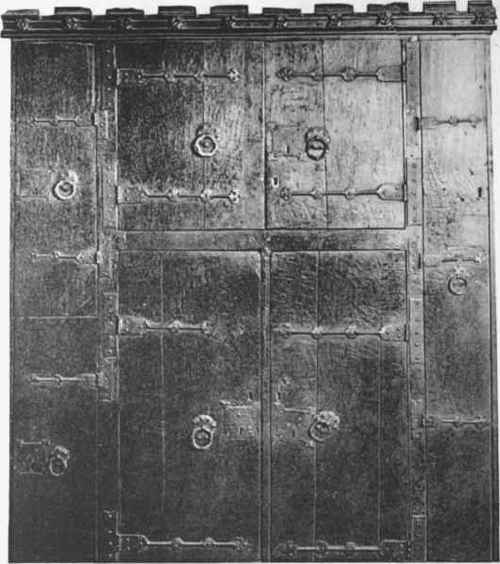
Plate II. Armoire, Oak, 15th Century York Minster
ii. Armoire, oak. Fifteenth century. York Minster.
Dimensions : Height 69, Length 58, Depth from front to back 12½ inches. By kind permission of the Dean.
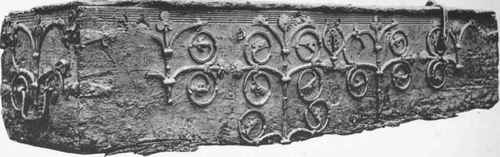
Plate III. Oak Chest, I2th Or 13th Century; Decorated With Iron Brampton Church, Northants
Fig. I
Fig. A
III. Chest, oak, twelfth or thirteenth century, decorated with iron. Brampton Church, Northants.
Approximate dimensions: Length 6 feet 5 inches, Width 19 inches, Depth 17½ inches.
The rest of the decoration is supplied by iron strap hinges of no great elaboration, and ring handles hanging from circular plates with scalloped edges.
Besides these armoires there also exist certain 'almeries,' either used for doles in churches like some of the later 'livery cupboards,' or as food cupboards for domestic use, in which case they would be the precursors of the 'butter cupboard,' of which Sir Spencer Ponsonby-Fane of Brympton, Somerset, possesses an example. Like that, these were pierced for the free ingress of air. Mr. Roe illustrates one belonging to Mr. Morgan Williams, St. Donat's Castle, Glamorganshire, which has six openings pierced with Gothic tracery. This tracery is of Perpendicular type. There are two in Carlisle Cathedral, decoratively painted, iron-strap hinged, and also showing traces of a velvet covering.
English buffets or dressoirs, high, many-shelved pieces of furniture, of which French representations may be seen in Viollet-Le-Duc's Dictionnaire du Mo-bilier, do not remain to us; but a beautiful example of a less ambitious type, belonging to the early sixteenth century, should be mentioned. It is illustrated both by Mr. Roe and Mr. Litchfield. The former calls it a ' credence' - a term applied either to a receptacle of communion-plate in churches, now become merely a table, or else to a combination table and cupboard used for domestic purposes. In the latter case the object, Mr. Roe says on page 5 of his book, would be a cupboard set upon legs, with a shelf underneath, and the top would be used by the steward to carve the meat, which, for safety's sake, he would be expected previously to taste. As the height of the example referred to, belonging to Mr. E. Barry of Ockwells Manor, near Bray, Berkshire, is nearly four feet, it would have been an exceedingly inconvenient thing for carving, even if its top had been large enough for the purpose - about four feet by two. I think, therefore, we may dismiss the name 'credence' and call it, with Mr. Litchfield, a 1 buffet.' It consists of an enclosed upper part with a front of three heavily moulded panels.
The light cornice is decidedly classical in style. The stiles between the panels are decorated with leaf-work, and there is a bold twisted moulding running round three sides below the panels. The lower part is an open stand upon four legs, with a shelf not far from the floor. The back legs are plain rectangular, the front pilaster-shaped of the Tudor type with imbrications. Between these legs, and under the twist moulding, are two very flat ogival arch shapes separated by a pendant. The front of the shelf (about on a line with the bases of the pilasters) has a skirting piece cut into curved shapes, the centre of which recalls the ogival forms above. A noticeable feature is the little cross cut just above this central point. It is supposed by-some that the presence of such a cross upon furniture denotes a pre-Reformation origin. However convenient it might be to adopt this view, it is to be feared that the notion must be relegated to the category of the unauthenticated. This cross is to be found exactly the same on a stool belonging to Mr. Seymour Lucas, R.A., who was the original discoverer of Mr. Barry's buffet.
Continue to:


My Books

