


Handles
Description
This section is from the book "English Furniture", by Frederick S. Robinson. Also available from Amazon: English Furniture.
Handles
More endurable than the picture, though not very inspiring, because found upon furniture in the late Sheraton style of inferior design and heavy shape, was the method of replacing wood inlay by brass lines and scroll ornament. It is a cheap form of Boulle work, wood taking the place of tortoise-shell, but whereas fine Boulle work is engraved, and thereby avoids the harshness of mere flat inlaid brass lines, the English work of the late eighteenth and early nineteenth century is seldom, if ever, so treated. The uncompromising edges of the brass lines are never blended into the ground by incised shading, and the dissimilarity of the two materials produces an inferior effect to that of wood inlaid upon wood when the mellow tone of polish blends all into a harmonious whole. Caution has to be observed in the judgment of furniture with inlaid patterns. We have seen how mahogany furniture of the eighteenth century is liable to the process of 'carving up' by unscrupulous dealers. The corresponding process may also be performed with veneered or inlaid furniture. There are, of course, notable examples of veneered furniture elaborately decorated with inlaid patterns, such as those illustrated in Plates cxlviii. and cxlix. of this work.
But these examples were extremely costly, and must therefore have been rare. The fan and the shell, as we have seen, together with modest borderings of tulip and other woods, are the rule in the decoration of the late eighteenth century. The more florid and exceptional the piece, the greater the necessity for thorough examination. There is this in favour of the imitator of eighteenth century furniture: he has only to reproduce the effects of the wear of a hundred years, more or less. His task, though not absolutely easy, is perhaps hardly as difficult as that of the man who wishes to produce a really deceptive Gothic chest. A word should be said about handles. Brass is the material used for the mahogany period, and iron for that of oak. A ring hanging from a circular plate is found in Gothic times, as in the York armoire (Plate ii). Drop handles, narrower at the top than the bottom, somewhat pear-shaped, are characteristic of the next period. The court cupboard of 1603 (Plate XXXVIII.) shows these. Representative seventeenth century hinges may be found in Plates XXXVIII., xl., xli, and xlii.
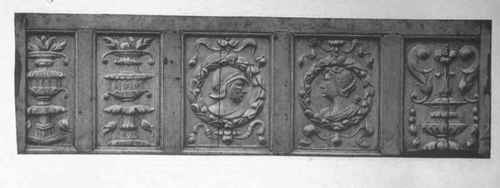
Plate XXXVIII. Panelling Early 16th Century Plate Xxxviii.
XXXVII. Panelling. Early sixteenth century. From a house at Waltham Abbey. V. & A. M.

Plate XXXVIII. Court Cupboard, Oak Inlaid, 1603
xxxviii. Court Cupboard, oak, inlaid. 1603. Said to be from Derby Old Hall. V. & A. M.
Dimensions: Height 50½, Length 46¼, Depth from front to back 2½ inches.
Wooden knob handles and tubular wooden handles are also found (Plates lxi., lxii.). With the end of the seventeenth century and the beginning of the eighteenth a solid pear-shaped drop handle takes the place of the open pear-shaped, and is often of brass (see Plates xlvl, lxxvii., lxxx., lxxxi. i). After this we find the open drop handle with a plate of irregular shaped outline, roughly incised, but not pierced or fretted (Plates lxxix., lxxx.). Towards the Chippendale period pierced plates and also chased handles come into fashion, and are often quite elaborate (Plates xc, cviii., CIX.). Heppelwhite and Sheraton return to a solid polygonal, round or oval plate with a drop handle, and also largely use brass knobs or lions' heads with rings in their mouths (Plates CXI., cxxv., CXXXIX., cliv., cliv.). As I have noticed elsewhere, Battersea enamel was sometimes used for the knobs. Old handles are a desideratum; a brass Sheraton drop handle upon a seventeenth century chest of drawers is a mere disfigurement.
Continue to:


My Books

