


Court-Cupboard
Description
This section is from the book "English Furniture", by Frederick S. Robinson. Also available from Amazon: English Furniture.
Court-Cupboard
The hinges are not original. Carved instances are to be found. Not an uncommon detail in Wales is an S-curve, fashioned into a dragon shape, with barbed tongue.
Etymologists are not very satisfactory in their explanations of the name of 'court cupboard,' which is given to these pieces of furniture. In Singer's notes to Romeo and Juliet, where the term is used, it is explained as meaning a cumbrous piece of furniture, with stage or shelves gradually receding like stairs to the top, whereon the plate was displayed at festivals. Chapman in his May Day, 1611, speaks of court cupboards planted with flagons, cans, cups, beakers, etc. The court cupboard, Singer adds, was also called 'cupboard of plate' and 'livery cupboard,' but the latter term came in time, as we shall see presently, to be applied to a special shape of cupboard quite distinct from the first.
It is well to remind ourselves of the literal meaning of the word cupboard, i.e. not a receptacle with doors, but an object for the display of cups and plates.1 Singer's piece of furniture, with 'shelves reaching like stairs,'recalls the Gothic buffet or 'credence,' English examples of which, perhaps, do not exist. There are, however, French and Flemish examples of the fifteenth century, of which Mr. F. Litchfield in his History of Furniture reproduces a specimen from Viollet le Due's Mobilier. This has no enclosed part, and is very tall. Probably it was found that a lower piece of furniture with a part enclosed was a more convenient form, and this reduction of height would account for the term 'court-cupboard,' i.e. short cupboard. The Flemish credence in the Victoria and Albert Museum, to which reference has already been made, has the slanting sides, and is about the height, of the example of 1603, illustrated on Plate XXXVIII. Upon each of these there is opportunity for the display of a greater or less quantity of plate.
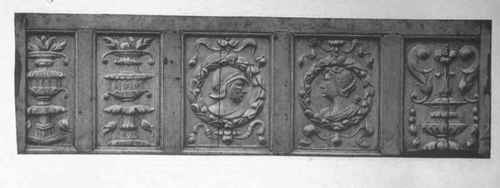
Plate XXXVIII. Panelling Early 16th Century Plate Xxxviii.
XXXVII. Panelling. Early sixteenth century. From a house at Waltham Abbey. V. & A. M.

Plate XXXVIII. Court Cupboard, Oak Inlaid, 1603
xxxviii. Court Cupboard, oak, inlaid. 1603. Said to be from Derby Old Hall. V. & A. M.
Dimensions: Height 50½, Length 46¼, Depth from front to back 2½ inches.
1 The farmer had 'pewter on his cupboard.' See Harrison, Description of England, 'on the Manner of Building and Furniture of our Houses.' 1577.
It seems to me a more natural genesis of the court cupboard to derive it from the Gothic buffet with shelves, than to call it, as Mr. Fred Roe does in Ancient Coffers and Cupboards, 'a modification of the armoire.' In the next sentence he remarks that the one differs essentially from the other. The armoire is a flat-fronted object enclosed with doors reaching down to the floor. The York Minster example (Plate II.) is the type. Seventeenth century oak flat-fronted cupboards, which are to all intents and purposes 'armoires,' exist in sufficient numbers. One has recently been presented to the Victoria and Albert Museum. These appear to me to be the Gothic armoire's legitimate successors, which the court cupboard, with its recessed upper part forming a shelf, and pillars or pendants, could never have been. The only resemblance between the armoire and the court cupboard lies in the fact that while the armoire is completely covered in, the court cupboard may be. But its really essential element, the shelf for the display of plate or beakers, which makes it a cupboard, is perfectly alien to the armoire.
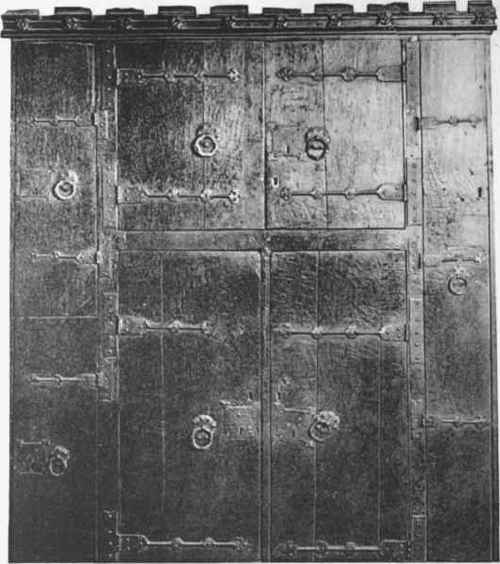
Plate II. Armoire, Oak, 15th Century York Minster
ii. Armoire, oak. Fifteenth century. York Minster.
Dimensions : Height 69, Length 58, Depth from front to back 12½ inches. By kind permission of the Dean.
Lastly, the overhanging top with pendants seems an obvious reminiscence of the overhanging canopied top with pendants, as it appears upon Viollet-Le Due's buffet, or upon canopied chairs, such as the one also reproduced by Mr. Litchfield, History of Furniture (p. 38), from a Burgundy Library MS. at Brussels.
Referring to these 'oak presses,' as he calls them, Mr. Litchfield mentions (p. 121) that they are described in inventories of 1680 to 1720 as 'press cupboards,' 'great cupboards,' wainscot,' and 'joyned cupboards.' To this list may be added that of 'butter cupboard,' where, as is the case with an example belonging to Sir Spencer Ponsonby-Fane of Brympton, Somerset, the back and sides have been bored with holes in regular patterns to admit the air and keep butter fresh.
Continue to:


My Books

